DIABLOTIN – red bedding floribunda rose – Delbard & Chabert
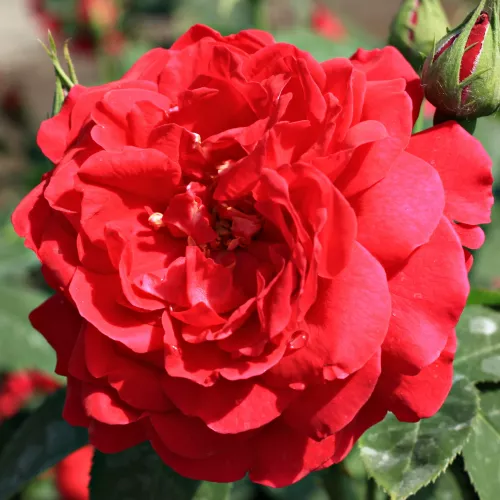
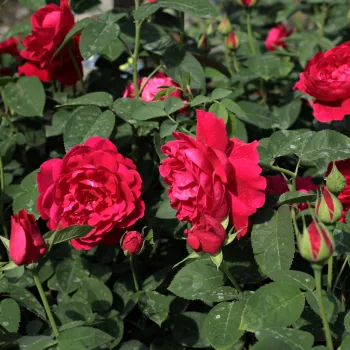
Imagine stepping onto your veranda after a blustery coastal walk, the air salty yet softened by a low, bushy hedge of brilliant red blooms that stand firm even when the weather turns unsettled in exposed British gardens where wind and rain quickly test weaker plants. DIABLOTIN forms a compact, edging-friendly shrub that slips neatly into smaller family plots and shingle beds, giving you colour without demanding constant attention. Its clusters of fiery, red flowers repeat through the season, keeping borders lively from early summer onwards with very little input. Planted as an own‑root rose in well‑drained soil, it settles in steadily, and the first year concentrates on roots, the second on stronger shoots, and by the third it reaches full ornamental impact with a stable shape and dependable display. With low maintenance needs, robust disease resistance and a naturally compact habit, it is ideal for time‑pressed gardeners who still want a lasting, well‑framed focal point.
Usage options
| Target area | Reasoning |
|---|
| Small coastal veranda container |
Its compact, bushy habit and medium height make DIABLOTIN easy to accommodate in a 40–50 litre container on a veranda or balcony, where its fiery red clusters create a vivid focal point with minimal pruning for busy beginners. |
| Low hedge along a shingle path |
Regular, even growth and good branching allow you to clip a neat, low hedge that visually anchors shingle or gravel paths while withstanding brisk breezes and showery, changeable coastal weather for family gardeners. |
| Front‑of‑border bedding strip |
Its floribunda clusters and repeat flowering give continuous colour at the front of mixed borders, helping smaller gardens feel more abundant without needing complex feeding or deadheading regimes for time‑pressed homeowners. |
| Urban courtyard or patio pot |
The compact spread and steady, upright framework are well suited to larger patio pots, where reliable repeat blooming adds structure and brightness even in modest spaces with only part‑day sun for urban gardeners. |
| Mass planting in public or shared spaces |
Consistent height, dense foliage and even flowering make it ideal for repeat blocks or drifts, creating a tidy, unified look that remains attractive without intensive upkeep or frequent replacement for landscape users. |
| Mixed coastal bed with grasses and perennials |
Good overall robustness and dependable red colour that barely fades allow it to hold its own among sea kale, Festuca and other coastal‑style plants, giving structure and long‑season flower interest for seaside enthusiasts. |
| Informal low barrier near seating |
Moderate prickliness and dense, mid‑green foliage form a gentle visual and physical barrier around seating areas, subtly defining spaces without feeling harsh or overbearing for garden hosts. |
| Water‑wise family garden bed |
It tolerates moderate drought once established, blooming steadily in hot spells provided it receives occasional deep watering, helping you balance colour with sensible water use in everyday gardens for practical planners. |
Styling ideas
- Veranda focus pot – Plant one DIABLOTIN in a 50‑litre terracotta container with fine gravel mulch to echo shingle shores – ideal for coastal‑style lovers wanting simple, bold colour.
- Ruby ribbon border – Create a low, continuous ribbon of red along a front border, underplanting with compact Festuca for texture – suited to beginners seeking easy structure.
- Shingle path hedge – Line a shingle path with evenly spaced plants at hedge spacing, letting them knit into a soft boundary – for families wanting gentle separation of play and seating areas.
- Urban red accent – Combine DIABLOTIN in a large square planter with Euonymus fortunei ‘Minimus’ for year‑round foliage contrast – perfect for small city patios needing long‑term definition.
- Coastal meadow mix – Weave groups of DIABLOTIN among sea kale, hare’s‑ear bupleurum and hemp‑agrimony for a relaxed, seaside‑inspired tapestry – aimed at hobby gardeners favouring naturalistic planting.
Technical cultivar profile
| Property | Data |
|---|
| Name and registration |
Floribunda bedding rose, bed rose group; registered as DELpo, marketed as Diablotin bedding rose DELpo, a shrub‑type floribunda suitable for beds, edging and low hedging in family gardens. |
| Origin and breeding |
Bred by Georges Delbard and André Chabert, Roseraies Georges Delbard, France; cross of ‘Orléans Rose’ × ‘Fashion’, introduced and registered in 1961, part of classic mid‑twentieth‑century French breeding. |
| Awards and recognition |
Trial Ground Certificate, National Rose Society, UK (1961); Certificates at Madrid and Bagatelle rose trials (1961); silver medal from Société Nationale d’Horticulture, confirming strong garden and trial performance. |
| Growth and structural characteristics |
Bushy, compact shrub rose, typically 60–90 cm tall and 50–70 cm wide, with dense, mid‑green matt foliage and moderate prickles, forming a rounded outline suited to bedding, containers and low, informal hedges. |
| Flower morphology |
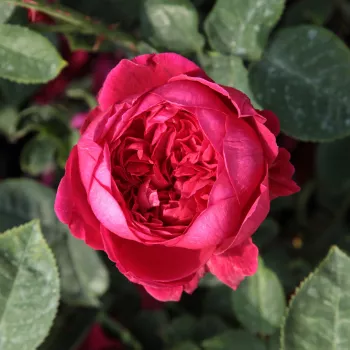
Medium‑sized, double, cup‑shaped blooms with 26–39 petals, produced in clusters; remontant, giving an abundant second flowering and further flushes with basic care, maintaining decorative value over a long season. |
| Colour data and phenology |
Fiery, uniform red blooms (RHS 46A outer, 46B inner); colour remains vivid as flowers open, only slightly matting with age, so beds stay bright from bud to fall of the petals, even in strong summer light. |
| Fragrance and aroma |
No noticeable scent; grown primarily for strong visual impact and reliable performance rather than perfume, making it a practical choice where colour, structure and ease of care are the main selection criteria. |
| Hip characteristics |
Occasional small, spherical hips, 6–9 mm across, in orange‑red tones; generally sparse and not a major ornamental feature, though they can add a light seasonal accent if some spent flowers are left unpruned. |
| Resistance and winter hardiness |
Good overall disease resistance, with strong tolerance to powdery mildew, black spot and rust; hardy to about −21 to −18 °C (RHS H7, USDA 6b), managing typical UK winters with routine mulching in colder spots. |
| Horticultural recommendations |
Ideal for beds, edging, low hedges, containers and parks; plant at 35–40 cm for hedges or 65 cm as specimens, in well‑drained soil, with moderate watering during extended dry spells and light deadheading for neatness. |
DIABLOTIN offers compact, long‑season red colour, dependable disease resistance and good drought tolerance in an own‑root form that matures into a stable, long‑lived shrub, making it a thoughtful choice for relaxed coastal‑inspired gardens.