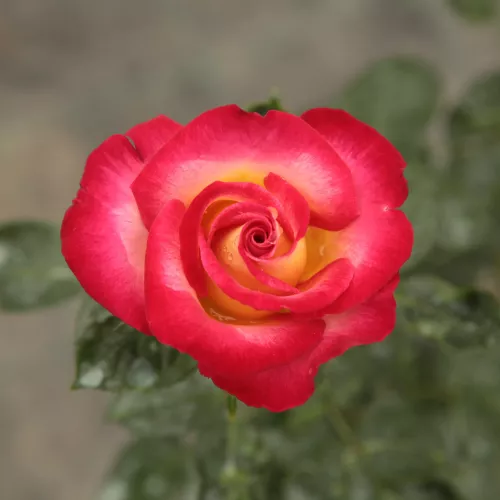
DICK CLARK™ – cream-yellow with red-edged petals bedding grandiflora rose
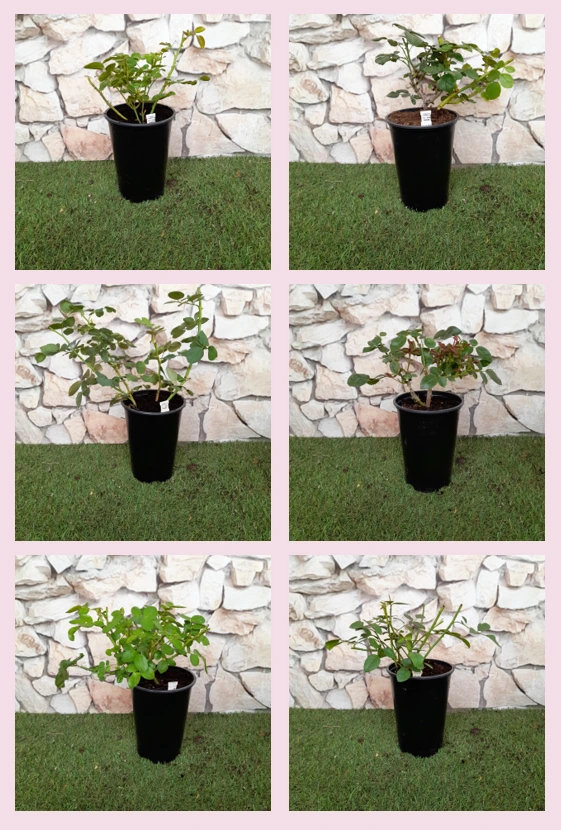
Imagine stepping onto your veranda after a blustery walk on the beach, tea in hand, and being met by a tall, bushy rose whose flowers glow cream-yellow, edged with cherry-red, even after a day of salt-laden winds. DICK CLARK™ in pharmaROSA® ORIGINAL 2‑litre own-root form is bred for endurance and easy enjoyment: an upright, well-anchoring shrub that copes with typical coastal breezes and helps manage heavier soils through its deepening root system. Over time it creates a vertical screen for shingle gardens and sheltered terraces, while its reliably repeating blooms give colour from early summer onwards. Medium, cupped, double flowers appear in flushes, needing only light deadheading, and reward you with a sweet, spicy fragrance that suits relaxed afternoon seating areas. Own-root planting supports a long-lived, regenerating structure that responds well to simple pruning, offering stable ornamental value without fuss. This makes it an ideal choice for hobby gardeners and beginners seeking a rose that looks sophisticated but behaves forgivingly, developing roots in year one, stronger top growth in year two and full visual impact by year three.
Usage options
| Target area | Reasoning |
|---|
| Coastal veranda in large containers |
In a 40–50 litre pot on a sheltered Cornish or Devon veranda, this bushy, upright grandiflora forms a tall accent with showy, repeat-flowering blooms and sweet, spicy scent, while own-root vigour supports long-term container performance for the time-poor beginner. |
| Small family garden seating corner |
Planted near a bench or outdoor dining set, its medium, cupped flowers and medium-strength fragrance create a relaxing atmosphere without overwhelming the space, and moderate maintenance needs suit busy family schedules and relaxed homeowners. |
| Flower bed in heavier garden soil |
Once established, the deepening root system helps the plant anchor and thrive in typical British heavier loams where drainage has been modestly improved, providing stable height, dense foliage and reliable colour for practical, long-term gardeners. |
| Specimen rose in a shingle or gravel strip |
As a solitary specimen in a shingle run or gravel strip, its tall, bushy habit and dramatic bicolour flowers give a focal point that reads well from the house, with own-root resilience supporting a long lifespan for design-conscious coastal owners. |
| Mixed coastal-style border with grasses |
Combined with sea kale, Festuca and similar grasses, its upright framework and glossy dark foliage add structure and season-long flower interest, contrasting well with looser textures and echoing seaside colours sought by coastal-style lovers. |
| Informal flowering screen or short hedge |
At typical heights of 140–180 cm and dense foliage, plants set at hedge spacing provide a light visual screen around terraces or play areas, while repeat flowering keeps the barrier decorative for families wanting soft separation and privacy. |
| Cut-flower corner for home vases |
Medium-sized, double, cupped blooms on strong stems, with good colour retention, are ideal for cutting; remontant flowering ensures fresh stems through summer, giving hobby florists and gift-givers a steady source of home-grown bouquets. |
| Partially shaded town garden bed |
Its suitability for partial shade and moderate disease resistance make it useful in urban gardens where sun is limited and air movement is reduced, offering consistent structure and repeat flowering for busy city-based rose enthusiasts. |
Styling ideas
- Veranda Screen Duo – plant two DICK CLARK™ in 50 litre tubs flanking a patio door, underplanted with low Festuca for a breezy, coastal feel – ideal for seaside balcony and veranda users.
- Shingle Showcase – set a solitary plant in a cream shingle bed edged with driftwood and sea kale for a relaxed, beach-walk mood – for lovers of informal, coastal-inspired front gardens.
- Family Tea Corner – group one or two bushes beside a small seating area, with lavender and foxgloves to extend colour and scent – perfect for families enjoying afternoon tea outdoors.
- Grassland Border – weave plants through ornamental grasses to create vertical colour punctuations that read well from a distance – suited to hobby gardeners wanting low-fuss drama.
- Cutting Patch Row – line a sunny border edge with evenly spaced plants for easy access to fragrant, medium blooms for the vase – attractive for beginner florists and gift-giving hosts.
Technical cultivar profile
| Parameter | Data |
|---|
| Name and registration |
Grandiflora-floribunda bedding rose; registered as WEKfunk, marketed as DICK CLARK™; ARS exhibition name “Dick Clark”; bed rose commercial group for garden and cut use. |
| Origin and breeding |
Bred in the United States in 2008 by Christian Bédard and Tom Carruth from ‘Fourth of July’ × unknown seedling; introduced by Weeks Roses in 2011 after 2009 registration. |
| Awards and recognition |
All-America Rose Selections (AARS) winner in 2011 and American Rose Society Members’ Choice in 2015, indicating broad garden performance and strong enthusiast approval. |
| Growth and structural characteristics |
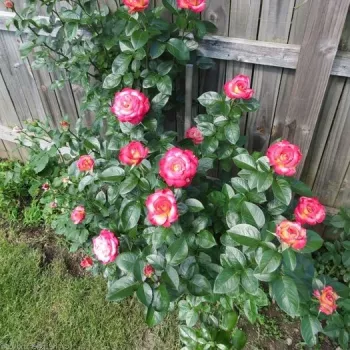
Bushy, upright shrub reaching about 140–180 cm high and 80–120 cm wide, with dense, glossy dark green foliage and moderate thorns; moderate self-cleaning, some deadheading desirable. |
| Flower morphology |
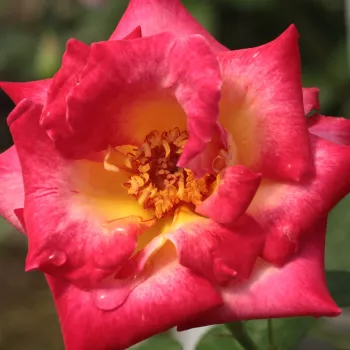
Medium-sized, double, cupped blooms with 26–39 petals, usually borne singly; remontant habit with good repeat flowering, producing a strong second flush under typical garden care. |
| Colour data and phenology |
Cream-yellow base with bright cherry-red to burgundy edge; colour darkens in heat and softens in cooler spells, but overall fading is limited, maintaining attractive contrast through the season. |
| Fragrance and aroma |
Medium-strength, clearly noticeable scent combining sweet and spicy notes; primarily ornamental, with fuller blooms that limit pollen access and therefore offer lower pollinator appeal. |
| Hip characteristics |
Rose hips form sparsely; occasional small, spherical, vivid red hips around 10–14 mm diameter may appear, adding minor seasonal interest without dominating the plant’s overall display. |
| Resistance and winter hardiness |
Hardy to approximately −26 to −23 °C (RHS H7, USDA 5b); moderate tolerance to heat and drought with watering in prolonged dry spells; moderate resistance to common foliar diseases. |
| Horticultural recommendations |
Best at 60–110 cm spacing depending on use; medium maintenance with occasional pest and disease checks; suitable for beds, specimen planting, hedging and fragrant cutting in partial sun sites. |
DICK CLARK™ offers tall, repeat-flowering, fragrant colour with durable structure in an own-root form that settles in for the long term, a thoughtful choice if you want a reliable coastal-style rose without complicated care.