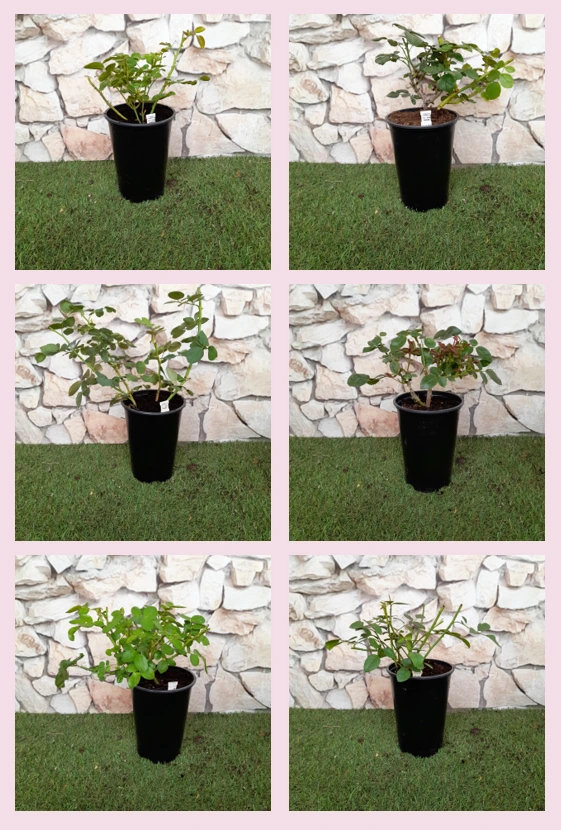
DICK KOSTER™ – pink flowerbed polyantha rose
Imagine late-afternoon sea light on a sheltered veranda, where compact clusters of deep pink blooms sit low and steady against the breeze, creating a cheerful border that softens shingle and paving. DICK KOSTER™ forms a neat, compact mound that works beautifully in smaller coastal gardens, providing reassuring continuity of colour from early summer onwards with generous repeat flowering. Its moderate size suits large containers, while its own-root nature supports gradual regeneration and long-term stability, so the planting quietly strengthens and anchors itself even where soil is challenging and drainage needs thoughtful management.
Usage options
| Target area | Reasoning |
|---|
| Coastal veranda container (40–50 litre) |
The rose’s compact habit and dense foliage suit a generous 40–50 litre pot, where roots have room to establish and support reliable flowering without becoming top-heavy in windy, exposed spots, ideal for relaxed coastal veranda owners and beginners. |
| Low edging along paths or shingle |
The rounded, 35–50 cm height naturally creates a low edging line, while repeated clusters of small pink pompon blooms soften hard lines of paths or shingle, offering a tidy but romantic look for family gardens. |
| Compact front-garden feature |
Its modest spread and rounded shape make it easy to position in tight front gardens or townhouse plots, giving season-long interest without dominating windows or parking spaces, ideal for busy urban homeowners. |
| Small flowerbed in average family garden |
The remontant flowering habit brings waves of colour through the season, so even a small bed reads as “in bloom” for much of the year, with own-root plants building up reliably from roots to full effect over the first three years. |
| Mixed planting with grasses and perennials |
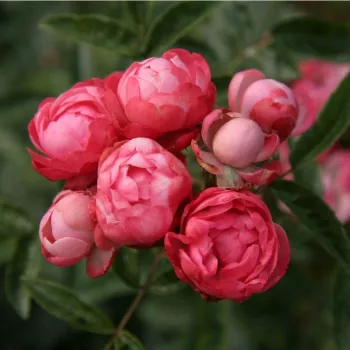
Dense, glossy foliage and ball-shaped flower clusters combine well with airy grasses and perennials, adding structure and rhythm without complex maintenance, suiting informal schemes planned by hobby gardeners. |
| Weather-exposed coastal border |
The low, compact habit offers a reassuringly steady outline that copes with onshore breezes while rewarding consistent watering and reasonable drainage, bringing colour stability to gardens facing regular gusty, salt-tinged winds. |
| Informal hedge or repeated rhythm planting |
Regular spacing at 30–35 cm creates a soft, low hedge with repeating deep pink accents, simple to trim and refresh as own-root plants recover well from light renovation, particularly attractive for design-conscious coastal-style lovers. |
| Urban courtyard or roof terrace container |
In sturdy, well-watered containers the compact root system supports long-lived plants that respond steadily to simple care, making it a reliable choice where time is short but a cheerful, refined look is wanted by busy urban residents. |
Styling ideas
- Seaside-ribbon border – repeat DICK KOSTER™ along a shingle strip, interplanted with blue Carex for a low, wave-like edge – suited to coastal veranda owners wanting calm structure.
- Powder-pink patio pot – one rose in a 50 litre terracotta container, underplanted with silver thyme, for compact colour beside outdoor seating – ideal for beginners with limited space.
- Gravel garden accent – cluster three plants with Festuca and sea kale to contrast fine grasses with rounded pink pompons – appealing to coastal-style lovers seeking easy texture.
- Cottage-edge path – line a path with alternating DICK KOSTER™ and baby’s-breath for a soft, romantic feel – perfect for family gardens aiming for gentle formality.
- Urban courtyard trio – group three large containers with this rose and low lavender to create a simple, fragrant focal point – designed for busy urban gardeners wanting low-fuss charm.
Technical cultivar profile
| Parameter | Data |
|---|
| Name and registration |
Polyantha bed rose, registered as ‘Dick Koster’; commercial use includes the trade name DICK KOSTER™ – pink flowerbed polyantha rose, commonly supplied as a bushy, cluster-flowering bedding rose. |
| Origin and breeding |
Sport selected from ‘Anneke Koster’, bred and introduced by D. A. Koster & Sons in Boskoop, Netherlands, around 1929, remaining a classic compact bedding polyantha within traditional European assortments. |
| Awards and recognition |
Recognised at the Raleigh Rose Society (USA) with the Polyantha Spray Award in 2001, reflecting its dependable cluster flowering performance in formal and exhibition-style planting displays. |
| Growth and structural characteristics |
Compact, bushy shrub reaching about 35–50 cm in height and 40–60 cm in spread, with dense, glossy dark green foliage and moderate prickles, forming a low, rounded mound ideal for bedding patterns. |
| Flower morphology |
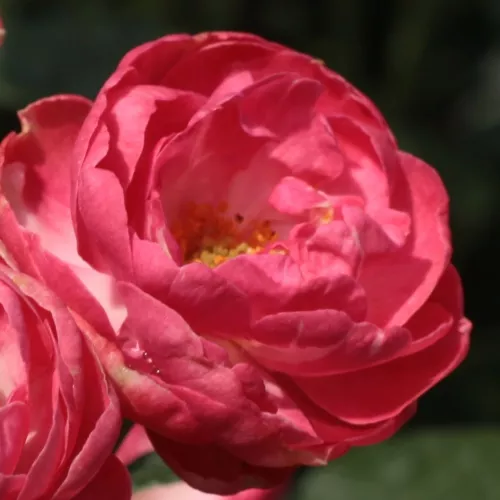
Semi-double pompon flowers with 13–25 petals, produced in tight clusters on short stems; small bloom size of roughly 1–4 cm gives a fine-textured, richly studded appearance across the plant surface. |
| Colour data and phenology |
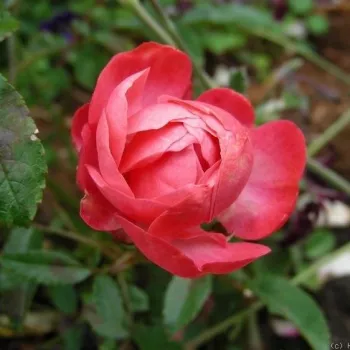
Blooms open deep pink with a slight raspberry tone, briefly showing a paler centre, then gradually fade to soft powder-pink; colour retention is moderate, with continuous cluster production in flushes. |
| Fragrance and aroma |
Fragrance is very weak and barely perceptible, so it is primarily chosen for its abundant flower clusters and colour effect rather than scent, making it suitable where fragrance is not a key requirement. |
| Hip characteristics |
Produces moderate numbers of small, spherical hips around 5–7 mm in diameter, ripening to an orange-red colour, adding a discreet late-season detail without significantly affecting flowering performance. |
| Resistance and winter hardiness |
Rated to approximately –26 to –23 °C (RHS H7, USDA 5b, Swedish zone 4); disease resistance is medium for black spot, mildew and rust, benefiting from good air circulation and routine monitoring. |
| Horticultural recommendations |
Best in sunny positions for beds, edging or containers; maintain moderate watering in dry spells, occasional deadheading and plant protection as needed, spacing 30–55 cm depending on hedge, mass or specimen use. |
DICK KOSTER™ offers compact, repeat pink clusters, reliable low edging or container colour, and the steady resilience of an own-root rose; a considered choice if you prefer long-lived impact with modest effort.