PRELINA – carmine-red bedding floribunda rose – pharmaROSA®
With PRELINA you can create a sheltered, seaside-feel corner where glossy foliage and carmine-red clusters bring a sense of sunny refreshment while quietly coping with blustery, moisture-laden coastal weather and well-managed drainage. This bushy floribunda settles quickly as a low hedge, fills narrow beds with colour, and thrives in a large patio container for relaxed afternoon tea by the sea. Its abundant, remontant flowering means weeks of raspberry-pink blooms from early summer onwards, supported by reliable foliage health that reduces the need for spraying. Own-root strength underpins long-term stability, so even after harsh winters the plant regrows evenly, maintaining its shape and display. Over time, roots establish in year one, framework and flowering build in year two, and by year three PRELINA offers its full ornamental impact with minimal intervention – an easy-going choice for busy coastal gardens.
Usage options
| Target area | Reasoning |
|---|
| Coastal veranda in a large pot |
PRELINA’s compact, bushy habit is ideal for a 40–50 litre container where you want reliable structure without daily attention; its carmine-red clusters read beautifully against shingle, decking and white walls for those who enjoy relaxed coastal-style verandas. |
| “Girly” shingle and gravel bed |
The raspberry-pink tones soften beautifully over time, bringing a romantic note to pale shingle and light gravel, especially when mixed with silvery foliage, for gardeners seeking a softly feminine seaside atmosphere borders. |
| Low flowering wind-filter hedge |
The bushy, moderately dense framework forms a low, semi-permeable hedge that helps slow gusts in exposed gardens while holding its line, making a neat choice for those wanting subtle wind-filtering structure hedging. |
| Easy-care family front garden |
Good disease resistance and low maintenance needs mean less spraying and pruning, keeping entrances smart with minimal effort for time-pressed owners of small to medium family plots driveways. |
| Mixed floribunda and perennial bed |
Clustered, repeat flowering provides continuous colour threads through summer, linking perennials and grasses in a coherent scheme for home gardeners who value ongoing seasonal interest flowerbeds. |
| Clay soil garden with improved drainage |
Once planted into loosened, compost-enriched clay that drains freely, PRELINA anchors well and copes with the combination of wet spells and breezy conditions common in many UK gardens for practical, low-fuss homeowners. |
| Small urban courtyard or balcony |
Its modest height and spread make PRELINA suitable where space is tight; in a single generous container it becomes a long-season focal point for busy urban gardeners wanting impact from just one or two key plants. |
| Long-term own-root planting |
As an own-root rose, PRELINA keeps its character even after hard pruning or winter damage, regenerating evenly year after year to protect your initial planting effort for gardeners planning durable, low-replacement gardens. |
Styling ideas
- Seaside-Nook – Mass PRELINA in a curve around a bistro set on shingle, underplanted with blue Festuca and sea kale, for couples wanting a sheltered, coastal-feel tea corner.
- Cornish-Patio – One or two PRELINA in 50 litre clay pots with trailing thyme soften a sunny veranda edge, ideal for homeowners seeking a simple, low-care focal point.
- Pink-Ribbon – Plant a ribbon of PRELINA along a path, interspersed with lavender, to create a gently scented, romantic walkway for families who enjoy colourful everyday approaches.
- Wind-Softener – Use a staggered row as a low, flowering wind-filter in front of a fence, combined with upright Liatris, for gardeners needing structure without heavy maintenance.
- Raspberry-Mix – Combine PRELINA with pale ornamental grasses and white perennials in a small bed for a fresh, girly colour palette suited to compact front gardens.
Technical cultivar profile
| Parameter | Data |
|---|
| Name and registration |
PRELINA – carmine-red bedding floribunda rose, commercial bed rose type; registered cultivar name not specified, marketed as PRELINA Bedding rose pharmaROSA® within the floribunda group. |
| Origin and breeding |
Parentage is unknown; the cultivar was discovered and selected by pharmaROSA®, with initial distribution by PharmaRosa® Ltd. (Hungary); introduction and registration dates are not documented. |
| Growth and structural characteristics |
Bushy, moderately dense plant, typically 70–95 cm tall with a 60–85 cm spread; mid-green, glossy foliage and moderate thorniness lend it good bedding presence and a stable, compact outline. |
| Flower morphology |
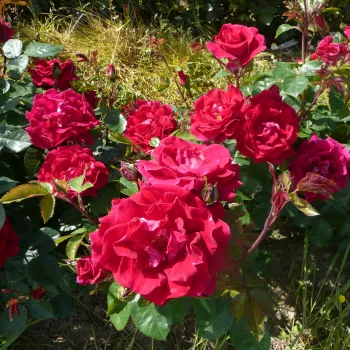
Large, double, cup-shaped blooms with 26–39 petals are borne in clusters; the variety is remontant, giving abundant repeat flowering through the season once established in garden or container settings. |
| Colour data and phenology |
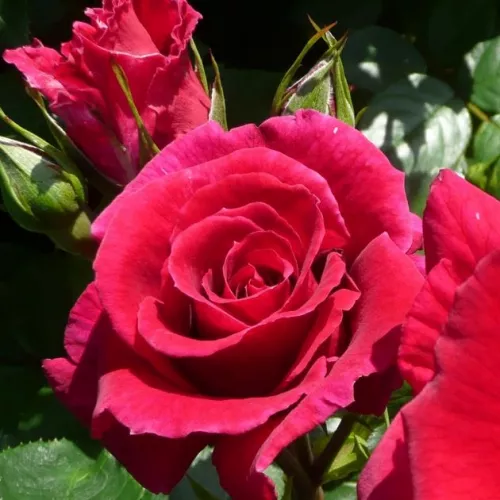
Closed buds are dark carmine-raspberry; open flowers show vivid carmine-red with raspberry-purple tones, gradually lightening to raspberry pink as they age while maintaining a clear, attractive colour impression. |
| Fragrance and aroma |
No reliable data confirm fragrance strength or character; PRELINA should be chosen primarily for its colour effect, bedding performance and repeat flowering rather than for pronounced scent in the garden. |
| Hip characteristics |
Occasional rose hips form after flowering, typically 10–18 mm across; hips are not a dominant ornamental feature but may add small seasonal points of interest in late season if spent blooms are left. |
| Resistance and winter hardiness |
Rated to approximately −26 to −23 °C (RHS H7, Swedish zone 4, USDA 5b); shows resistance to powdery mildew, black spot and rust, supporting low-input cultivation in varied temperate climates. |
| Horticultural recommendations |
Suited to bedding, edging and low hedging; plant 50–60 cm apart in groups, or as a solitary at about 1 m spacing; prefers well-drained soil and benefits from regular watering in larger containers. |
PRELINA Bedding rose pharmaROSA® offers compact bushy growth, generous repeat flowering and durable own-root performance, making it a thoughtful choice for long-lived, low-effort colour in family and coastal gardens.