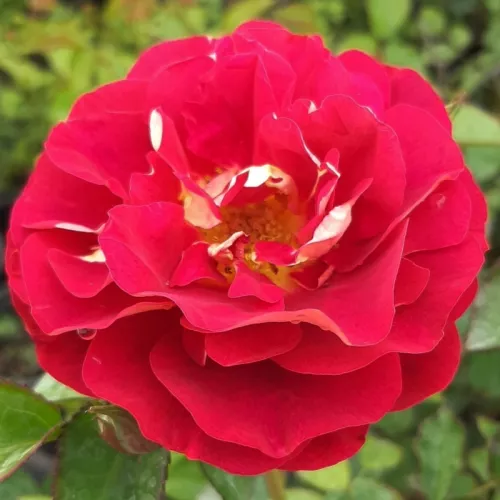
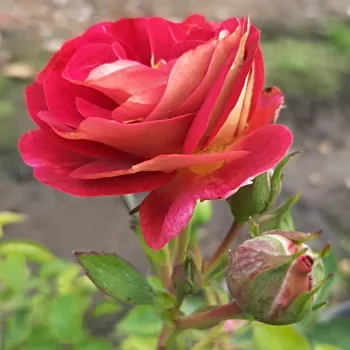
DIE SEHENSWERTE ® – crimson-red-yellow bedding floribunda rose
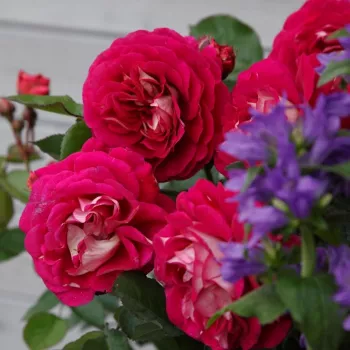
Imagine coming home from the beach, dropping your shells on the table and sitting down with a cup of tea behind a low, colourful windbreak. DIE SEHENSWERTE ® settles easily into coastal-style beds and veranda planters, its compact growth and dark foliage holding the scene together even when Atlantic gusts rattle the garden, while roots anchor the plant in lighter or heavier soils for dependable stability. Clusters of very full, crimson-and-yellow blooms repeat reliably through the season, providing long-lasting colour with minimal deadheading. Bred by Kordes and ADR-recognised, it offers reassuring disease resistance and a long, own-root lifespan that repays your planting efforts over years. In a typical UK family garden, this makes it an easy-care choice for shingle borders, front-of-bed edging or a generous 40–50 litre container on a sheltered, sunny veranda.
Usage options
| Target area | Reasoning |
|---|
| Small coastal front garden bed |
The compact upright habit (around 60–80 cm) makes edging a narrow shingle or gravel strip straightforward, giving you neat structure without overshadowing low seaside perennials. Reliable repeat flowering adds colour pulses from early summer to autumn for beginners who want clear visual reward with modest care, ideal for the busy coastal homeowner gardener. |
| Large 40–50 litre veranda container |
In a roomy pot with free-draining compost, its dense foliage and medium-height framework create a seasonal focal point that copes well with exposed, breezy sites typical of Cornish or Devon balconies. Good heat and moderate drought tolerance reduce watering stress on hot days, while own-root vigour supports long-term performance in a permanent container for time-poor urban veranda owners. |
| Family garden mixed border |
Planted near sea kale, Festuca or lavender, its vivid crimson and golden-yellow cups stand out against silvery foliage and ornamental grasses, giving a “holiday by the sea” look even inland. Repeat clusters bring long-season interest so the bed never feels flat, with low maintenance needs suiting households that prefer enjoying the garden to constant pruning, especially relaxed family gardens. |
| Low rose hedge or path edging |
The relatively even, upright framework and dense, glossy leaves lend themselves to a short hedge that visually separates play areas, lawns and seating spaces without feeling formal. Consistent flowering along the row creates a bright, welcoming line, while disease resistance keeps foliage clean so there is less pressure for spraying or complex care, reassuring for new rose keepers. |
| Urban courtyard or patio feature |
Placed in a sunny, sheltered corner of a small patio, this floribunda delivers concentrated colour where every square metre matters. Its cluster-flowering habit gives the impression of many plants from a single root system, making it cost-effective in tight city spaces, while own-root longevity means the planting becomes a stable fixture rather than a short-lived decoration, attractive to space-conscious city residents. |
| Coastal-style shingle planting |
Among sea-washed pebbles and drought-tolerant companions, this rose offers a refined counterpoint to rugged materials. Good heat and moderate drought tolerance make it a suitable choice where rainfall is irregular and irrigation needs to be efficient, so the border can look thoughtfully designed yet forgiving if watering is occasionally delayed, reassuring for holiday-home and weekend-garden users. |
| Low-maintenance family flower bed |
The combination of strong disease resistance and only moderate self-cleaning means that, while an occasional deadhead improves neatness, the plant still looks presentable if you skip tasks during busy weeks. High petal count and very full blooms give a “storybook” effect that children notice, while parents appreciate that routine care is limited mainly to seasonal pruning, suiting time-stretched family households. |
| Wind-exposed yet sheltered corner seating area |
Used as a colourful buffer in front of a fence or glass balustrade, its height and density help soften gusts, providing a more comfortable pocket for outdoor chairs in blustery gardens where wind and showers test planting schemes and anchoring roots matter for long-term stability. This balance of shelter, colour and durability supports relaxed outdoor living for coastal-ambience enthusiasts. |
Styling ideas
- Shingle-Romance – Combine with sea kale, Festuca and pale pebbles for a soft coastal vignette that highlights the rose’s compact, upright habit – ideal for lovers of seaside-inspired front gardens.
- Veranda-Jewel – Plant singly in a 40–50 litre container with trailing thyme around the rim, making the crimson-and-gold blooms a neat focal point – perfect for balcony and terrace owners wanting easy impact.
- Storybook-Border – Repeat the variety along a path with lavender and salvias for a fairy-tale edging that flowers for months – suited to families wanting charming structure without heavy upkeep.
- Urban-Glow – In a small courtyard, pair with upright grasses and dark containers to emphasise the vivid colour contrast – attractive to city gardeners seeking drama in limited space.
- Breeze-Haven – Place a row behind low seating in a sheltered corner, softening wind while providing long-season colour – designed for coastal veranda users seeking comfort and calm.
Technical cultivar profile
| Parameter | Data |
|---|
| Name and registration |
Floribunda bedding rose from the MärchenRosen® collection; registered as KORsehendie and marketed as Die Sehenswerte ®, introduced 2016, for use mainly as a compact bed and border rose. |
| Origin and breeding |
Bred by W. Kordes & Sons in Germany from unknown parentage, bred in 2006 and released in 2016, reflecting the Kordes focus on ornamental value combined with reliable disease resistance. |
| Awards and recognition |
Holds the German ADR quality award from 2017 and a Bronze medal at the Australian National Rose Trials in 2020, indicating strong garden performance and ornamental appeal in varied climates. |
| Growth and structural characteristics |
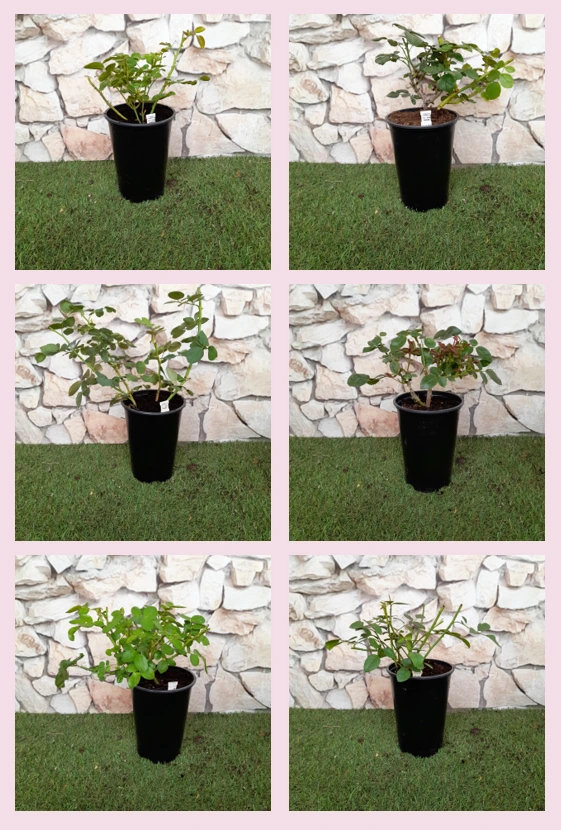
Compact upright shrub reaching approximately 60–80 cm in height and 40–60 cm spread, with dense, dark green glossy foliage and moderate prickliness, suitable for edging, beds and large containers. |
| Flower morphology |
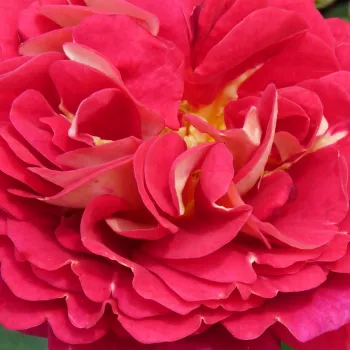
Produces medium-sized, very full, cup-shaped, cluster-flowered blooms with more than 40 petals; remontant flowering, with a particularly abundant second flush following the first main early-summer display. |
| Colour data and phenology |
Petals are deep crimson on the inner side with golden-yellow outer surfaces; colours fade only slightly, the yellow reverse softening towards salmon while the open blooms retain rich crimson centres for weeks. |
| Fragrance and aroma |
Primarily an ornamental variety with very weak, almost imperceptible fragrance; the strongly double blooms conceal stamens, so pollinator attraction is limited and the focus is visual effect over scent or nectar. |
| Hip characteristics |
Due to very double flowers, hip set is generally sparse; where formed, hips are small, spherical, around 7–10 mm diameter, in orange-red tones, offering only minor late-season decorative contribution. |
| Resistance and winter hardiness |
Excellent resistance to powdery mildew, black spot and rust; hardy to approximately –21 to –18 °C (RHS H7, USDA 6b, Swedish zone 3), coping well with heat and moderate drought given supplementary watering. |
| Horticultural recommendations |
Prefers a sunny position with well-drained soil; plant 35–75 cm apart depending on use, at 4.9–5.7 plants/m² for mass effects; suits beds, edging, containers and urban plantings with generally low maintenance needs. |
DIE SEHENSWERTE ® offers compact structure, long-season colour and dependable disease resistance in an own-root form that matures into a durable, low-effort feature, making it a thoughtful choice if you value lasting coastal-style charm.