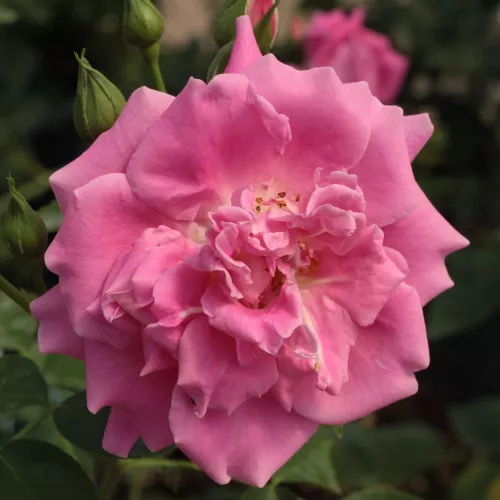
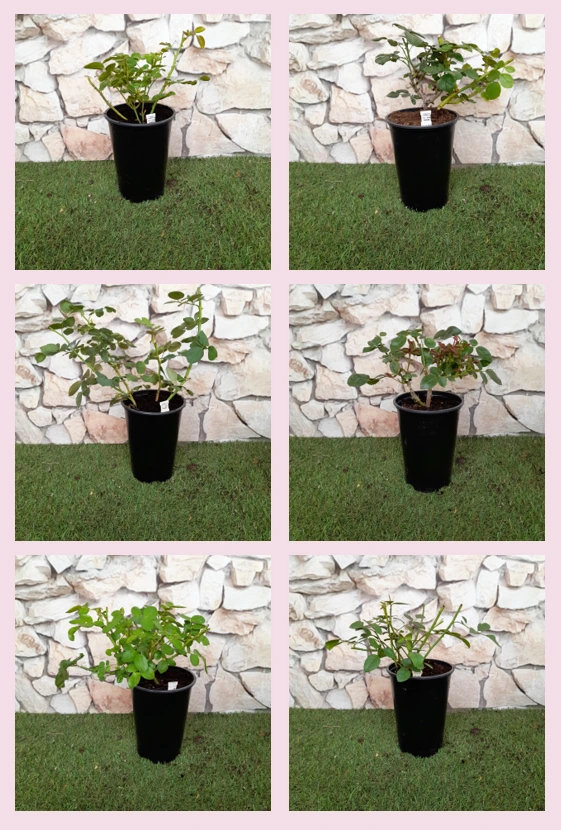
ROUNDELAY – dark‑red bedding grandiflora rose - Swim
Imagine late afternoon light on a seaside veranda, this deep crimson rose sheltering your tea table as the breeze carries a hint of salt: Roundelay offers reliability in blustery coastal weather, with a bushy habit that sits firmly and securely in the soil, giving reassuring stability even where the ground stays wet yet drains well in storms and showers. Its own‑root form promises quiet longevity and an easy rhythm in your garden, with year one focused on rooting, year two on strong shoots, and by year three a full, satisfying display of velvety red clusters. The medium‑sized, cutting-quality blooms repeat generously through the season, while the compact, upright habit makes Roundelay ideal for smaller family plots, shingle beds and larger coastal containers on decks or balconies.
Usage options
| Target area |
Reasoning |
| Coastal shingle bed in a small family garden |
Roundelay’s upright, bushy shape and solid root system give it good anchorage in exposed, breezy beds, fitting naturally into a Cornish or Devon shingle border with resilient companions like sea kale and Festuca; a calm option for the coastal-style beginner |
| Wind-buffering veranda planter (40–50 litres) |
In a generous container it forms a dense, glossy screen that softens wind around outdoor seating; drainage-friendly compost and a stable pot help it cope with blustery showers and summer heat, suiting the busy veranda owner |
| Compact front-garden focal point |
The dark red, high-centred clusters create a formal yet welcoming look by the front path or gate, offering reliable repeat flowering without demanding pruning skills, making it reassuring for the time-poor homeowner |
| Season-long cutting patch near the kitchen door |
Medium, exhibition-style blooms with strong, long-lasting scent are ideal for small vases; repeat flowering means regular stems for the house, rewarding light deadheading and feeding for the home cut-flower enthusiast |
| Mixed bed with sea-holiday colour palette |
Its velvety dark red stands out beautifully against silvery Santolina and blue Festuca, echoing sun, sea and evening light while keeping a manageable size, an inspiring choice for the colour-loving gardener |
| Low, formal hedge along a path or drive |
Planted at hedge spacing, the upright grandiflora framework knits into a tidy, repeat-flowering strip that guides the eye and defines space, suiting the structured family-garden planner |
| Feature rose in a clay-based border |
With sensible soil preparation for drainage, its bushy habit and own-root resilience establish well in the heavier soils typical of many UK gardens, helping it settle into a stable, low-fuss rhythm for the practical clay-soil gardener |
| Long-term “heirloom” planting in a cherished plot |
As an own-root, mid-century classic with good winter hardiness, Roundelay is well suited to long-lived beds where plants are expected to endure and regenerate over time, appealing to the heritage-minded rose lover |
Styling ideas
- Veranda-Nook Retreat – Large tubs (40–50 litres) with Roundelay underplanted with creeping thyme and Festuca create a sheltered tea corner by glass doors – ideal for coastal veranda owners seeking low-effort charm
- Cornish-Shingle Drift – Mix Roundelay with sea kale, Santolina and low grasses in a free-form shingle bed to echo windswept beaches – perfect for informal gardeners who love a natural coastal feel
- Red-and-Lavender Duo – Alternate Roundelay with lavender in a short path-edge row for fragrance and contrast – suited to busy homeowners wanting classic impact with simple maintenance
- Cutting-Strip Border – Line a sunny fence with Roundelay and Crocosmia for vases in reds and oranges from summer to autumn – attractive for beginners who enjoy bringing flowers indoors
- Evening-Glow Corner – Combine Roundelay with dark-leaved shrubs and silver foliage in a small seating area to catch the last light – appealing to urban gardeners designing a compact, atmospheric space
Technical cultivar profile
| Parameter |
Data |
| Name and registration |
Roundelay is a dark-red bedding grandiflora rose from the bed rose group, marketed as Roundelay Bedding rose Swim; it is an unregistered cultivar but recognised in exhibitions under the name Roundelay. |
| Origin and breeding |
Bred by Herbert C. Swim at Armstrong Nurseries, California, from ‘Charlotte Armstrong’ × ‘Floradora’; introduced by Armstrong Nurseries in 1953, with breeding work completed in the United States in 1954. |
| Awards and recognition |
Decorated in European trials, including a Gold Medal and City of Geneva Prize in 1954 at Geneva, and an RNRS Trial Ground Certificate in 1958, reflecting its ornamental and garden performance. |
| Growth and structural characteristics |
Upright, bushy shrub reaching about 85–115 cm in height and 75–105 cm spread, with moderately dense, glossy dark green foliage and moderate prickliness; self-cleaning is partial, so some deadheading is beneficial. |
| Flower morphology |
Medium-sized, double, high-centred grandiflora blooms with 26–39 petals, forming pointed buds and clustered inflorescences; remontant habit with particularly abundant second flush, suitable for both bedding and cutting. |
| Colour data and phenology |
Deep, velvety dark red flowers with subtle burgundy tones; colour retention is very good, with slight paling in strong sun and richer hues in cooler weather, spanning bud to full bloom with consistent dark-red impression. |
| Fragrance and aroma |
Strong, long-lasting fragrance of classic rose character, though detailed scent notes are undocumented; the double, more closed bloom form reduces pollinator access, so the variety serves chiefly as an ornamental and cut flower. |
| Hip characteristics |
Hip set is generally sparse due to the double, cluster-flowering habit; when present, hips are ellipsoid, around 12–18 mm across, with a red tone corresponding to RHS 44A, adding modest late-season interest. |
| Resistance and winter hardiness |
Hardy to about −21 to −18 °C (RHS H7, USDA 6b, Swedish Zone 3); disease resistance is medium overall, with notable susceptibility to black spot, so occasional preventative care is advisable, especially in damp climates. |
| Horticultural recommendations |
Best in sunny sites with good air movement; spacing 65 cm in beds, 55 cm for hedges, or 100 cm as a specimen; medium maintenance with regular deadheading and irrigation during prolonged drought, plus light plant protection when needed. |
ROUNDELAY – dark‑red bedding grandiflora rose - Swim offers repeat dark-red flowering, compact structure and enduring own-root vigour for modest, breeze-prone gardens, making it a thoughtful choice if you favour long-term, quietly reliable roses.