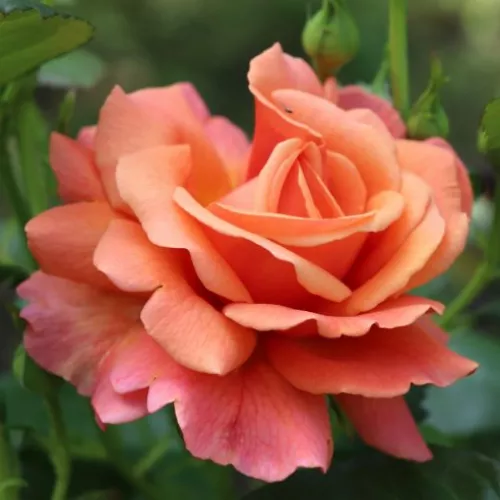
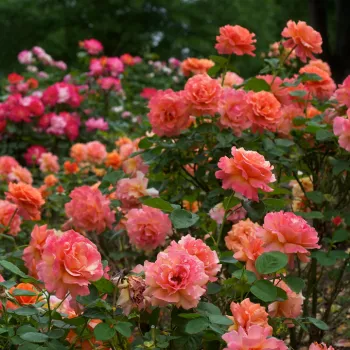
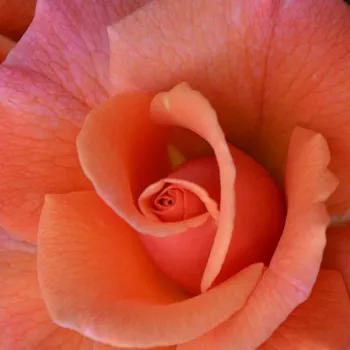
EASY DOES IT – orange bedding Floribunda rose – Harkness & Harkness
With its ruffled mango-orange blooms and softly fruity scent, EASY DOES IT settles comfortably into coastal-style family gardens, offering a quietly reliable splash of colour from late spring onwards. This own-root rose is bred for resilience, building a deep, stable root system that supports a long, low-effort life in beds or large containers. In a well-prepared border it copes steadily with blustery, damp weather and challenging soil by ensuring secure anchoring and steady water use even when conditions fluctuate. Over time it develops into a bushy, upright shrub with dense, glossy foliage that frames its generous flowering clusters. From the second year its repeated flushes become noticeably fuller, and by the third season you can expect its mature ornamental presence with minimal intervention. Ideal if you enjoy a cup of tea on a breezy veranda after a walk on the beach, it fits naturally into relaxed, shingle-inspired planting where colour, texture, structure, longevity, reliability, fragrance and ease matter more than fuss.
Usage options
| Target area | Reasoning |
|---|
| Small coastal front garden bed |
The bushy, upright habit and dense foliage form a neat, low screen that handles exposed, breezy spots near the sea, while flowering steadily through the season without complex care, suiting beginners. |
| Feature rose for shingle-style border |
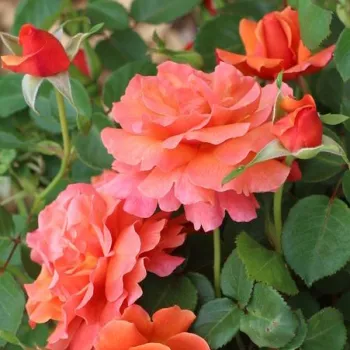
Clusters of mango-orange, peach and pink-toned blooms add lively movement and colour to pale gravel or shingle, repeating well so the display does not rely on perfect weather, ideal for coastal-lovers. |
| Large container on veranda or terrace |
Performs reliably in a 40–50 litre pot, where its own-root system develops steadily and supports long-term use without frequent replacement, fitting the routines of busy-owners. |
| Low-maintenance family flower bed |
Needs only light pruning and ordinary watering to stay healthy and floriferous, so day-to-day upkeep remains manageable alongside work and family life for time-poor. |
| Mixed planting with grasses and perennials |
The strong health and upright structure allow it to sit comfortably among sea kale, Festuca or lavender without crowding, giving a stable focal point for design-conscious. |
| Warm, sunny spot with challenging soil |
Good heat and drought tolerance, together with robust health, means it copes with summer dry spells and less-than-perfect clay soil when drainage is improved, reassuring for casual-gardeners. |
| Season-long colour near seating area |
Remontant flowering brings repeated waves of ruffled blooms, so the area around a bench or veranda stays colourful from early summer well into autumn, pleasing for evening-sitters. |
| Lightly shaded corner of the garden |
Its suitability for partial shade allows planting where sun is limited for part of the day, maintaining structure and bloom without demanding a prime south-facing spot, helpful for small-plot. |
Styling ideas
- Veranda-nook – Place EASY DOES IT in a 50 litre container with gravel mulch beside outdoor chairs, pairing with lavender for scent and a calm, low-maintenance focus – ideal for relaxed tea-drinkers.
- Shingle-ribbon – Run a curving line of plants through coastal-style gravel, backed with sea kale and blue Festuca for a soft, wind-tousled look – suited to seaside romantics.
- Sunset-bed – Combine its orange and peach tones with soft pink perennials and dwarf pines for structure, giving a long-flowering border that needs only light annual pruning – perfect for easygoing stylers.
- Family-border – Use as a repeating accent along a main path at 65 cm intervals, keeping the layout simple yet colourful so the garden looks cared-for with minimal effort – good for busy households.
- Cornerscape – Plant a group of three in a lightly shaded corner, underplanted with groundcover honeysuckle to knit the soil and reduce weeding – useful for low-fuss owners.
Technical cultivar profile
| Parameter | Data |
|---|
| Name and registration |
Floribunda bed rose, registered as HARpageant, marketed as EASY DOES IT – Masterpiece Collection, exhibition category floribunda and shrub; ARS exhibition name Easy Does It™. |
| Origin and breeding |
Bred in Great Britain by Robert B. and Philip A. Harkness from (‘Queen Charlotte’ × ‘Della Balfour’) × ‘Baby Love’; introduced 2010 after UK breeding work completed in 2006. |
| Awards and recognition |
Winner of the All-America Rose Selections (AARS) award in 2010, demonstrating reliable garden performance and ornamental value across a range of tested climates and conditions. |
| Growth and structural characteristics |
Bushy, upright shrub reaching about 90–130 cm in height and 70–110 cm spread, with dense, mid-green glossy foliage and moderate thorns, forming a full, well-branched outline. |
| Flower morphology |
Large, double, cup-shaped, cluster-flowered blooms with 26–39 petals; remontant habit delivers plentiful second and subsequent flushes on well-branched stems through the season. |
| Colour data and phenology |
Vibrant mango-orange base with peach-pink and honey-peach shades; colour softens to peach and creamy pink as blooms open and fade, maintaining attractive tones and good colour retention. |
| Fragrance and aroma |
Medium-strength, softly fruity fragrance noticeable at close quarters, complementing its warm flower colours without overpowering nearby seating areas in compact gardens or terraces. |
| Hip characteristics |
Very double flowers mean hips are usually sparse; where formed, they are small spherical red hips around 10–14 mm diameter, adding occasional late-season interest without seeding heavily. |
| Resistance and winter hardiness |
Demonstrates good resistance to powdery mildew, black spot and rust; hardy to approximately −26 to −23 °C (RHS H7, USDA 5b, Swedish zone 4), tolerating heat and moderate drought well. |
| Horticultural recommendations |
Suited to beds, low hedging, pots and specimen use; plant 55–100 cm apart, ideally in well-drained soil, with low pruning and watering needs and tolerance of partial shade in UK gardens. |
EASY DOES IT offers long-season colour, dependable health and easy care in an own-root form that matures into a durable feature, making it a thoughtful choice if you want lasting impact from a single rose.