AUSmak – pink English rose – Austin
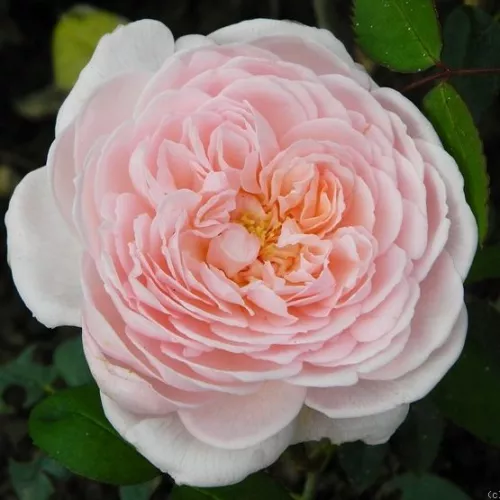
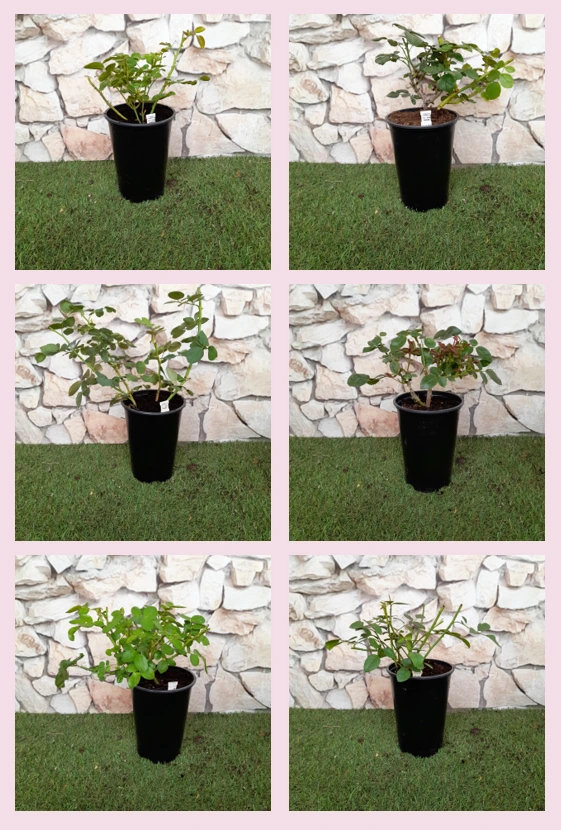
Imagine a sheltered coastal veranda where you can enjoy afternoon tea, protected by a gentle rose windbreak and surrounded by the soft glow of pastel petals. This David Austin English shrub settles readily into typical UK family gardens, coping well with brisk weather while its roots anchor securely and manage moisture in heavier soils, giving you reassuring stability in exposed spots. Its bushy habit, dense foliage and strongly repeat-flowering nature bring a long season of shell-pink blooms from a compact footprint, ideal for small to medium gardens and shingle-style coastal borders. Planted as a pharmaROSA ORIGINAL own-root rose, it establishes quietly in the first year, builds strong top growth in the second, and by the third year reaches full ornamental impact with abundant clusters of rosette blooms and a delicately sweet tea-scented fragrance.
Usage options
| Target area | Reasoning |
|---|
| Coastal veranda containers (40–50 L) |
The bushy, compact habit and dense foliage make this rose ideal for large containers on a seaside balcony or veranda, where its shell-pink blooms and tea fragrance soften hard edges without taking much space – especially appealing for beginners. |
| Small front gardens and cottage-style beds |
Its moderate height and rounded shape fit neatly into modest UK front gardens, giving a romantic English look with repeated flushes of pastel flowers from late spring to autumn – reassuring for busy-owners. |
| “Girly” shingle or gravel planting near the coast |
The soft, powder-pink rosettes pair beautifully with silvery foliage and shingle surfaces, while the shrub’s good anchoring and moisture-handling roots suit breezier coastal layouts where stable structure is needed – inspiring for coastal-lovers. |
| Mixed borders with perennials and ornamental grasses |
Its clustered, medium-sized blooms sit well among sea kale, Festuca and lavender, providing repeat colour and gentle scent without overwhelming nearby plants, so a single shrub can refresh a whole border – perfect for hobby-gardeners. |
| Season-long flowering focus near seating areas |
Strong repeat-flowering and a generous second flush keep the display going through the main sitting-out months, giving ongoing interest around benches and terraces with minimal specialist care – reassuring for time-poor. |
| Romantic hedging or low boundary definition |
Planted at hedge spacing, its bushy structure and dense mid-green foliage form a soft, semi-formal line that works as a gentle visual screen around patios or play lawns, still allowing space-efficient planting – attractive for family-gardens. |
| Cut-flower corner for home arrangements |
The very double, rosette blooms and medium, sweet tea scent make reliable, pretty stems for vases; repeat-flowering means you can cut a few regularly without losing the overall garden effect – ideal for home-stylists. |
| Long-term structural rose in established beds |
As an own-root shrub with H7 hardiness and black-spot resistance, it offers long-lived structure and stable ornamental value, regenerating well from the base after routine pruning and weather setbacks – dependable for long-term-planners. |
Styling ideas
- Coastal-Veranda-Nook – Grow one plant in a 50–60 L container with sea kale and blue Festuca for a salty, breezy tea corner – suited to balcony and veranda owners.
- Shell-Pink-Shingle – Set the rose in a pale gravel bed with driftwood accents to echo seashell tones – ideal for coastal-style enthusiasts.
- Cornish-Cottage-Mix – Combine with lavender and low grasses in a small front garden for a soft, romantic welcome – perfect for busy homeowners.
- Pastel-Cut-Flower-Strip – Plant a short row along a path so you can snip blooms for vases while retaining a full display – appealing to home decorators.
- Soft-Boundary-Hedge – Use several plants at hedge spacing to edge play lawns with a gentle, petal-soft barrier – ideal for family gardeners.
Technical cultivar profile
| Parameter | Data |
|---|
| Name and registration |
English shrub rose from the English Rose Collection, commercial type “english rose”; registered cultivar name AUSmak, marketed as Eglantyne with verified cultivar authenticity. |
| Origin and breeding |
Bred by David C. H. Austin from unknown seedling × ‘Mary Rose’; introduced and first distributed by David Austin Roses Ltd. in the United Kingdom in 1994. |
| Awards and recognition |
Holds the Royal Horticultural Society Award of Garden Merit (2001) and received Modern Shrub Rose honours at the Central Ohio Rose Society Show in 1999. |
| Growth and structural characteristics |
Bushy, moderately thorny shrub reaching about 90–140 cm high and 80–120 cm wide, with dense mid-green, slightly glossy foliage providing good garden presence and structural volume. |
| Flower morphology |
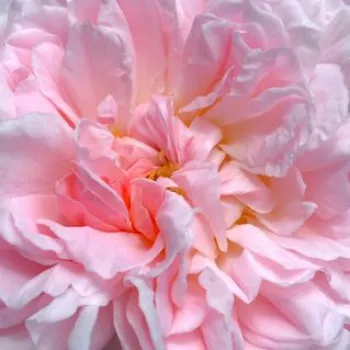
Very double rosette blooms with more than 40 petals, medium flower size on clustered inflorescences, strongly repeat-flowering with an abundant second flush in suitable conditions. |
| Colour data and phenology |
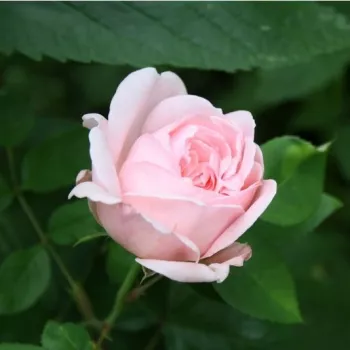
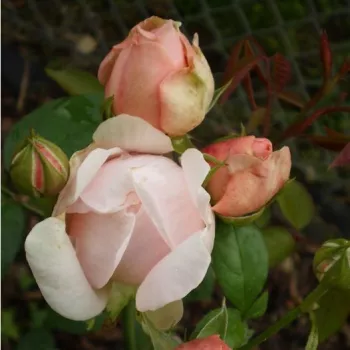
Uniform pale pink with creamy undertone; buds powder-pink, opening shell-pink (RHS 65D outer, 65C inner), then fading toward pastel and almost white centres, faster in strong sun than in cool weather. |
| Fragrance and aroma |
Clearly noticeable, medium-strength fragrance with a delicately sweet, tea-scented character; primarily ornamental as very double flowers limit access for pollinating insects. |
| Hip characteristics |
Rose hip production is generally poor due to very double flowers; occasionally forms small spherical orange-red hips about 8–14 mm in diameter later in the season. |
| Resistance and winter hardiness |
Hardy to approximately −26 to −23 °C (RHS H7, Swedish zone 4, USDA 5b); moderate general disease resistance with good black-spot resistance and moderate rust and powdery mildew tolerance. |
| Horticultural recommendations |
Best for beds, parks, hedging and specimen use at 55–100 cm spacing; moderate maintenance, benefits from deadheading and spring frost protection, and tolerates partial shade with regular watering. |
AUSmak offers compact, bushy growth, repeat shell-pink flowering and long-lived own-root resilience, making it a graceful choice for relaxed coastal or family gardens you plan to enjoy for years.