EISPRINZESSIN ® – white bedding floribunda rose – KORettiflus
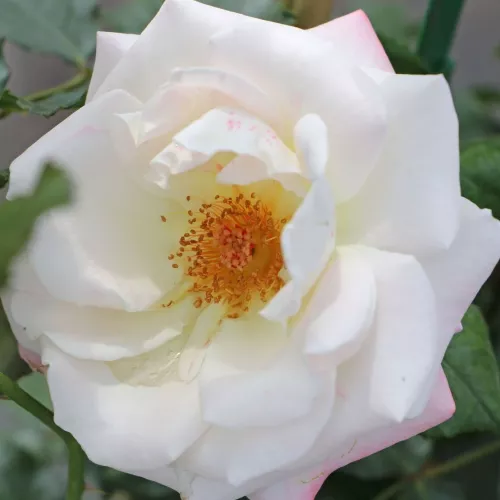
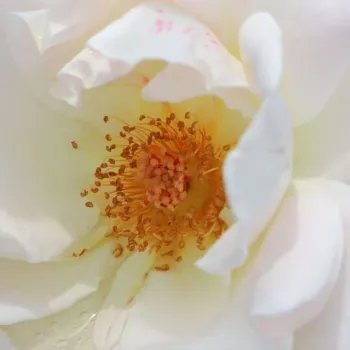
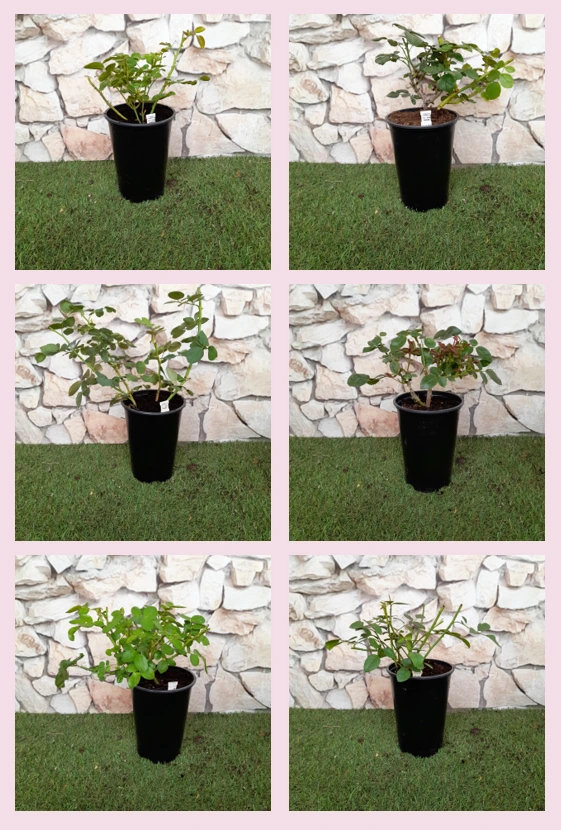
With its cool off‑white blooms finely edged in blush pink, EISPRINZESSIN ® brings a sense of seaside refreshment to compact beds, borders and coastal verandas. This upright floribunda forms a dense, glossy green structure that copes well with exposed British weather, offering reassuring stability even where breezes funnel through the garden. Repeat, cluster flowering creates generous waves of seasonal colour with little effort, and the plant’s moderate care needs suit busy households who want beauty without a complicated routine. As an own‑root rose it builds a durable underground network, regenerating reliably after pruning or harsh winters and supporting a long ornamental life. In a typical family garden you can enjoy a calm, bright focal point that anchors shingle, gravel and coastal‑style planting while also suiting neat urban verandas. Give it a well‑drained spot and watch it settle in steadily over its first years, from strong Year 1 roots to fuller Year 2 branching and confident Year 3 presence that feels effortlessly at home beside sea kale, lavender and ornamental grasses in a small, low‑maintenance sanctuary.
Usage options
| Target area | Reasoning |
|---|
| Small coastal or urban front garden bed |
The compact, upright habit and 75–105 cm height make this rose ideal for tight beds where you need reliable structure without overpowering the space. Clustered flowers give a clear focal point while leaving room for gravel or shingle. Perfect for the time‑poor beginner. |
| Mixed flowerbed with perennials |
Dense, dark green foliage creates a calm backdrop for airy companions such as sea kale, Festuca or Liatris, helping the white and pink‑edged blooms stand out. This turns a small border into a refined, long‑season feature. A good choice for design‑conscious homeowners. |
| Low flowering hedge or edging |
The recommended 35–45 cm spacing allows you to form a gentle, flowering line along paths or driveways, giving definition without a rigid formal look. Semi‑double clusters repeat through the season, softening paving and lawn edges. Well suited to practical family‑garden users. |
| Large container on veranda or terrace |
Planted in a 40–50 litre pot with good drainage, this variety offers a long‑lived, movable feature for balconies and verandas. Own‑root growth supports steady regeneration in containers, extending its useful life with only periodic feeding. Ideal for busy urban gardeners. |
| Coastal, shingle or salt‑tolerant layout |
The tough framework and glossy foliage cope well with brisk winds and variable rain, anchoring designs that mix shingle, driftwood and resilient coastal plants. This makes it a natural fit where you want a soft but durable windbreak effect for relaxed seaside owners. |
| Low‑maintenance family flowerbed |
Moderate care needs and dependable repeat flowering mean you mainly water in dry spells and prune once a year. Own‑root resilience supports a long lifespan, reducing the need for replacements and complex spraying schedules. Great for low‑fuss family‑garden planners. |
| Small lawn island or focal point |
The upright habit and 50–70 cm spread allow a single plant or tight group to read clearly from the house or patio, giving a neat, bright centre to a small lawn island. It provides seasonal interest without blocking sightlines. Ideal for compact‑plot owners. |
| Urban parklet or shared courtyard bed |
Medium height, durable structure and repeat flowering suit communal beds that must look cared‑for between maintenance visits, managing wind and rain where buildings channel weather. This helps keep public or shared spaces welcoming for lightly involved residents. |
Styling ideas
- Seaside border – Combine with sea kale, blue Festuca and pale gravel to echo a Cornish beach palette – for coastal‑style lovers seeking a light, breezy look.
- Veranda calm – Plant in a 50 litre pot with lavender and soft grey Helichrysum for a fragrant, easy‑reach tea corner – for beginners wanting simple container harmony.
- White focus – Use a trio in a small bed with white perennials and low grasses to create a cool, evening‑friendly focal point – for homeowners who favour restrained elegance.
- Soft hedge – Line a path with evenly spaced plants, underplanted with groundcover thyme on gravel, to frame routes without hard edges – for families needing gentle structure.
- Urban accent – Pair one rose with Perovskia and decorative stone in a courtyard planter for a modern, drought‑aware arrangement – for busy city gardeners wanting order with minimal care.
Technical cultivar profile
| Property | Data |
|---|
| Name and registration |
Floribunda bed rose registered as KORettiflus, marketed as EISPRINZESSIN ® Flowerbed rose KORettiflus; also known in exhibitions as Ice Princess, a white bedding floribunda for garden use. |
| Origin and breeding |
Bred by Tim‑Hermann Kordes in Germany in 2006, with parentage not publicly disclosed; introduced commercially by W. Kordes’ Söhne in 2015 as a modern, reliable floribunda bedding rose. |
| Growth and structural characteristics |
Upright bushy habit reaching about 75–105 cm high and 50–70 cm wide; dense, dark green, glossy foliage and moderate prickliness provide a stable, well‑filled framework for bedding and edging. |
| Flower morphology |
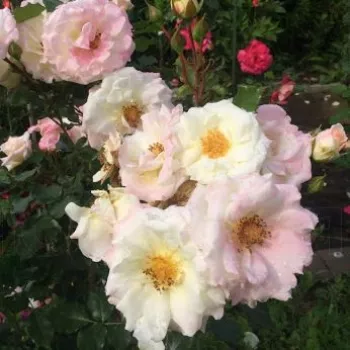
Semi‑double, large cup‑shaped blooms with 13–25 petals, produced in clusters; repeat‑flowering through the season, with a particularly generous second flush that maintains colour presence in beds. |
| Colour data and phenology |
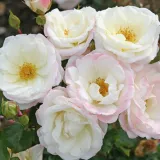
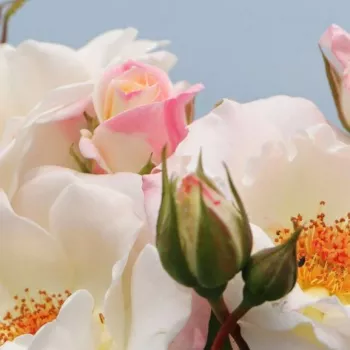
Base colour off‑white with delicate pale pink petal edges; buds ovoid with a pink veil, opening to soft contrast that fades to almost uniform white, giving a cool, clean effect in full bloom. |
| Fragrance and aroma |
Mild, classic rose scent noticeable mainly at close range; fragrance is subtle rather than dominant, suiting seating areas where a gentle background perfume is preferred over intense aroma. |
| Hip characteristics |
Rose hips form only slightly; occasional small spherical orange‑red hips around 6–10 mm in diameter may appear, adding modest late‑season interest without significant self‑seeding. |
| Resistance and winter hardiness |
Hardy to about −21 to −18 °C (RHS H7, roughly USDA 6b); shows moderate overall disease resistance with good black spot resistance, though powdery mildew and rust may appear in some seasons. |
| Horticultural recommendations |
Suited to beds, edging, groups and large containers; plant 35–75 cm apart depending on use, in well‑drained soil with regular watering in dry periods and occasional pest and disease checks as needed. |
EISPRINZESSIN ® offers compact structure, repeat off‑white flowering and dependable, long‑lived own‑root performance in beds or large containers, making it a thoughtful choice for relaxed coastal‑style gardens and small family spaces.