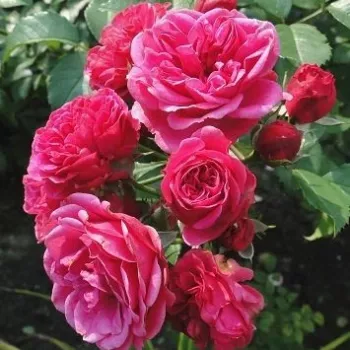
ELMSHORN® – deep pink park rose - Kordes
Imagine a salty breeze brushing your veranda as deep-pink blooms sway gently, forming a natural windbreak that copes well with persistent coastal gusts and exposed family plots; ELMSHORN® creates a hedge or backdrop that feels instantly established, its upright, bushy habit filling awkward gaps and giving your garden structure even when other plants are bare. This classic Kordes shrub rose settles steadily into shingle-inspired borders and clay-based beds once you’ve ensured basic drainage, rewarding you with clusters of small, cup-shaped flowers from early summer onwards. In year one it concentrates on roots, in year two on confident shoots, and by year three it reaches its full ornamental presence, providing a long-lived framework for relaxed, coastal-style planting. Semi-double clusters offer a familiar, traditional rose character that blends comfortably with favourite perennials and ornamental grasses, while consistent flowering waves keep the garden feeling lively from the patio door to the far corner of the lawn.
Usage options
| Target area | Reasoning |
|---|
| Coastal veranda windbreak |
The tall, upright, bushy structure builds into a dense, flowered screen that softens winds around seating areas and porches, adding colour and a sense of enclosure for coastal-style lovers |
| Flowering boundary hedge |
Planted at hedge spacing, the shrub’s height and spread knit together into a deep-pink, traditional boundary, giving privacy and a gentle park-like feel for homeowners |
| Wildlife-friendly corner |
Semi-double clusters and moderate hip production offer nectar and autumn food, helping to weave this rose into a more lively, biodiverse planting for nature-conscious gardeners |
| Small family garden backdrop |
The generous eventual size means one or two plants create a strong flowering backdrop, reducing the need for numerous shrubs and simplifying layout choices for busy garden owners |
| Clay soil planting strip |
Once the planting hole is opened up with grit and compost, the robust root system anchors well and copes reliably with heavier garden soils for UK family gardens |
| Own-root long-term investment bed |
The own-root form, without graft unions, builds a stable framework that can regenerate from the base after harsher winters or pruning mistakes, giving reassuring longevity for long-term planners |
| Low-fragrance seating area |
With only a very weak scent, ELMSHORN® suits terraces or verandas where strong perfume might be unwelcome, yet still provides colour and movement for outdoor entertainers |
| Traditional park-style planting |
Its heritage breeding and classic, semi-double deep-pink blooms recreate a familiar municipal-park rose look that many people associate with established gardens and childhood memories for sentimental gardeners |
Styling ideas
- Seaside-terrace hedge – line a veranda edge with ELMSHORN® and underplant with Festuca and sea kale for a breezy, beach-walk feel – ideal for coastal-style lovers
- Family-supper backdrop – create a deep-pink screen behind an outdoor dining set, mixing in Lavandula for soft contrast – ideal for homeowners who host relaxed suppers
- Clay-soil rose border – use ELMSHORN® as the tall backbone in a heavy-soil border, adding feverfew and ornamental grasses – ideal for gardeners dealing with challenging clay
- Wildlife-corner frame – position one shrub at the back of a wildlife bed so hips and semi-double blooms support birds and insects – ideal for nature-conscious families
- Park-style front garden – plant a pair flanking the path with low evergreen mounds for a nostalgic public-park look – ideal for those who like traditional street appeal
Technical cultivar profile
| Parameter | Data |
|---|
| Name and registration |
ELMSHORN® park shrub rose, Hybrid Musk / Lambertiana group, ARS exhibition name ‘Elmshorn’; commercial type park rose, own-root supply, unregistered cultivar name. |
| Origin and breeding |
Bred by Reimer Kordes, W. Kordes’ Söhne, Germany, from ‘Hamburg’ × ‘Verdun’; introduced in 1951 and distributed by W. Kordes’ Söhne for garden and landscape use. |
| Awards and recognition |
Historic accolades include an RNRS Certificate of Merit (1950) and early ADR status later withdrawn, reflecting its valued garden character despite disease sensitivity. |
| Growth and structural characteristics |
Strong, upright, bushy shrub reaching about 120–190 cm high and 100–160 cm wide, with moderately dense, glossy light-green foliage and moderate prickliness for support. |
| Flower morphology |
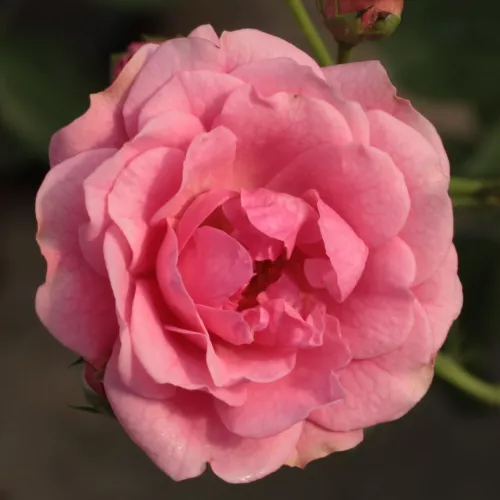
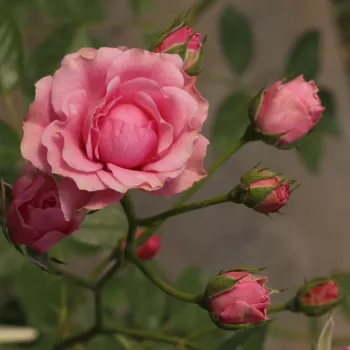
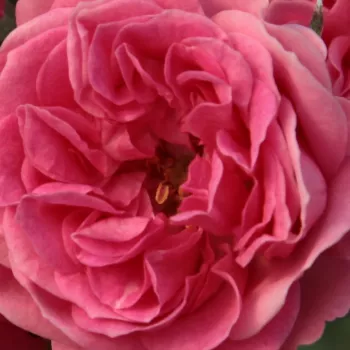
Semi-double, small cup-shaped blooms (0.5–1.5 in, 13–25 petals) carried in clusters, remontant with notably abundant second flush, though spent flowers require regular deadheading. |
| Colour data and phenology |
Vibrant deep pink with cherry-red tone (RHS 52A outer, 53B inner); colour lightens in heat and with age, petal edges paling while the centre remains more saturated. |
| Fragrance and aroma |
Fragrance is very weak and barely perceptible, making it unobtrusive near seating or paths; no specific scent profile recorded and not typically used for perfumed harvest. |
| Hip characteristics |
Produces moderate quantities of small spherical hips, around 6–10 mm diameter, red RHS 40A, offering additional seasonal interest and potential wildlife value into autumn. |
| Resistance and winter hardiness |
Very susceptible to powdery mildew, black spot and rust, so regular preventative care is needed; hardy to about −32 to −29 °C (USDA 4b, RHS H7, Swedish zone 5). |
| Horticultural recommendations |
Best in full sun with well-drained yet moisture-retentive soil; space generously (c. 110–200 cm) and consider a 40–50 litre or larger container if grown in a substantial pot. |
ELMSHORN® offers a tall, deep-pink shrub presence for hedges and coastal-style backdrops, with own-root resilience supporting long-term structure; consider it if you enjoy traditional rose character with space to develop.