EPI D'OR – yellow hybrid-tea rose – Delbard
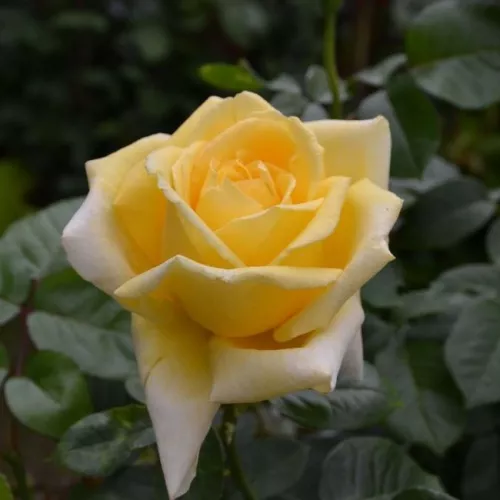
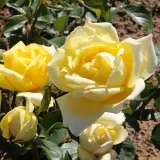
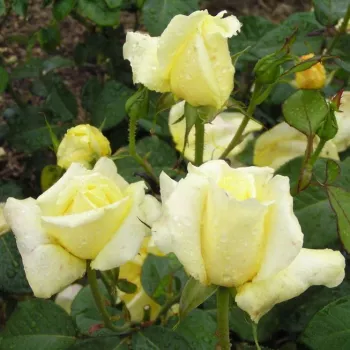
Imagine returning from the seaside, salt on your skin and a gentle breeze, to find EPI D'OR glowing in your garden: a compact hybrid tea rose with sunlit yellow, XL, exhibition-style blooms that hold their colour beautifully. Its bushy habit and moderate height make it naturally suited to smaller UK plots and sheltered coastal corners where reliable anchoring and good drainage help it thrive in blustery, salt-tinged conditions. Planted as an own-root rose in a quality 40–50 litre container or border, it establishes steadily for long-term longevity, building roots in year one, strong shoots in year two and full ornamental value by year three. The modest, fruity fragrance lends a refined note to morning tea on a veranda, while the luminous colour reads as instantly cheerful beside shingle, pale gravels and soft grasses, giving you high-impact flowers with straightforward, moderate-care maintenance that fits busy lives by the sea.
Usage options
| Target area | Reasoning |
|---|
| Small coastal front garden feature |
Compact, bushy growth and XL, exhibition-type blooms create a strong focal point without overwhelming a modest Cornish or Devon frontage, ideal where space is tight but you still want a “wow” rose for everyday enjoyment for the busy homeowner. |
| Container on sheltered veranda (40–50 litre) |
Performs well in a generous 40–50 litre pot, where its moderate size and upright habit suit verandas and decks; own-root form supports long-term structure, so you can refresh compost without replacing the plant, suiting container-focused coastal gardeners. |
| Sunny, wind-sheltered shingle bed |
Luminous yellow flowers read beautifully against pale shingle and gravel, while the bushy plant anchors well in free-draining, improved soil that copes with breezy, salt-influenced conditions around UK coasts, ideal for seaside garden enthusiasts. |
| Mixed border with perennials |
Moderately dense, mid-green foliage provides structure among low perennials, while repeat flowering gives recurring highlights through summer; planting at 60 cm spacing allows each plant to show its form, suiting relaxed, low-effort family borders. |
| Cut-flower corner in family garden |
XL, cup-shaped flowers on strong stems were bred for exhibition and cutting, so a dedicated cluster near the house gives easy access to long-lasting indoor blooms without special techniques, appealing to home florists and beginners alike. |
| Low, fragrant seating-area hedge |
At around 55–85 cm, planted 50 cm apart, it forms an informal, low hedge that frames a terrace without blocking light; the gentle fruity scent enhances outdoor seating, attractive for households wanting subtle fragrance rather than overpowering perfume. |
| Long-term “legacy” rose in own-root form |
Own-root plants recover more readily from weather or pruning mishaps and do not throw unwanted rootstock shoots, building into a stable, repeat-flowering shrub over many years, ideal for value-conscious gardeners planning a durable family garden. |
| Structured rose bed with simple maintenance |
Regular spacing at around 2.8–3.2 plants/m² creates a formal bed that looks designed yet only needs moderate care and occasional disease checks, while remontant flowering keeps the display going, reassuring those wanting impact without complex routines. |
Styling ideas
- Shingle-Chic Border – set EPI D'OR in a narrow shingle strip with pale gravel and sea-weathered timber, letting its yellow blooms glow against the muted palette – for coastal-style lovers wanting a tidy, contemporary frontage.
- Veranda Glow – plant a single rose in a 40–50 litre clay pot with trailing thyme to soften the rim, placing it by a bistro table for evening tea – for balcony and veranda owners seeking easy elegance.
- Soft-Pastel Mix – combine with lamb’s ear and cranesbill to contrast golden flowers with silver foliage and airy pinks, creating a “girly” yet restrained scheme – for beginners building a romantic family border.
- Sunny-Hedge Line – run a low row along a path, underplanting with golden barren strawberry as a living mulch to keep soil neat and cool – for practical gardeners wanting structure and reduced weeding.
- Cutting-Panel Bed – group three plants in a square, edging with neat Festuca, so you can harvest exhibition-style stems while the bed still looks full – for home florists who like reliable, repeat-flowering roses.
Technical cultivar profile
| Parameter | Data |
|---|
| Name and registration |
Hybrid tea rose, registered as DELépi, marketed as Epi d'Or Grands Parfums DELépi; ARS exhibition name Épi d'Or; part of the Grands Parfums collection with verified cultivar authenticity. |
| Origin and breeding |
Bred by Georges Delbard, France, from complex hybrid tea parentage including Madame A. Meilland; bred 1981 and introduced by Delbard in 1982 as a premium, exhibition-quality yellow Hybrid Tea selection. |
| Awards and recognition |
Gold Medal and Plus Belle Rose de France at Lyon Rose Competition 1981, plus Gold Medal at Rome 1981, confirming its early status as an outstanding yellow exhibition and garden rose internationally. |
| Growth and structural characteristics |
Compact, bushy shrub around 55–85 cm tall and 50–70 cm wide, with moderately dense, matt, mid-green foliage and moderate prickliness, forming a neat, upright plant suitable for beds, low hedging and containers. |
| Flower morphology |
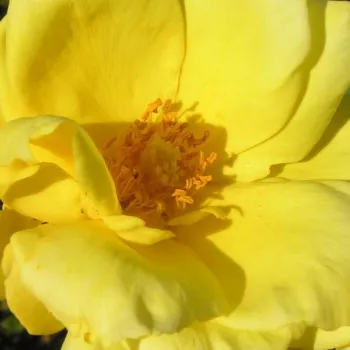
Large, double, cup-shaped blooms with roughly 26–39 petals, usually borne singly on stems; remontant habit with a plentiful second flush, bred for cutting and exhibition yet also effective as a garden feature. |
| Colour data and phenology |
Uniform, medium yellow with warm luminosity, RHS 14A outer and 14B inner; colour holds well with minimal fading, only lightening towards lemon-yellow late on, giving stable flower colour through the opening phase. |
| Fragrance and aroma |
Mild, pleasantly fruity fragrance that is noticeable at close range without being overpowering; suited to seating areas and cut flowers where a gentle, refined perfume is preferred over strong, room-filling scent. |
| Hip characteristics |
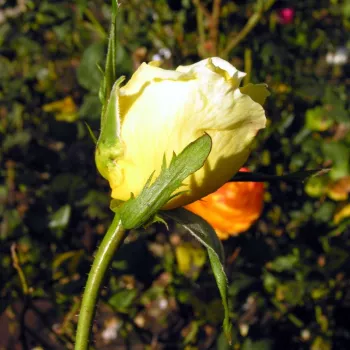
Occasional ellipsoid hips, around 15–21 mm, ripening to orange-red; modest ornamental interest in autumn but not a heavy hip producer, so overall display remains focused on repeated flowering through the season. |
| Resistance and winter hardiness |
Rated to approximately –21 to –18 °C, RHS H7, USDA Zone 6b; disease resistance moderate to powdery mildew, black spot and rust, needing basic monitoring and timely care in typical UK garden conditions. |
| Horticultural recommendations |
Plant 50–60 cm apart, or up to 100 cm for specimens; best in fertile, well-drained soil with full sun, plus moderate maintenance including pruning, feeding and occasional disease control in damp or high-pressure seasons. |
EPI D'OR offers luminous, colour-fast yellow blooms, compact structure and rewarding repeat flowering on a durable own-root plant, making it a thoughtful long-term choice for refined yet undemanding coastal and family gardens.