ERINNERUNG AN BROD – crimson historical old garden rose – Geschwind
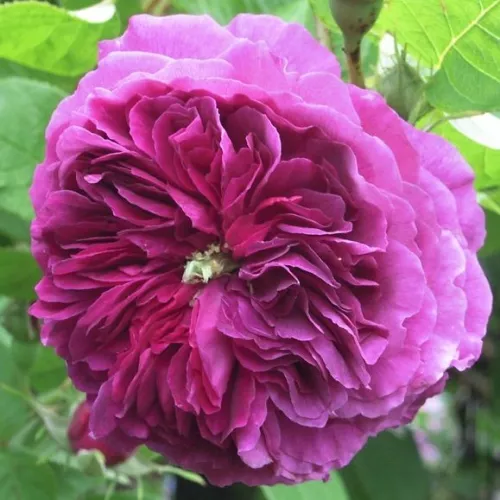
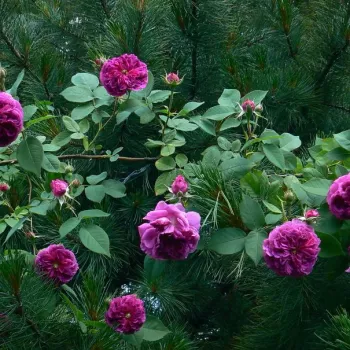
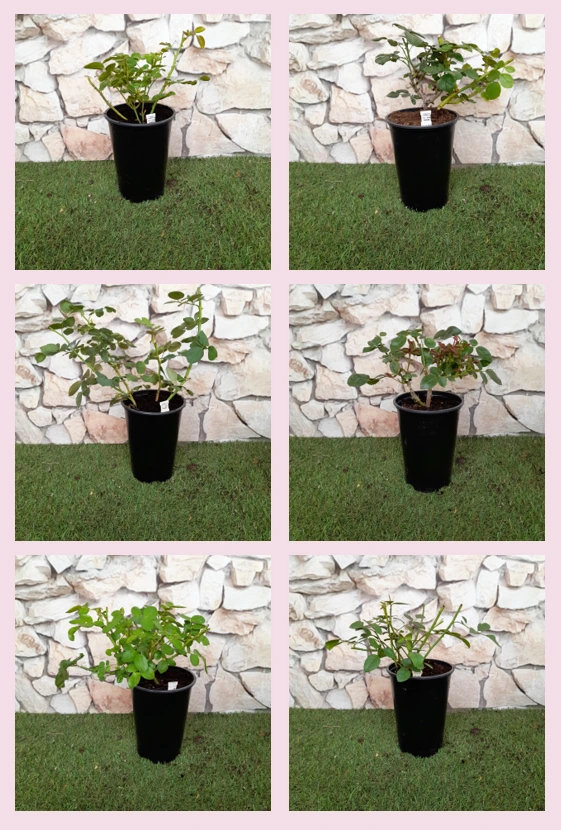
On a breezy Cornish afternoon, salt on your lips and sun on your face, ERINNERUNG AN BROD brings a sweep of velvety crimson to your coastal veranda. This historic hybrid Setigera climber is quietly reliable, forming deep roots that anchor it well where winds are brisk and soils need thoughtful drainage. Once a year it covers itself in perfumed, old-fashioned blooms, then rests, its dense, dark foliage giving a cool, calm backdrop to shingle, sea kale and lavender. Over time it settles in as a long-lived, own-root companion, building strength below ground in the first year, height and framework in the second, and its full ornamental presence by the third, so the rose’s character and patina can mature gracefully with your garden.
Usage options
| Target area |
Reasoning |
| Coastal veranda windbreak |
Train along a balustrade or light trellis to filter sea breezes and create a calm corner for chairs and a small table; its climbing habit and good anchoring roots suit exposed, salt-kissed sites on the coast for beginners. |
| Family garden pergola |
Use over a modest pergola where children play underneath; dense foliage and long canes offer dappled shade, while once-a-year flowering means less deadheading and fewer thorns at eye level for families. |
| Small shingle garden backdrop |
Planted at the back of a narrow shingle border, it forms a tall, leafy screen that sets off lower grassy textures and sea-themed perennials, giving height without demanding intensive care from time‑pressed. |
| Historic-style courtyard |
Ideal for recreating a period feel against stone or limewashed walls; the deep crimson, rosette blooms and strong perfume deliver an authentic old-rose atmosphere cherished by romantics. |
| Part-shade side passage |
Performs reliably in partial shade along a north-east or east-facing fence, where many roses struggle, keeping blooms richer in colour and foliage presentable for homeowners. |
| Low-maintenance feature fence |
Space plants along a boundary at the recommended distances to create a flowering curtain needing only annual tie-in and occasional trimming, suited to those who prefer structured but simple care for busy. |
| Large container on sheltered balcony |
Can be grown in a substantial 40–50 litre container with a solid obelisk or trellis, giving vertical drama and fragrance where soil is limited, provided watering is monitored carefully by urbanites. |
| Long-term heritage collection |
Its own-root form supports natural regeneration and long lifespan, allowing a carefully trained framework to be renewed from the base over the years, a thoughtful choice for dedicated collectors. |
Styling ideas
- Sea-breeze arch – Arch two plants over a gravel path with sea kale and Festuca beneath for a shingle-garden feel – ideal for coastal-style lovers.
- Veranda curtain – Let canes drape along a balcony rail with container lavender at their feet to catch the scent in evening air – perfect for beginners wanting impact.
- Heritage corner – Combine with old terracotta pots and Gypsophila repens for a soft, “girly” crimson-and-pale vignette – appealing to romantic homeowners.
- Parkland echo – Train along a simple timber fence with Echinacea in front to evoke classic estate planting – suited to those curating a heritage feel.
- Clay-soil screen – On heavier ground, raise a free-draining bed and use as a tall backdrop with drought-tolerant grasses – made for practical, low‑maintenance gardeners.
Technical cultivar profile
| Parameter |
Data |
| Name and registration |
Historical old garden rose from the Heritage rose collection; trade name ERINNERUNG AN BROD, also known as Souvenir de Brod in exhibitions; classified as an old rose, Hybrid Setigera climbing cultivar. |
| Origin and breeding |
Bred by Rudolf Geschwind in Austria around 1884 from Rosa setigera Michx × ‘Génie de Châteaubriand’; first distributed by Ketten Frères in Luxembourg according to early catalogue listings. |
| Growth and structural characteristics |
Strong climbing habit reaching about 240–380 cm in height, with a 160–260 cm spread; moderately thorny shoots carry dense, dark green, slightly glossy foliage suited to arbour, wall and fence training. |
| Flower morphology |
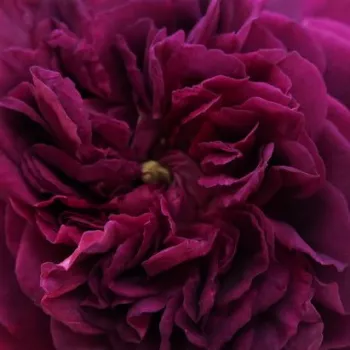
Large, very full, rosette-shaped blooms with more than 40 petals, borne mostly solitary; once-flowering in early summer, providing a concentrated display rather than repeat flushes later in the season. |
| Colour data and phenology |
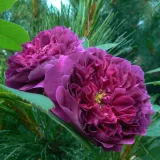
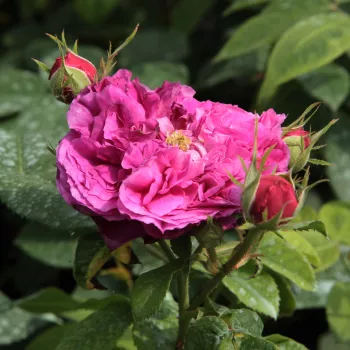
Closed buds are blackish-purple and velvety; flowers open deep carmine to crimson-red with a violet sheen, then weather towards greyish mauve tones; colour holds better in partial shade than in strong sun. |
| Fragrance and aroma |
Markedly strong, full-bodied fragrance typical of historic roses, noticeable at some distance in still air; highly ornamental but, due to the double form, offers limited pollen access for visiting insects. |
| Hip characteristics |
Hip set is generally sparse because of the very double flowers; when present, produces small, egg-shaped orange-red hips around 10–15 mm in diameter late in the season. |
| Resistance and winter hardiness |
Hardy to approximately −26 to −23 °C (RHS H7, USDA 5b, Swedish zone 4); tolerates summer heat if watered during prolonged drought; displays moderate resistance to black spot, mildew and rust in gardens. |
| Horticultural recommendations |
Best on well-drained soil with a support such as a pergola, wall or fence; suitable for partial shade where colours stay richer; maintenance is moderate, with occasional pest control and seasonal framework pruning. |
ERINNERUNG AN BROD offers a once-a-year wave of perfumed crimson, reliable height for screening and coastal-style structures, and the long, regenerative life of an own-root climber, making it a thoughtful choice for your next planting decision.