TAPIS PERSAN – red bedding floribunda rose - McGredy
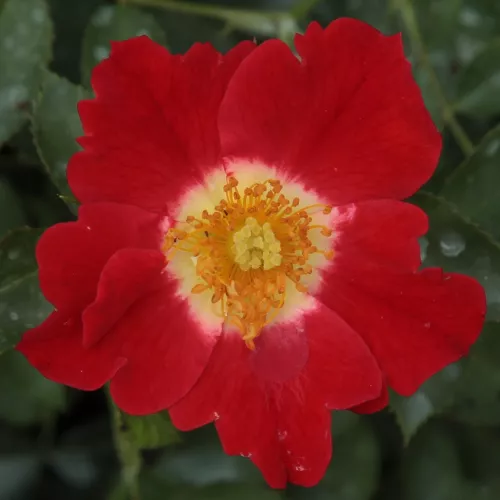
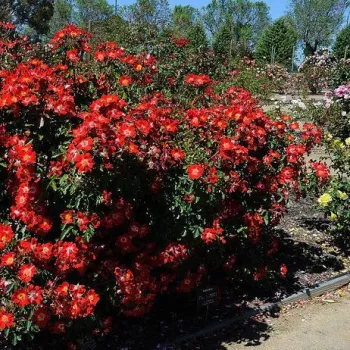
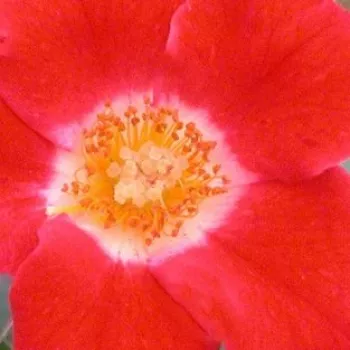
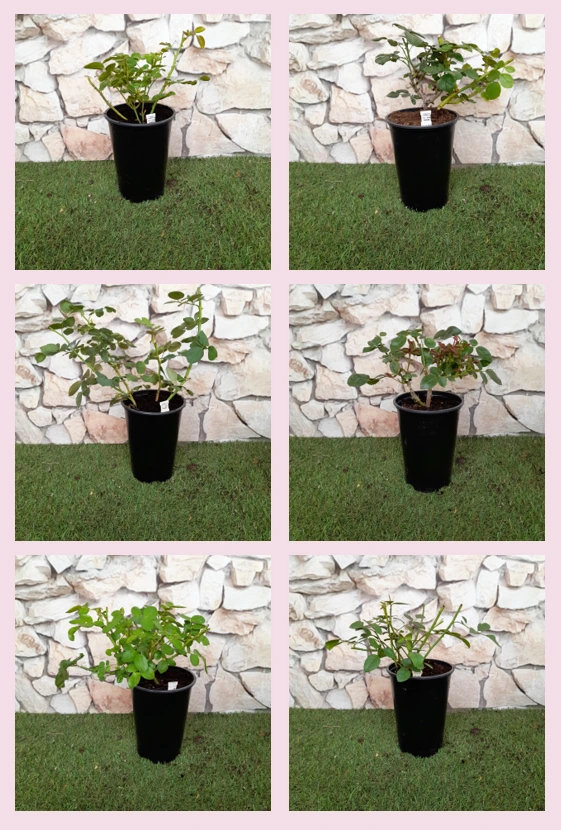
Imagine stepping onto your veranda after a blustery coastal walk, a cup of tea in hand, greeted by clusters of scarlet blooms splashed like a living Persian carpet against the wind. TAPIS PERSAN has single flowers with a glowing cream-white eye, creating a light, airy feel that suits shingle, pots and compact borders where space is precious. This resilient, bushy shrub anchors itself well while calmly handling typical coastal breezes and damp spells with reliable stability and poise. Its remontant flowering keeps colour coming in flush after flush, a real companion for busy gardeners who prefer watching to working. Own-root plants bring reassuring longevity, quietly regenerating from the base if cut back hard or nipped by weather, protecting your investment in a small family garden. In larger containers from 40–50 litres it settles into a steady rhythm of growth and bloom, offering impact from spring to autumn with only modest deadheading. Over its early years it builds roots in the first season, pushes stronger shoots in the second, and by the third year reaches full ornamental value in your coastal-style scheme. Designed for straightforward care rather than fussy exhibition treatment, this floribunda is a refreshing choice for casual, seaside-inspired spaces.
Usage options
| Target area | Reasoning |
|---|
| Coastal veranda in large container |
Ideal for a sheltered coastal veranda where space is tight but you still want drama at eye level; choose a 40–50 litre pot so the bushy plant can anchor well and cope with breezy, changeable conditions along the coast, perfect for the relaxed coastal-style lover homeowner |
| Small family front garden bed |
Masses of bright, single blooms create instant kerb appeal in a modest front border, without needing complex pruning; remontant flowering keeps the show running through the school term and holidays for those who just want reliable colour busy-gardener |
| Mixed border with pollinator focus |
The open, single flowers with accessible pollen attract bees and other beneficial insects, adding movement and life to a mixed planting; works well near herbs or perennials where wildlife value is as important as looks nature-conscious |
| Low, informal hedge along a path |
The slightly spreading, moderately thorny growth habit knits into a low, informal hedge that guides foot traffic while discouraging shortcuts across beds; its repeat bloom brightens everyday routes to the front door family-garden |
| Feature plant in a shingle or gravel strip |
Planted into a well-drained shingle or gravel strip, the dark foliage and vivid bi-coloured blooms stand out against pale stone; with sensible watering it copes well where traditional bedding might struggle in reflected heat design-conscious |
| Urban courtyard with careful ventilation |
In an urban setting where air can be still, placing it where breezes move through reduces humidity around foliage, supporting its medium disease resistance and keeping maintenance to light, occasional checks city-gardener |
| Season-long colour in a family seating area |
Remontant flowering with abundant second flush keeps the seating area bright from early summer into autumn; own-root growth means that even if children break a stem, fresh shoots regenerate, preserving the display for years young-family |
| Focal point in compact coastal-themed border |
As a single specimen at about 90 cm spacing, the striking red-and-cream flowers echo deckchair stripes and seaside hues, working especially well where breezy, damp weather would challenge fussier roses, suiting relaxed but style-aware gardeners beginner |
Styling ideas
- Shingle Charm – Set TAPIS PERSAN in a gravel strip with sea kale and blue Festuca for a breezy, low-care coastal look – ideal for coastal veranda owners seeking impact without fuss
- Veranda Showcase – Plant in a 50 litre pot with trailing thyme and dwarf Lavandula for colour, fragrance and bees around seating – perfect for hobby gardeners enjoying evening tea outdoors
- Pollinator Drift – Repeat in a loose ribbon with Lychnis alpina and dwarf Michaelmas daisies to create a pollinator-friendly tapestry – suited to wildlife-minded families
- Pathway Glow – Line a main garden path with evenly spaced plants and pale gravel mulch so the vivid flowers guide the way – good for homeowners wanting easy everyday structure
- Mixed Border Accent – Weave between Echinacea ‘Delicious Nougat’ and airy grasses for a modern, naturalistic border that still flowers for months – ideal for busy urban gardeners wanting long-season colour
Technical cultivar profile
| Characteristic | Data |
|---|
| Name and registration |
Floribunda shrub rose; registered as MACeye, marketed as TAPIS PERSAN from the Hand-painted roses collection, also known in exhibitions as ‘Eye Paint’. |
| Origin and breeding |
Bred by Samuel Darragh McGredy IV (McGredy Roses International, New Zealand) from ‘MACyeleye’ × ‘Picasso’; registered 1976, introduced after 1976 as a distinctive patterned floribunda. |
| Awards and recognition |
Gold medal at Baden-Baden 1976, Merit certificate New Zealand Experimental Garden 1976, plus Belfast awards including Best cluster-flowered rose and Merit diploma in 1978. |
| Growth and structural characteristics |
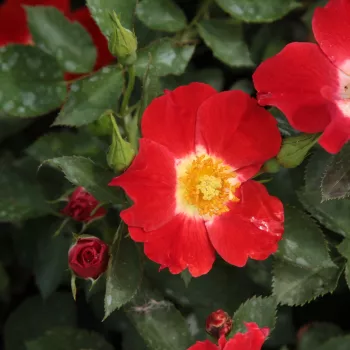
Bushy, slightly spreading shrub to around 120–180 cm tall and 65–95 cm wide, with moderately dense, dark green foliage and moderate prickliness; self-cleaning is partial. |
| Flower morphology |
Single, flat flowers in clusters, typically 5–12 petals and small (about 0.5–1.5 inches); remontant habit with abundant second flush for extended seasonal display in beds or containers. |
| Colour data and phenology |
Vibrant scarlet-red petals (RHS 46A) with cream-white central eye (c. 11C); buds deep red, blooms open to flat discs, then red lightens while the pale centre tends towards near white. |
| Fragrance and aroma |
Fragrance is very weak and barely perceptible, so it is chosen primarily for its striking colour effect and flower form rather than scent; suitable where pollen value and visual impact matter more. |
| Hip characteristics |
Produces moderate numbers of small, egg-shaped hips about 11–15 mm across, coloured RHS 33B; hips can add discreet seasonal interest if not all spent blooms are removed. |
| Resistance and winter hardiness |
Rated to about −21 to −18 °C (RHS H7; USDA 6b, Swedish zone 3); medium general disease resistance with good tolerance of powdery mildew and rust, black spot resistance moderate. |
| Horticultural recommendations |
Suited to beds, borders, hedges, urban green spaces and containers; prefers well-drained soil, regular watering in dry spells and a ventilated position; partial shade is tolerated without major loss of bloom. |
TAPIS PERSAN brings long-season colour, pollinator-friendly single blooms and adaptable bed-or-container use on a durable own-root framework, making it a thoughtful choice if you want lasting seaside-style character with minimal complexity.