FANTIN-LATOUR – pale pink historic centifolia rose - Bunyard
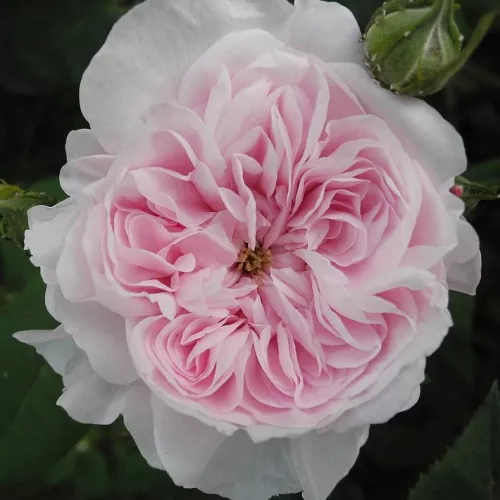
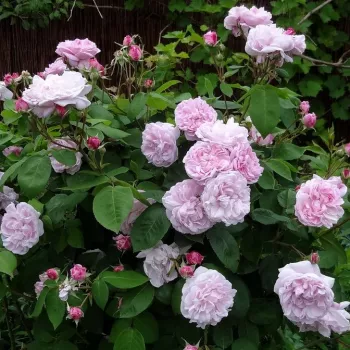
Let the romantic Fantin-Latour shrub bring a sense of quietly sunlit calm to your coastal veranda or family garden, combining heritage character with reassuring robustness. This historic centifolia rose offers once-a-year, abundantly fragrant flowering in soft, milky pale pink, held on bushy growth with dense, dark green foliage that feels naturally sheltering in breezier UK sites. It copes well with typical British summers, including blustery spells and salty air where good soil preparation supports firm anchoring and steady root development. As an own-root plant, it promises a long-lived, reliably regenerating shrub that can be trimmed and refreshed over the decades without losing its identity, ideal for those who prefer low-fuss endurance over constant replacing. In a typical setting it focuses on solid structure in its first year, fuller shoots and blossom in its second, and then by the third season settles into its mature, easy-going ornamental presence.
Usage options
| Target area | Reasoning |
|---|
| Coastal veranda in large containers |
Suiting UK coastal homes, this shrub’s bushy form and moderate height create a soft living screen in big pots, provided you use a stable 40–50 litre container with free-draining compost. Its once-a-season flower show is focused but generous, bringing a classic, strongly scented rose display to sheltered seating areas where wind and sea air are regular companions, yet gardening time is limited for the busy beginner. |
| Family garden border near seating |
The rich fragrance and soft pink rosettes work perfectly beside a terrace or garden bench, where you will actually pause to enjoy them. Dense foliage offers a leafy backdrop for perennials, while the shrub’s own-root habit supports long-term structure with straightforward pruning. Over time it becomes a stable feature rather than a plant that needs frequent replacement for the homeowner. |
| Informal flowering hedge |
Planted at the recommended hedge spacing, this variety forms a tall, lightly thorned, leafy barrier that is friendly to maintain and pleasant to brush past. Once-flowering roses are well suited to hedging, and own-root plants respond well to periodic hard cutting, helping to renew growth from the base and preserve the hedge line for the practical gardener. |
| Romantic specimen in a lawn or gravel |
As a single specimen, the height and spread give it real presence without overwhelming a modest family garden. The historical character and Award of Garden Merit status combine beauty with proven garden reliability, while moderate disease resistance and own-root resilience make its care manageable for the style-conscious owner. |
| Traditional mixed border with perennials |
The once-per-season flush pairs well with perennials that take over later in summer, and its bushy habit weaves nicely between ornamental grasses and lavender. Consistent structure year after year is supported by the own-root system, offering a stable backbone for the border without complex feeding or spraying for the relaxed gardener. |
| Partially shaded side garden |
This shrub tolerates partial shade, so it can brighten the side of a house or a corner where sun is limited to a few hours. In such spots, the pale flowers and strong scent stand out, and its reliable woody framework copes well with variable light and shelter, matching spaces that are often overlooked by the townhouse owner. |
| Wind-exposed but sheltered-by-structures corners |
Where walls or fences break the strongest gusts, this rose delivers a satisfying balance of sheltering foliage and manageable height. In typical coastal or open-situation gardens, thoughtful soil preparation encourages deep rooting and firm anchoring against recurrent wind, reducing the need for staking or frequent intervention for the coastal gardener. |
| Cut flowers for the house |
The large, very double blooms with their classic perfume are ideal for cutting during the main flowering period. Once flowering keeps management simple: you can focus on a few weeks of abundant indoor arrangements, then prune and lightly tidy spent blooms, allowing the shrub to rest and regrow steadily on its own roots for the rose enthusiast. |
Styling ideas
- Coastal-Veranda Nook – Position Fantin-Latour in a 50 litre frost-resistant container with dwarf lavender and sea-coloured cushions to echo beach tones – ideal for coastal-style lovers wanting easy romance.
- Heritage-Hedge Walk – Plant a loose hedge along a path, underplanting with dwarf fountain grasses so the billowing flowers rise above soft seedheads – for families who like a traditional yet low-fuss boundary.
- Tea-Garden Corner – Place a single shrub by a bistro set, paired with Lychnis alpina and silvery Festuca to enhance fragrance and texture – suited to small-garden owners who enjoy quiet morning coffee outdoors.
- Pastel-Mixed Border – Weave this rose through a border of pale perennials, allowing its dense foliage to act as a structural anchor – perfect for hobby gardeners wanting stable shape without complex design.
- Gravel-Courtyard Focus – Set one specimen in a gravel circle with simple terracotta pots of dwarf lavender for a low-maintenance, historic feel – for busy urban gardeners seeking character with minimal upkeep.
Technical cultivar profile
| Feature | Data |
|---|
| Name and registration |
Historic centifolia shrub rose traded as Fantin-Latour, also known as a Bunyard selection; an unregistered variety belonging to the historical rose group with verified cultivar authenticity. |
| Origin and breeding |
Selected by Edward A. Bunyard at Bunyard’s Nursery in the United Kingdom, bred around 1938 and introduced locally in 1900, reflecting traditional British shrub-rose breeding heritage. |
| Awards and recognition |
Holds the Royal Horticultural Society Award of Garden Merit, recognising dependable garden performance, ornamental value and relative ease of cultivation under typical UK conditions. |
| Growth and structural characteristics |
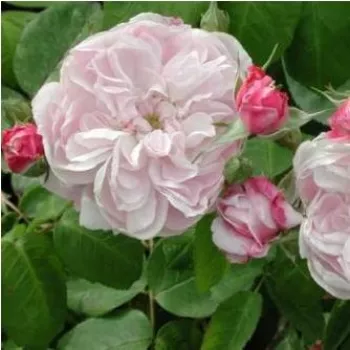
Bushy shrub 140–220 cm high and 120–190 cm wide, with dense, dark green, slightly glossy foliage and sparse thorns; forms a substantial, long-lived structure suitable for hedging or specimen use. |
| Flower morphology |
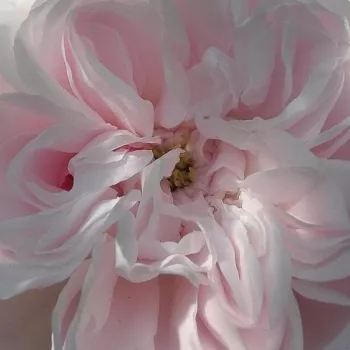
Large, very double, rosette-shaped blooms with over 40 petals, usually borne singly on stems; once-flowering during the season, giving a concentrated flush of classic old-rose character. |
| Colour data and phenology |
Pale pink flowers, ARS Lp, RHS 65C outer and 65B inner; buds pastel pink, opening to milky pink rosettes that may fade towards creamy or near-white tones in strong sunlight. |
| Fragrance and aroma |
Strong, easily noticeable fragrance with a classic old-rose character; flowers are highly double so mainly ornamental rather than pollinator-focused, best enjoyed near paths and seating. |
| Hip characteristics |
Hip set is generally limited due to the very double flower form; where produced, hips are small, spherical, orange-red, about 9–15 mm across, giving a discreet late-season accent. |
| Resistance and winter hardiness |
Hardy to approximately −34 to −32 °C (RHS H7, USDA 4a), with moderate disease resistance; generally good against powdery mildew, with black spot and rust at moderate levels. |
| Horticultural recommendations |
Best in well-drained but moisture-retentive soil; plant 90–165 cm apart according to use. Medium maintenance with occasional deadheading and health checks; suitable for borders, hedges and specimen planting. |
FANTIN-LATOUR offers richly fragrant, once-a-season pale pink blossom on a robust, bushy historic shrub whose own-root form supports long life and easy renewal; consider it if you value traditional charm with manageable care.