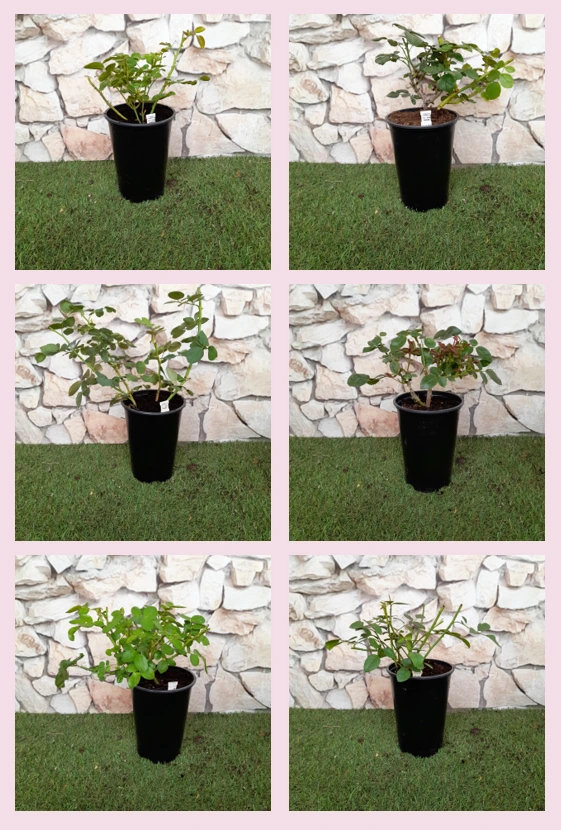
LOUISE BUGNET – white park rose - Bugnet
Imagine stepping onto your veranda after a blustery walk, the air still tasting of the sea, and being greeted by dense, salt-kissed white blooms that seem to glow against grey-green foliage; Louise Bugnet forms a naturally upright, compact hedge that anchors itself steadily even where coastal winds test planting schemes and drainage must quietly cope with heavy, moisture-laden soils, while its good hardiness shrugs off winter storms and late frosts. In a large container of at least 40–50 litres this hybrid Rugosa settles into shingle-style spaces and small gardens just as well as a flowerbed, the fragrance carrying on sunny days like a memory of beach roses along the dunes. As an own-root shrub it offers reassuring longevity, regrowing strongly from its base if ever cut back hard, and building year-on-year from establishing roots in its first season, through bolder shoots in its second, to full ornamental presence by its third.
Usage options
| Target area | Reasoning |
|---|
| Coastal veranda in large containers |
In a 40–50 litre pot, this compact hybrid Rugosa forms a stable, upright shrub that copes well with breezy sites and bright light, ideal for bringing classic white flowers and strong scent close to seating areas on small coastal terraces for the relaxed beach-lover homeowner |
| Shingle or gravel front garden |
The dense, grey-green foliage and radiant white flowers read beautifully against shingle or gravel, evoking a dune-side atmosphere while requiring only basic care once established and offering a quietly structured presence for those seeking informal, seaside character with minimal fuss beginners |
| Informal flowering hedge |
Planted at around 100 cm apart, the upright, compact framework and good height allow an informal screen that marks boundaries without feeling heavy, bringing repeated flowering and strong perfume along paths and driveways for families wanting softness instead of hard fencing gardeners |
| Mixed shrub and perennial border |
The rounded habit and reliable white, double flowers provide a calm focal point among grasses and perennials, acting as a long-term structural anchor that ties the border together from year to year for design-conscious owners of average-sized family gardens planners |
| Wind-exposed family garden corners |
Its robust shrub framework copes with exposed positions where many roses sulk, giving you a tide of white blossom and scent while standing firm in sites that often feel too blustery for finer plants, especially in gardens open to coastal breezes and Atlantic weather systems coast-dwellers |
| Cool-climate or frost-prone plots |
Exceptionally low temperature tolerance means this variety endures harsh winters and late frosts without losing its long-term shape, ensuring a dependable shrub presence even after difficult seasons for those gardening in chillier or more exposed UK locations rural-owners |
| Long-term framework planting in new gardens |
As an own-root shrub that rebuilds from the base, it forms a lasting framework that can be refreshed by rejuvenation pruning, giving a sense of permanence and allowing the rest of the planting to change around it over the years for householders planning a settled, evolving garden long-termers |
| Low-maintenance, scented viewing point |
Placed where you can sit and enjoy it, the strong, classic rose fragrance and self-cleaning blooms limit deadheading while still offering a refined experience of scent and colour; it thrives where coastal winds test planting schemes and drainage must quietly cope with heavy, moisture-laden soils for time-pressed but scent-loving urbanites |
Styling ideas
- Shingle-Dune Nook – Combine with sea kale and blue Festuca in gravel for a soft, maritime look that suits front gardens near the coast – ideal for relaxed seaside-style lovers
- Veranda Tea Corner – One specimen in a 50 litre container with low lavender and lanterns creates a wind-sheltered, scented seat – perfect for busy homeowners enjoying evening tea outdoors
- Soft Boundary Hedge – Repeat-plant along a front boundary with lamb’s-ear at the base for a child-friendly, touchable edge – suited to family gardens wanting a gentle screen
- White-and-Grass Border – Mix with fountain grass and Macedonian scabious for airy movement and a calm white focus – for gardeners seeking an elegant yet easy seasonal display
- Crisp Winter Structure – Use as a structural anchor among perennials that die back, relying on its hardy framework and sparse, bright hips – good for planners wanting year-round shape
Technical cultivar profile
| Property | Data |
|---|
| Name and registration |
Park and shrub rose from the Hybrid Rugosa group, marketed as LOUISE BUGNET – white park rose - Bugnet, with American Rose Society exhibition name Louise Bugnet; unregistered cultivar name. |
| Origin and breeding |
Bred by Georges Charles-Jules Bugnet in Canada around 1960 from ‘Martha Bugnet’ × ‘Thérèse Bugnet’, reflecting cold-climate hardiness and classic rugosa character for landscape and park use. |
| Awards and recognition |
Acknowledged in Scandinavia as a robust, ornamental shrub rose, including the Swedish Årets Ros (Rose of the Year) 2020 award, highlighting its garden value and reliability in colder climates. |
| Growth and structural characteristics |
Upright, compact shrub 120–180 cm tall and 100–150 cm wide, with dense, matt grey-green foliage and sparse prickles; generally self-supporting, forming a substantial, hedge-capable garden presence. |
| Flower morphology |
Large, double, flat blooms with 26–39 petals, usually in clusters of three to five per stem; remontant with a lighter second flush, the spent flowers tend to drop naturally, easing deadheading work. |
| Colour data and phenology |
Buds show purple-red striping over a white base, opening to pure, radiant white flowers with subtle greenish tints; colour holds well with minimal fading, giving a consistently clean white display over time. |
| Fragrance and aroma |
Classic rose fragrance, strong and noticeable from a distance, evoking traditional rugosa perfume; flowers are mainly ornamental rather than pollinator plants, as the double form hides most stamens. |
| Hip characteristics |
Hips form only occasionally due to the double flowers, but when present are spherical, bright red and around 20–30 mm wide, adding modest late-season colour without dominating the shrub’s appearance. |
| Resistance and winter hardiness |
Extremely winter-hardy down to about -40 °C (H7, USDA 2b) with good heat and moderate drought tolerance, but notably very susceptible to black spot, mildew and rust, so regular protection is advised. |
| Horticultural recommendations |
Suited to flowerbeds, hedges, specimen and park planting at 100–180 cm spacing; tolerates partial shade and benefits from well-drained soil, good air flow and a consistent preventative plant protection regime. |
LOUISE BUGNET offers hardy structure, glowing white fragrance and long-term own-root resilience, making it a reassuring choice for those shaping a calm, coastal-inspired family garden.