FELBERG'S ROSA DRUSCHKI – pink park rose - Felberg-Leclerc
Imagine a sheltered coastal veranda where sunlight catches deep pink goblet blooms above dark green foliage, giving you a sense of quiet refreshment after a windy walk on the shingle. FELBERG'S ROSA DRUSCHKI settles in steadily, with roots in year one, strong shoots in year two and full ornamental presence in year three, so you can enjoy its reliability in a family garden without constant attention. As a taller, upright shrub it offers natural windbreak structure, while its remontant flowering provides generous continuity of colour through the season. The own‑root form supports long-term regeneration and a stable look over decades, even if the weather turns rough. Choose a free-draining spot where it can anchor itself securely in coastal breezes and allow enough room for its height to develop into a characterful backdrop that frames your outdoor tea-time moments.
Usage options
| Target area |
Reasoning |
| Coastal veranda windbreak shrub |
The tall, upright habit creates a living screen that breaks salty breezes without feeling oppressive, while remontant flowering keeps the backdrop colourful for relaxed outdoor seating. Ideal for beginners. |
| Feature rose in a small front garden |
Its strong vertical presence and deep pink goblet blooms give immediate street-side impact from a single plant, providing structure and colour in tight spaces with only moderate ongoing care. Suits busy homeowners. |
| Mixed coastal border with lavender and grasses |
Works well in free-draining borders with sea kale, Festuca and Lavandula, where its long-lived own-root framework offers dependable structure in wind and rain along UK coasts. A good choice for coastal-style lovers. |
| Season-long colour by a sunny terrace |
Remontant flowering with a plentiful second flush means repeated waves of pink colour close to seating areas, paired with a medium, sweet fragrance for evening use. Well suited to relaxed tea-drinkers. |
| Background hedge along a boundary fence |
Plant at hedge spacing to form a tall, flowered backdrop that defines the garden, with medium maintenance and the reassurance of own-root longevity for stable design over the years. Ideal for long-term planners. |
| Large container on a sheltered balcony |
In a 40–50 litre pot with good drainage, its upright growth makes a strong vertical accent while own-root resilience helps it recover from wind rock and occasional missed watering. Suitable for space-conscious urbanites. |
| Classic rose border with cut-flower potential |
Large, double, chalice-shaped blooms on upright stems lend themselves to cutting, bringing nostalgic, medium-strength fragrance indoors while the shrub continues to flower outside. Attractive for home arrangers. |
| Long-term park-style planting in a family garden |
Suited to loosely structured park-style groupings where its long lifespan and steady framework support sustainable design, with some deadheading and basic care to keep it tidy in everyday use. Best for patient garden starters. |
Styling ideas
- Shell-Walk Veranda – Line a sheltered deck with FELBERG'S ROSA DRUSCHKI in large containers, underplanted with silver sea kale to echo beach pebbles – for coastal veranda owners seeking soft privacy.
- Cornish Bank – Combine this tall rose behind drifts of Festuca and lavender along a sunny boundary, creating a wind-softening pink-and-blue ribbon – for gardeners in breezier coastal plots.
- Tea-Corner Backdrop – Plant one specimen at the back of a small terrace bed with low herbs at its feet, framing a bistro set – for busy homeowners wanting impact from a single rose.
- Pastel Promenade – Space several shrubs along a front path with bellflowers and soft grasses between, using the vertical pink blooms as repeating accents – for those who enjoy traditional, park-like structure.
- Balcony Statement Pot – Grow in a 50-litre tub with good drainage and a simple gravel mulch, letting the upright stems rise above low, drought-tolerant groundcover – for urban residents with limited floor space.
Technical cultivar profile
| Parameter |
Data |
| Name and registration |
Current trade name FELBERG'S ROSA DRUSCHKI, also listed as Felberg-Leclerc; shrub, Hybrid Perpetual park rose used as an exhibition bush; unregistered cultivar with ARS exhibition name Felberg’s Rosa Druschki. |
| Origin and breeding |
Bred in Germany around 1925 by Johannes Felberg-Leclerc from ‘Frau Karl Druschki’ × ‘Farbenkönigin’; introduced commercially by Hazlewood Bros. Pty. Ltd. in Australia in 1931 for garden and park use. |
| Growth and structural characteristics |
Strong, upright shrub 150–220 cm tall with 90–140 cm spread, moderately thorny shoots and moderately dense, slightly glossy dark green foliage forming a structural, park-style framework in time. |
| Flower morphology |
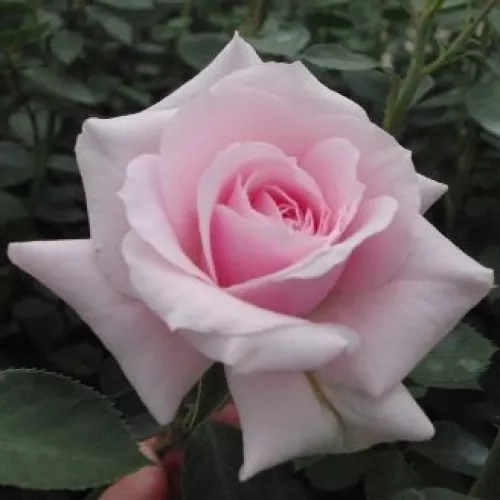
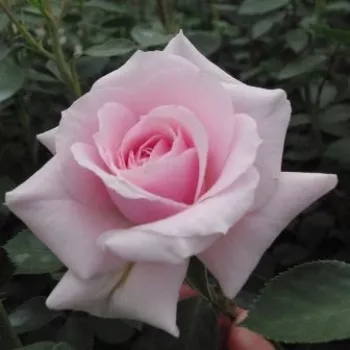
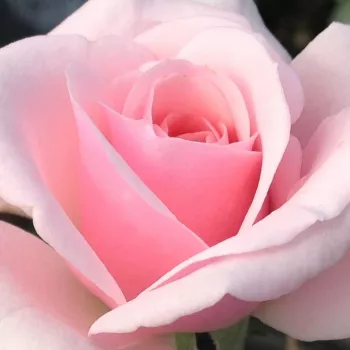
Large, double blooms with 26–39 petals, goblet to chalice shaped, carried mainly in clusters; remontant habit with a generous second flowering that extends ornamental value well beyond first flush. |
| Colour data and phenology |
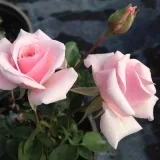
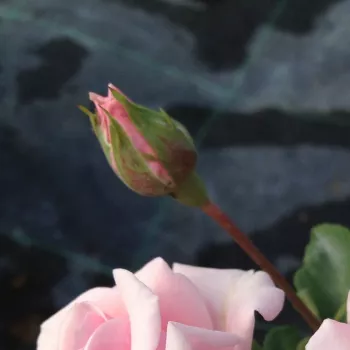
Rich deep pink with a cool tone; outer petals ARS DPk, RHS 66C, inner 65D. Buds raspberry-pink, opening to intense purple-pink, then softening to pastel lilac-pink shades, with better colour retention in cooler weather. |
| Fragrance and aroma |
Medium-strength, noticeably scented flowers with a delicately sweet, classic rose character; fragrance is appreciable at close quarters and contributes to the plant’s value near seating areas and paths. |
| Hip characteristics |
Rosehip production is generally low due to the full double blooms, but when present, hips are small, spherical, red and around 8–13 mm in diameter, adding a discreet seasonal accent late in the year. |
| Resistance and winter hardiness |
Hardy to around −21 to −18 °C (RHS H7, Swedish zone 3, USDA 6b). Disease resistance is medium for powdery mildew, black spot and rust; benefits from regular watering in heat and basic preventive care. |
| Horticultural recommendations |
Prefers a sunny, well-drained position; medium maintenance with some deadheading as self-cleaning is weak. Recommended spacings range from 100–180 cm depending on use, with lower densities for specimen planting. |
FELBERG'S ROSA DRUSCHKI offers upright structure, season-long colour and long-lived own-root resilience for family gardens and coastal verandas; consider it if you value enduring presence with moderate, straightforward care.