FÉLICITÉ ET PERPÉTUE – white historic rambler rose (climbing/trailing) - Jacques
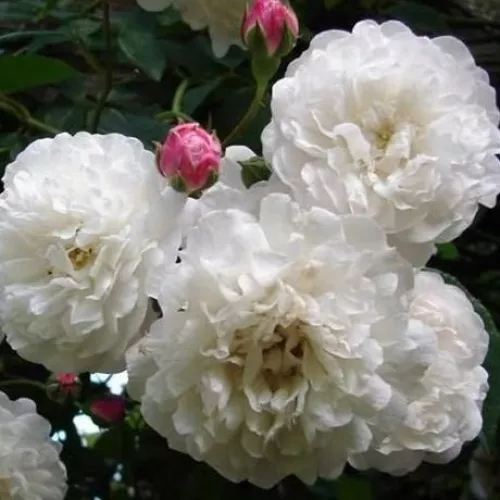
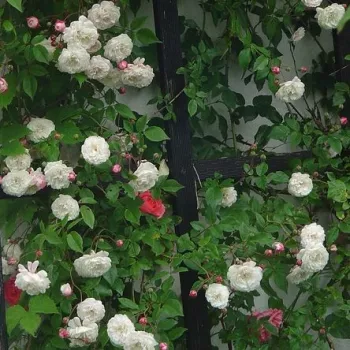
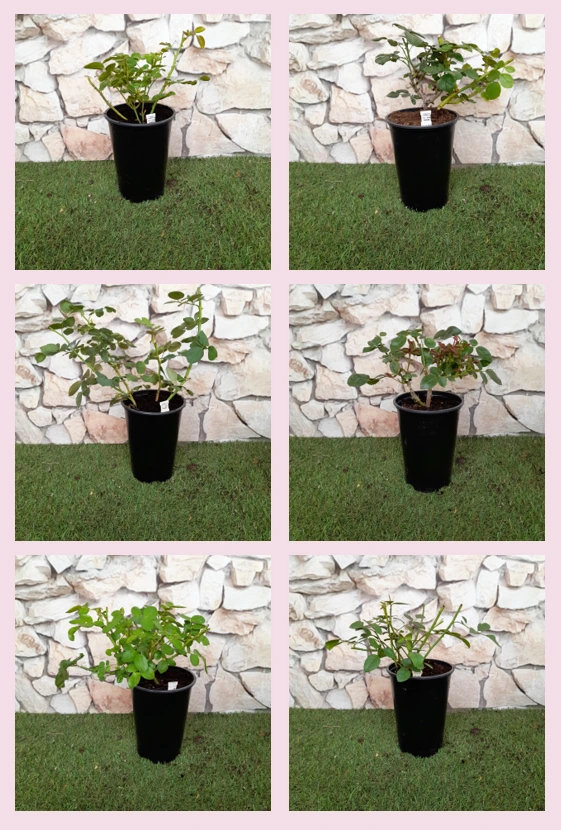
Imagine a sheltered coastal veranda where this own‑root rambler slowly weaves a living curtain of blossom, bringing a sense of seaside refreshment to your everyday garden life. FÉLICITÉ ET PERPÉTUE is an easy‑care heritage climber bred for generous coverage rather than fuss, anchoring itself steadily even where breezes and showers are frequent and drainage needs thoughtful management. Its dense, mid‑green foliage clothes walls, pergolas and old trees, while clusters of small, creamy‑white, pompon blooms create a soft, romantic backdrop for family time outdoors. Once established, this long‑lived, own‑root plant offers dependable structure with minimal pruning, rewarding patient gardeners with a strong development arc – first year roots, second year shoots, and by the third year full ornamental impact. Award‑winning garden credibility, low chemical reliance and solid health make it a reassuring choice for beginners who want charm without constant spraying, while its historic character and occasional orange‑red hips appeal equally to collectors seeking an authentic period rambler.
Usage options
| Target area | Reasoning |
|---|
| Family pergola or arbour in a small to medium garden |
This variety builds a leafy, flower‑laden canopy with relatively low maintenance once trained, giving dappled shade and privacy ideal for seating or children’s play corners. A good option for those who prefer easy-care. |
| Coastal veranda or sheltered seaside terrace |
Its robust foliage, good health and reliable growth suit milder coastal conditions where wind and salt‑tinged rain are common, especially when given a well‑drained planting pocket to cope with wetter spells. Well suited to householders seeking resilience. |
| Clothing a north‑ or east‑facing wall |
Tolerant of partial shade, it will still produce generous clusters of small, creamy‑white pompons, using the wall’s warmth to mature wood while needing only light annual tidying. Ideal for gardeners wanting structure. |
| Training into a mature tree |
The long, flexible canes and sparse prickles make it easier to weave through branches, creating a cascading effect of blossom high above eye level with no need for heavy pruning. Appealing to romantics who enjoy theatricality. |
| Low‑intervention, low‑spray garden schemes |
With strong disease resistance and reliable performance in poorer soils, it fits planting plans where chemicals are minimised and plants are expected to thrive largely unaided. Suitable for gardeners prioritising health. |
| Long‑term heritage feature in a settled family garden |
As an own‑root, historically proven rambler, it regenerates well from the base and builds presence over decades, retaining ornamental value even after hard pruning or weather damage. A reassuring choice for owners valuing longevity. |
| Large containers on patios or roof terraces |
In a 50–70‑litre container with sturdy support, it can be kept in scale yet still produce an impressive flush of bloom, turning compact outdoor spaces into calm, leafy retreats. A practical option for balcony and patio newcomers. |
| Romantic historic or cottage‑style borders |
Once‑a‑year, concentrated flowering delivers a memorable summer display above perennials like sea kale, Festuca and lavender, giving seasonal drama that anchors the whole design. Well matched to gardeners who appreciate tradition. |
Styling ideas
- Seaside-Veranda Screen – Train along a rail with sea kale, Festuca and lavender beneath, echoing shingle‑beach planting – for coastal homeowners wanting a calm, sheltered sitting area.
- Romantic-Pergola Walkway – Let it drape over a narrow pergola with soft underplanting of Heuchera and grasses – for families who enjoy a storybook entrance to the garden.
- Historic-Garden Focal – Use as a specimen on an old wall with terracotta pots and vintage furniture – for heritage‑loving gardeners building a period atmosphere.
- Tree-Canopy Cascade – Thread canes through a small tree, leaving the ground layer simple with lawn or low groundcovers – for busy owners wanting impact without complex borders.
- Cottage-Hedge Backdrop – Grow as an informal, flowering backdrop behind mixed perennials and lupins – for those seeking a soft, romantic frame to a family lawn.
Technical cultivar profile
| Aspect | Data |
|---|
| Name and registration |
FÉLICITÉ ET PERPÉTUE, historic Hybrid Sempervirens rambler; commercial heritage climber, ARS exhibition name Félicité-Perpétue; unregistered cultivar traditionally listed among Dowager and old rambler classes. |
| Origin and breeding |
Bred by Antoine Jacques in France, 1827, at the Château de Neuilly gardens from Rosa sempervirens crossed with a Noisette rose, combining evergreen influence with refined cluster flowering and climbing habit. |
| Awards and recognition |
Holds the Royal Horticultural Society Award of Garden Merit since 1993 and recognised as an ARS Dowager Queen in 2001, confirming dependable garden performance and historical interest for collectors and enthusiasts. |
| Growth and structural characteristics |
Strong, climbing rambler with 5–8 m height and 3–5 m spread, dense mid‑green glossy foliage, flexible canes and sparse prickles; moderate self‑cleaning, some clusters benefit from light deadheading after the main flush. |
| Flower morphology |
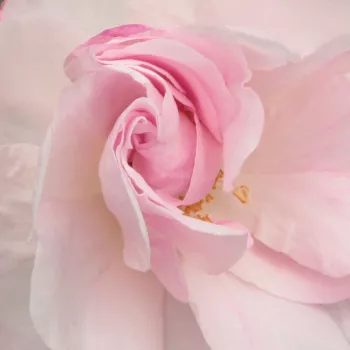
Small, 0.5–1.5 inch, very double pompon blooms in clustered inflorescences, each with over 40 petals, creating a full, globular shape; once‑flowering habit provides a concentrated, spectacular seasonal display in early summer. |
| Colour data and phenology |
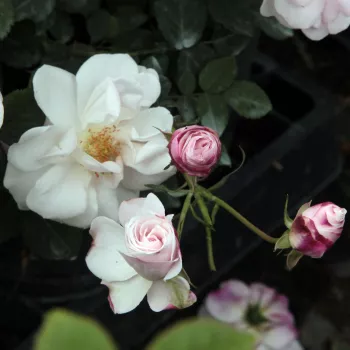
Cream‑white base with faint pink sheen; buds pale pink‑cream, opening to cream‑white with pink edges, maturing to clean off‑white; colour holds well in sun with little fading, giving a uniform, soft white canopy in full bloom. |
| Fragrance and aroma |
Fragrance is very weak, with a subtle classic rose character when noticed; primarily grown for visual effect and textural impact of dense clusters rather than scent, making it unobtrusive near seating or windows. |
| Hip characteristics |
Occasional small spherical hips, 8–12 mm, orange‑red when ripe; not heavily produced but can give a light decorative effect into autumn, especially when plants are not heavily pruned immediately after flowering. |
| Resistance and winter hardiness |
Reliable garden health with good resistance to powdery mildew, black spot and rust; hardy to around −21 to −18 °C (RHS H7, USDA 6b), tolerating heat and moderate drought once established in reasonably prepared soil. |
| Horticultural recommendations |
Best on walls, pergolas, arbours or trained into trees; plant 2.1–3.85 m apart depending on effect, in well‑drained soil; low maintenance, benefits from occasional thinning of old canes and tying in long, new shoots. |
FÉLICITÉ ET PERPÉTUE offers easy long-term coverage, outstanding health and heritage character in a durable own-root form that settles in for decades, making it a thoughtful choice if you want a quietly impressive garden partner.