FERDINAND PICHARD – pink historic perpetual hybrid rose - Tanne
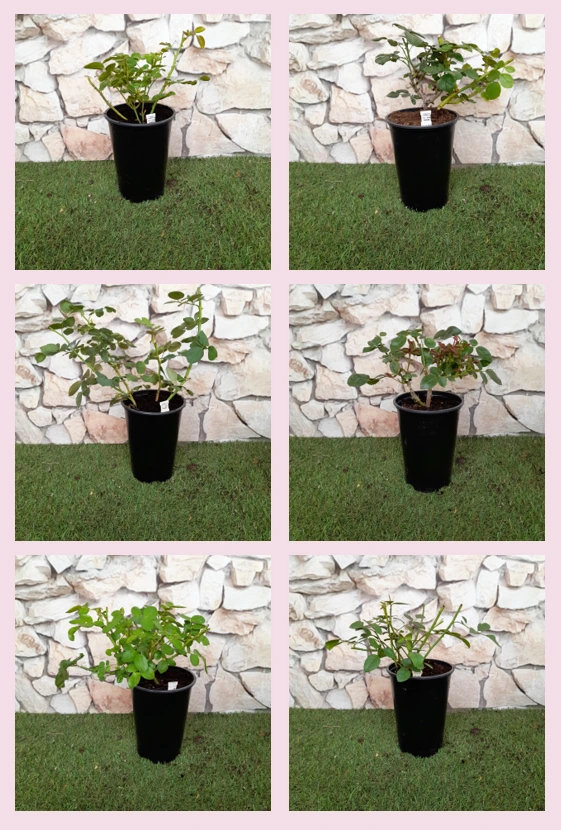
Sea-breeze verandas, shingle and sun suit this heritage beauty, whose striped blooms bring instant character to compact family plots while still feeling refreshingly natural. Bred in France in 1921, its classic Hybrid Perpetual form offers reliable remontant flowering and a strong, lingering fragrance that drifts through open doors and windows. Planted in a deep bed or a 40–50 litre container with good drainage, it establishes steadily, anchoring itself securely where windy, showery weather regularly sweeps in from the coast. Own-root plants age gracefully, regenerating from the base for a long-lived structure and stable ornamental value. You can expect a quiet first season focused on root building, increased shoot and flower growth in the second year, and full garden presence by the third. Ideal if you would like an atmospheric, historic rose without complex maintenance.
Usage options
| Target area | Reasoning |
|---|
| Coastal veranda in a large container |
In a 40–50 litre pot, this upright historic shrub offers generous repeat flowering and fragrance without overwhelming a small seating area, while practical drainage helps it cope with blustery, rain-laden seaside weather – perfect for the relaxed coastal-style beginner. |
| Feature rose for small to medium flower beds |
The bushy growth and tall habit allow a single plant to read as a focal point among gravel, shingle or perennials, giving long-season colour and scent with only occasional deadheading – well suited to the busy family-garden homeowner. |
| Lightly formal historic rose border |
Planted at the recommended spacing, its upright, repeat-flowering character and moderately dense foliage create a traditional, slightly formal line that still feels relaxed, ideal for echoing period architecture in an easy-care way for the time-conscious garden enthusiast. |
| Informal hedge or boundary marker |
At around 120–180 cm high with reliable remontant blooms, it forms an airy, scented screen that marks boundaries without feeling heavy, while own-root stamina allows the hedge to mature steadily over many years for the long-term-minded garden planner. |
| Part-shade side garden or narrow passage |
Tolerant of partial shade, this variety still produces full, strongly scented flowers where sunlight is limited for part of the day, helping you make use of awkward side returns or passages, especially valuable to space-conscious urban gardeners. |
| Cutting patch for fragrant historic blooms |
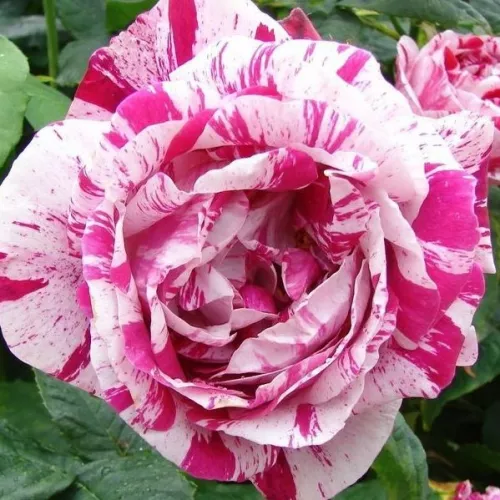
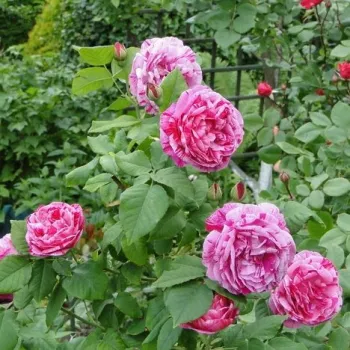
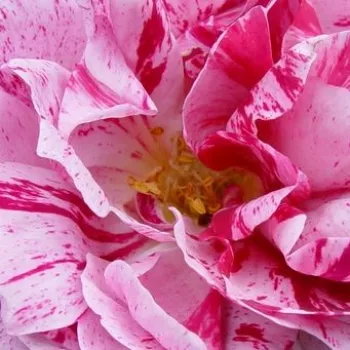
The large, full, cup-shaped flowers with their creamy pink and carmine striping are superb for vases, and remontant flowering means you can cut stems through the season while the shrub quietly regrows, ideal for the home-based flower-arranging hobbyist. |
| Mixed planting with drought-aware perennials |
Partnered with resilient companions such as Sedum acre or Mexican daisy, this rose enjoys their ground-cover and textural contrast, while regular, deeper watering keeps its moderate drought tolerance supported for the design-focused but practical garden stylist. |
| Long-term, low-replacement planting scheme |
As an own-root historic rose with solid winter hardiness and moderate disease resistance, it is intended to settle in and improve over time rather than be replaced frequently, rewarding patient establishment with enduring value for the forward-looking garden investor. |
Styling ideas
- Seaside-nook – Place one plant in a 40–50 litre tub on a sheltered veranda with shingle, pebbles and a bistro set – ideal for coastal-style lovers wanting low-fuss romance.
- Pastel-border – Combine with soft grasses like Festuca and pale perennials to let the striped blooms stand out – for homeowners seeking a gentle, family-friendly border.
- Heritage-walk – Line a path at wide spacing to create an informal, scented avenue with a nostalgic feel – for history-minded gardeners who enjoy evening strolls.
- Cottage-cutting – Mix with lavender and airy daisies to give a ready-made source of fragrant stems for the house – for creative hobby florists with limited time.
- Courtyard-focus – Use a single specimen in a deep container framed by sea kale or creeping bugle for foliage contrast – for urban balcony and patio owners wanting a clear focal point.
Technical cultivar profile
| Property | Data |
|---|
| Name and registration |
FERDINAND PICHARD – Hybrid Perpetual, historic perpetual hybrid rose; trade names include Ferdinand Pichard Heritage rose Tanne; unregistered cultivar with established exhibition recognition. |
| Origin and breeding |
Bred by Rémi Tanne in France and introduced by Eugène Turbat & Cie in 1921; parentage unknown, classic Hybrid Perpetual background typical of early 20th-century French breeding. |
| Awards and recognition |
Royal Horticultural Society Award of Garden Merit (1993); American Rose Society “Victorian Certificate” multiple years; Best Old Garden Rose at Rosexpo Montréal (1999). |
| Growth and structural characteristics |
Upright, bushy shrub, about 120–180 cm tall and 100–150 cm wide, moderately thorny, with moderately dense, slightly glossy light to mid-green foliage giving a relaxed but structural presence. |
| Flower morphology |
Large, full, cup-shaped flowers, usually borne singly, with 26–39 petals; remontant habit with a plentiful second flush provides good ornamental value through the main garden season. |
| Colour data and phenology |
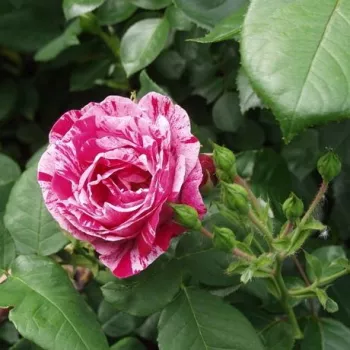
Pale pink base with vivid carmine-red striping; buds deep pink with marbling, colour moderate for sunfastness and may fade or blur in heat, adding a soft vintage character as blooms age. |
| Fragrance and aroma |
Strong, long-lasting classic rose scent with traditional Hybrid Perpetual character; flowers prioritise ornamental value, with dense petalling that limits pollinator access to nectar and pollen. |
| Hip characteristics |
Occasionally produces small, ovoid orange-red hips around 12–18 mm diameter, adding discreet seasonal interest without significantly affecting the plant’s main floral display period. |
| Resistance and winter hardiness |
Very hardy shrub (approx. −32 to −29 °C; RHS H7, USDA 4b, Swedish Zon 5); moderate disease resistance with good powdery mildew tolerance and average black spot and rust resistance. |
| Horticultural recommendations |
Prefers deep, well-drained soil; regular watering in dry periods and occasional deadheading improve performance; medium maintenance, suitable for beds, hedges, specimen planting and cut flowers. |
FERDINAND PICHARD offers remontant, strongly scented, striped blooms on a hardy, long-lived own-root shrub that matures steadily in gardens and large containers, making it a thoughtful choice if you enjoy enduring, characterful roses.