FIMBRIATA – pale pink historic old garden rose - Morlet
Step onto your veranda after a breezy beach walk and let ‘Fimbriata’ frame your tea-time with softly scented, pale pink, fringed blooms that feel naturally at home in shingle and salt-kissed gardens, while its deep roots give reliable anchoring even where coastal winds test young plants. This historical Hybrid Rugosa shrub offers easy, low-input maintenance and sturdy resilience, thriving in poorer, free-draining soils that many modern roses would reject, and tolerating periods of summer drought without fuss. Over time, its own-root strength translates into quiet longevity, with the plant steadily rebuilding itself after tough seasons for a consistently graceful silhouette. Plant once, water wisely, and let years one, two and three unfold from roots to shoots to full character.
Usage options
| Target area |
Reasoning |
| Coastal wind-filter hedge along a veranda or seating area |
The bushy, upright habit and dense foliage create an informal wind-filter that softens gusts without feeling heavy or over-manicured. Strong rooting and sturdy growth provide dependable anchoring in exposed, breezy coastal gardens, giving shelter for relaxed outdoor moments for beginners. |
| Low-maintenance, pale pink feature shrub in a family border |
As a classic shrub rose with low pruning and feeding needs, ‘Fimbriata’ suits busy households that want romance without routine fuss. Light deadheading and an annual tidy are usually enough to keep it flowering, keeping rose care accessible for hobby-gardeners. |
| Historic accent in a small to medium cottage-style garden |
Introduced in 1891, this old garden rose adds period charm without the typical fragility of many heritage varieties. Its reliable shrub structure and capacity to regenerate from its own roots support a long-lived planting that matures gracefully for homeowners. |
| Shingle or poor-soil strip near a coastal driveway or path |
As a Hybrid Rugosa that copes well in poorer, drier soils, this rose is practical where richer compost is hard to maintain. Once established, it tolerates spells of low rainfall and less-than-ideal ground, reducing the need for constant watering for busy-urbanites. |
| Soft screening beside terraces or balconies in breezy sites |
The mature height around 120–190 cm creates a light, semi-transparent screen that preserves sky views while introducing privacy. Over successive seasons, the shrub thickens and stabilises, developing into a reliable, long-term garden structure for planners. |
| Lightly scented evening seating corner near the house |
Medium-strength, softly sweet fragrance pairs well with its pale pink, semi-double flowers, creating a calm, understated atmosphere rather than an overpowering perfume. This makes it suitable close to doors, windows or outdoor tables for tea-lovers. |
| Pollinator-friendly rose focus among ornamental grasses |
Semi-double, fringed blooms with visible stamens offer easier pollen and nectar access than tightly double flowers. Planted among airy grasses or perennials, it supports bees while still reading as a refined, ornamental shrub for eco-conscious. |
| Large patio container or coastal courtyard planter |
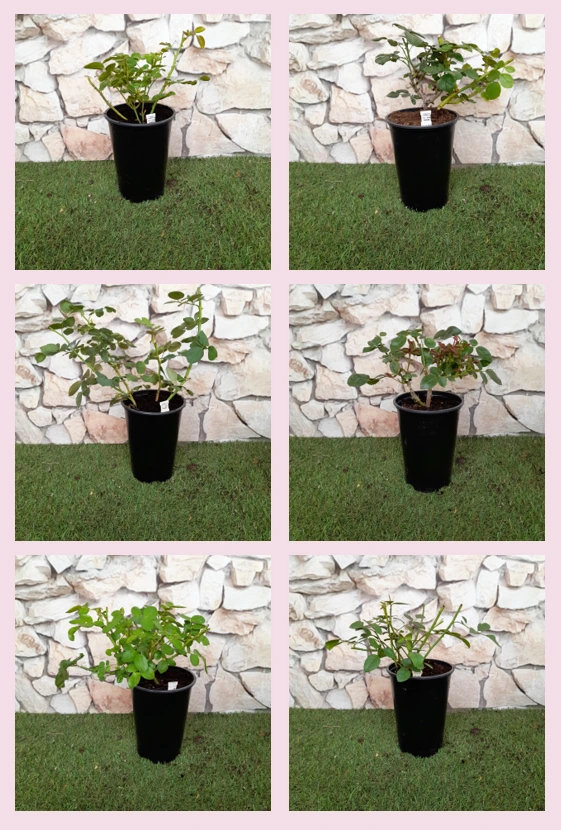
In a 40–50 litre or larger container with good drainage, ‘Fimbriata’ forms a sturdy, upright shrub that slowly builds presence year by year, its own-root system giving stability and recovery after winter or dry spells, ideal where ground space is limited for veranda-owners. |
Styling ideas
- Shingle‑softened hedge – Line a coastal path with a loose row of ‘Fimbriata’ underplanted with sea kale and Festuca to catch the light, creating a wind-filtering screen that still feels open – ideal for seaside homeowners.
- Tea‑time veranda – Place one plant in a large 50‑litre container by a sheltered seating nook, with low Lavandula and thrift at its base, for relaxed, fragrant evenings – perfect for balcony and veranda users.
- Historic focal point – Use a single shrub as a centrepiece in a small lawn island, edged with silvery foliage perennials, to showcase its heritage character and soft pastel blooms – suited to period-property gardens.
- Pollinator drift – Combine ‘Fimbriata’ with airy ornamental grasses and bee-friendly coastal perennials to form a gentle, wildlife-supporting ribbon beside a terrace – attractive to nature-focused families.
- Low‑care border – Repeat plant along a fence with groundcover roses or hardy perennials in front, relying on its resilience and modest feeding needs to keep maintenance light – ideal for time-poor beginners.
Technical cultivar profile
| Parameter |
Data |
| Name and registration |
Hybrid Rugosa historical shrub rose, traded as Fimbriata Heritage rose Morlet; American Rose Society exhibition name ‘Fimbriata’; unregistered cultivar, verified identity for consumer garden use. |
| Origin and breeding |
Bred by Morlet in France and introduced in 1891, from a cross of Rosa rugosa and ‘Madame Alfred Carrière’; represents a heritage Hybrid Rugosa line with classic shrub character. |
| Growth and structural characteristics |
Bushy, upright shrub reaching about 120–190 cm high and 90–150 cm wide, with dense, matte mid‑green foliage and pronounced prickliness, forming a substantial, wind‑resistant structure over time. |
| Flower morphology |
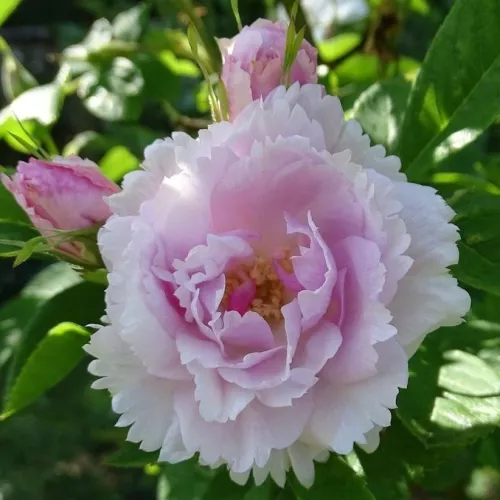
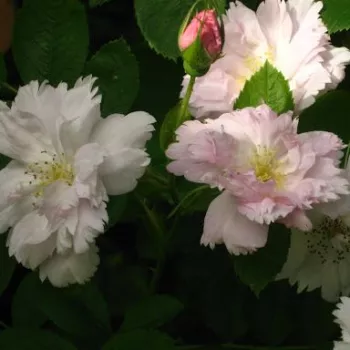
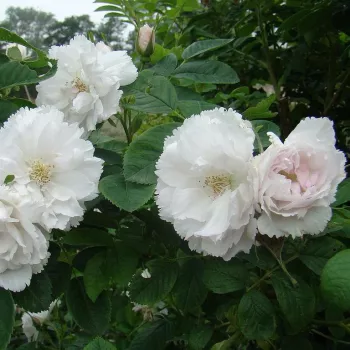
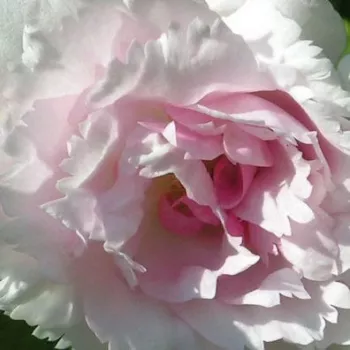
Semi-double, flat clusters of medium-sized blooms with around 13–25 petals; remontant with a lighter second flush later in the season, giving a gently repeating display rather than constant mass flowering. |
| Colour data and phenology |
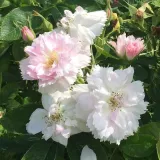
Pale, pastel pink blooms (ARS LP; RHS 65C outer, 65D inner) that fade strongly toward white as they age, creating a soft, weathered look well-suited to coastal light and historic or cottage-style garden designs. |
| Fragrance and aroma |
Medium-strength, softly sweet rose fragrance that is noticeable without being overpowering, making it comfortable near windows, seating areas and paths where regular close contact is expected. |
| Hip characteristics |
Produces moderate quantities of spherical red‑orange hips about 19–31 mm in diameter in autumn, adding seasonal interest and a traditional rugosa-style character to mixed borders and informal plantings. |
| Resistance and winter hardiness |
High resistance to powdery mildew, black spot and rust, with good drought tolerance; reliably hardy to approximately –32 to –29 °C (RHS H7, USDA zone 4b, Swedish zone 5), suitable for exposed UK sites. |
| Horticultural recommendations |
Best in full sun with well-drained soil; spacing 90–170 cm depending on hedge or specimen use. Minimal pruning and feeding usually sufficient; own-root plants establish gradually into durable, long-lived shrubs. |
Fimbriata offers a resilient, low-maintenance, long-lived shrub rose in own-root form that steadily matures into a fragrant, anchoring feature for coastal or family gardens, making it a thoughtful choice if you value quiet reliability.