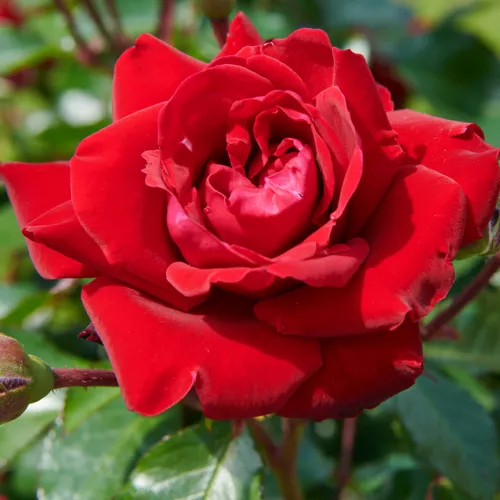
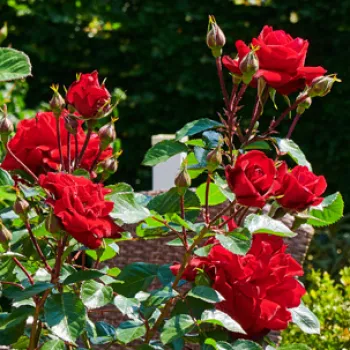
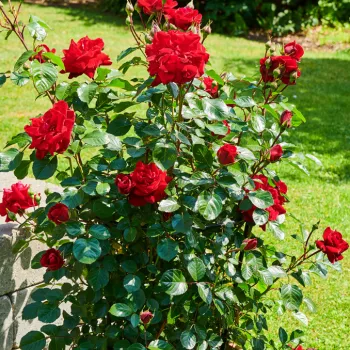
FIRST CLASS™ – red climbing rose – Olesen & Olesen
On a blustery afternoon by the sea, FIRST CLASS™ brings a quietly luxurious backdrop for tea on the veranda, its saturated mid-red clusters creating a sense of calm refreshment against salt-tolerant plantings. This compact Courtyard® climber is bred to be genuinely reliable in typical British family gardens, coping well where fences need softening and space is limited, while its glossy dark foliage stays attractively ornamental from spring to autumn. You can enjoy generous repeat flushes with minimal deadheading thanks to good self-cleaning, keeping your seating areas naturally tidy without constant pruning. Planted in well-prepared soil, it gradually anchors itself, giving reassuring stability even in breezier, more exposed spots near the coast where fences and pergolas catch the wind. In a large 40–50 litre container it will dress a sheltered balcony or courtyard with quietly compact vertical colour, ideal where ground space is at a premium. Being own-root, it offers long-term regeneration, growing back true to type after harsher winters or accidental damage and maintaining its shape without graft suckers. Expect a gentle development arc – strong roots in the first year, bolder shoots in the second, and by the third year a fully settled rose delivering consistent longevity and a first-class presence in your garden.
Usage options
| Target area |
Reasoning |
| Small coastal veranda with wind exposure |
FIRST CLASS™ stays manageable in height and spread, giving you vertical colour without overwhelming a compact seating area. Once established it roots deeply, offering quiet peace of mind as it holds its frame securely despite blustery coastal gusts – ideal for the busy homeowner. |
| Pergola or arch near a family seating area |
Its rounded clusters of very full flowers repeat reliably, so the structure looks dressed for much of the season with only occasional tying-in and trimming. The moderate vigour suits low pergolas, providing shade and prettiness without turning into a jungle – reassuring for the relaxed gardener. |
| Courtyard trellis beside a terrace table |
With a naturally compact climbing habit, it is easy to train on a small trellis, where the glossy dark foliage creates a calm green wall even between flushes. Good self-cleaning means fewer faded blooms to deal with around outdoor furniture – perfect for the time-pressed family. |
| Large 40–50 litre container by the front door |
In a generously sized pot with drainage, this own-root climber builds a durable root system and copes well with the warmer, drier conditions close to the house. Remontant flowering offers repeated splashes of red that welcome you home without fussy upkeep – suited to the urban beginner. |
| Mixed border with sea kale and ornamental grasses |
The saturated mid-red blooms stand out beautifully against pale sea kale and blue-grey Festuca, while the moderate height lets neighbouring perennials shine. Own-root growth allows the plant to recover faithfully after pruning, keeping the composition balanced over many years – ideal for the coastal stylist. |
| Sheltered, sunny fence in a typical family garden |
Planted 1–1.8 metres apart, it clothes a fence steadily rather than aggressively, so light still reaches the lawn and play areas. Its glossy foliage and repeat flowering provide long-lasting structure with just seasonal pruning and basic feeding – reassuring for the practical homeowner. |
| Border accent for clay soil with improved drainage |
Once you have added grit or organic matter to improve drainage, FIRST CLASS™ settles in well and rewards you with reliable remontant flowering. Over time the own-root system thickens, helping it cope better with typical British wet spells followed by summer dry periods – helpful for the gardener in heavy clay. |
| Discreet wildlife-friendly corner near existing shrubs |
Although mainly ornamental, it fits naturally among wildlife-friendly shrubs, adding colour while its small hips occasionally appear for seasonal interest. Being long-lived on its own roots, it quietly matures alongside neighbouring plants, supporting a familiar, stable garden scene – appealing to the nature-loving family. |
Styling ideas
- Coastal Courtyard Screen – Train FIRST CLASS™ on a slim trellis in a sheltered, sunny spot with sea kale and blue fescues at its feet for a tidy yet relaxed seaside feel – for veranda owners wanting easy vertical colour.
- Welcoming Entrance Arch – Plant on either side of a narrow arch, allowing the compact canes to frame the path without encroaching, paired with low lavender for a soft, fragrant approach – for households who like simple structure.
- Compact Balcony Climber – Grow a single plant in a 50 litre container with a narrow obelisk, underplanted with trailing sedums to cover the compost and echo the red blooms – for flat dwellers seeking low-effort impact.
- Family Fence Softener – Space plants along a sunny garden fence, interspersed with easy perennials, to create a long-lived, manageable ribbon of red without constant pruning – for families wanting a gentle, stable backdrop.
- Relaxed Pergola Retreat – Let the rose climb a small pergola over a bench, adding just enough shade and colour while remaining easy to reach for light pruning and tying-in – for hobby gardeners favouring calm maintenance.
Technical cultivar profile
| Property |
Data |
| Name and registration |
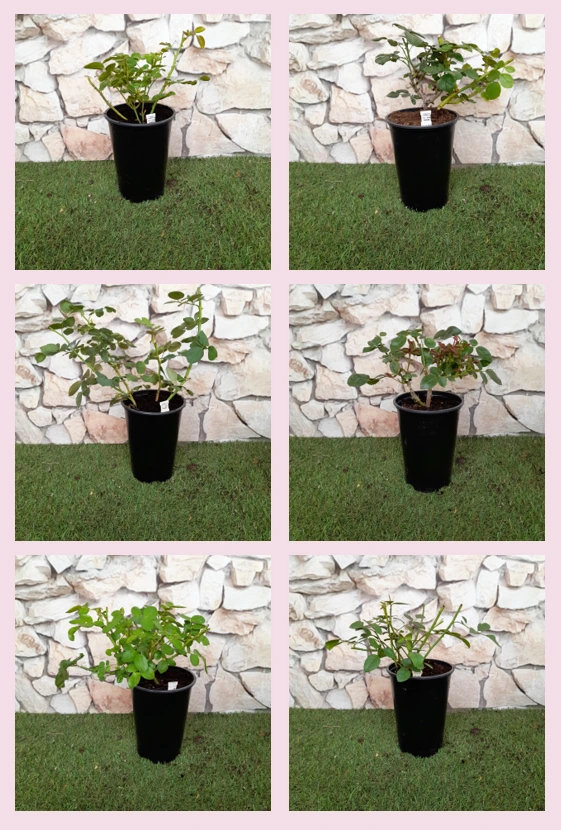
FIRST CLASS™ Courtyard® (POUlcy042); large-flowered climber, commercial climbing rose; registered 2022, introduced after 2022, premium bronze quality rating for vivianaROSE® ORIGINAL 2-litre own-root plants. |
| Origin and breeding |
Bred in Denmark in 2021 by L. Pernille Olesen and Mogens Nyegaard Olesen, Poulsen Roser A/S, as a seedling × seedling selection; developed for compact courtyard and terrace uses in temperate European climates. |
| Growth and structural characteristics |
Climbing habit to around 100–200 cm high and 50–120 cm spread, moderately thorny, with moderately dense, dark green, glossy foliage; suitable for trellises, small arches, pergolas, fences and trained container specimens. |
| Flower morphology |
Very full, cupped, cluster-flowered blooms, usually 40 or more petals per flower, large size (approximately 2.75–3.95 inches), with good self-cleaning so most spent petals fall freely, encouraging a tidy overall appearance. |
| Colour data and phenology |
Mid-red blooms, RHS 45A inner and outer; buds deep velvety red, opening vivid and slightly glossy, then lightening gently while retaining colour well; overall effect a saturated mid-red with subtle darker shading at petal bases. |
| Fragrance and aroma |
Delicately fruity fragrance of very weak intensity; scent is barely perceptible in normal garden use, so the variety is chosen primarily for colour, repeat flowering and structure rather than for pronounced perfume. |
| Hip characteristics |
Occasionally forms small hips, typically 0–4 mm in diameter, with limited ornamental effect; hip production is irregular and not a defining decorative feature, as the rose is mainly grown for its repeat-flowering display. |
| Resistance and winter hardiness |
Hardy to approximately −21 to −18 °C (RHS H7, USDA 6b, Swedish zone 3); moderate disease resistance to powdery mildew, black spot and rust, with general robustness improved by good air circulation and routine care. |
| Horticultural recommendations |
Best in sunny positions; plant 90–180 cm apart depending on use, with 1–1.2 plants/m² in mass plantings; medium maintenance, occasional plant protection and watering in dry spells, especially for container-grown specimens. |
FIRST CLASS™ Courtyard® offers compact climbing growth, reliable repeat flowering and long-lived own-root resilience; a thoughtful choice if you would like a quietly dependable red rose for everyday garden enjoyment.