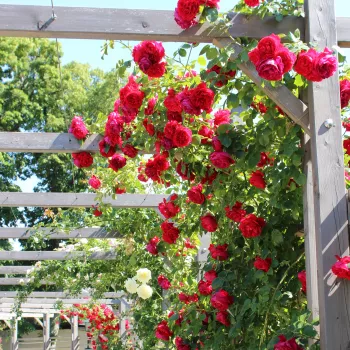
FLORENTINA ® – dark red climbing rose - Kordes
Imagine returning from the beach to a sheltered veranda, pouring tea and settling behind a living curtain of deep red blooms: this is where Florentina thrives as a reliable, easy-care climbing partner for typical British family gardens, especially where efficient drainage helps manage heavy soil and winter wet. Own-root planting gives reassuring longevity, supporting steady regrowth after wind or pruning and keeping ornamental value stable year after year. In its first season it focuses on rooting, the second brings stronger shoots, and by the third it reveals full impact along fences, arches or balcony rails. Glossy foliage, resilient health and compact height for a climber make it well suited to coastal-style spaces, where you want colour, structure and calm rather than complicated garden work.
Usage options
| Target area | Reasoning |
|---|
| Small coastal veranda in Cornwall or Devon |
Compact climbing height lets you frame railings and glass without overwhelming the space, while robust canes cope with brisk onshore winds and salty air in a well-drained, structured planting pocket; ideal for the relaxed coastal-style beginner. |
| Family garden fence or boundary screen |
Dense foliage and closely spaced flowering shoots build a living screen for privacy, creating a colourful wind-filter along play areas or seating without complex pruning, suiting time-pressed homeowners. |
| Pergola or arch by a seating corner |
Long, flexible stems train easily over arches and pergolas, giving a ceiling of rich red rosettes above your garden chairs with only light tying-in and deadheading, rewarding the relaxed hobby-gardener. |
| Container on a sunny terrace or balcony |
In a 40–50 litre pot with a sturdy obelisk or trellis, this climber offers vertical colour where ground space is scarce, while own-root durability supports long-term container life for busy urban balcony-owners. |
| Clay-based, windy suburban plot |
Strong rootstock-free anchoring and good disease resistance mean the plant establishes securely once drainage is improved, coping with exposed British weather yet needing little intervention, reassuring cautious beginners. |
| Low-maintenance long-season display |
Remontant flowering brings waves of blooms through summer, and moderate self-cleaning plus straightforward deadheading keep it tidy without specialist skills, pleasing practically minded gardeners. |
| Wildlife-aware family garden framework |
Although the double blooms are mainly ornamental, the dense, thorny structure can provide sheltered nesting and perching spaces within mixed borders, suiting nature-conscious families. |
| Cut-flower corner near the house |
Large, very double rosettes with a delicate rose scent make attractive, long-lasting stems for jugs indoors, so a single plant by a path can serve as a convenient cutting source for creative flower-lovers. |
Styling ideas
- Coastal-Veranda Screen – Train along slim trellis panels with sea kale, Festuca and potted Lavandula underneath for a salty, breezy look – ideal for coastal veranda owners.
- Romantic Archway – Cover a metal arch and underplant with foxgloves and peach-leaved bellflowers for a soft, cottage feel – perfect for nostalgic garden traditionalists.
- Family Fence Backdrop – Let it climb between posts behind lawn toys, with tough grasses at the base for easy mowing – suited to busy young families.
- Balcony Statement Pot – Grow one plant in a 50-litre container with a slender obelisk, keeping the base clear with gravel mulch – great for urban coastal-style enthusiasts.
- Cutting-and-Tea Corner – Place by a bistro set, paired with fragrant peonies, so you can sip tea and snip stems – appealing to relaxed weekend gardeners.
Technical cultivar profile
| Parameter | Data |
|---|
| Name and registration |
Large-flowered climbing rose from the Klettermaxe collection; registered as KORtrameilo, marketed as Florentina ® Klettermaxe® KORtrameilo, exhibition name Florentina for show purposes. |
| Origin and breeding |
German-bred by Tim-Hermann Kordes for W. Kordes’ Söhne; unnamed seedling × unnamed seedling, bred 2002, registered 2012, introduced after 2012 as a modern, reliable climbing garden rose. |
| Awards and recognition |
Decorated in international trials: Gold medal Buenos Aires 2012, Silver medal Tokyo International Great Rose Show 2013, ADR certification Germany 2016, and “Best of the Best” at La Tacita 2016. |
| Growth and structural characteristics |
Vigorous climber reaching about 2.0–3.0 m high and 70–130 cm wide, with dense, glossy dark green foliage and heavily thorned stems, forming a solid vertical framework on arches, walls or fences. |
| Flower morphology |
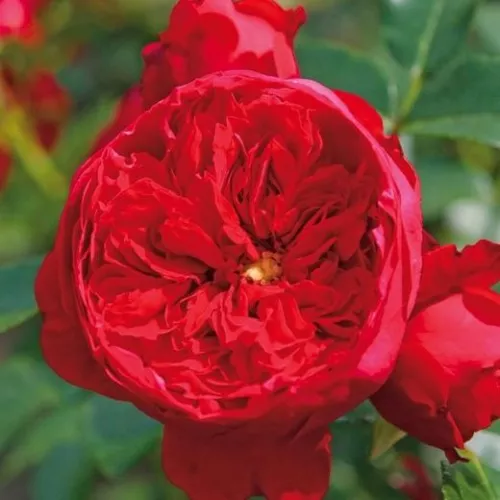
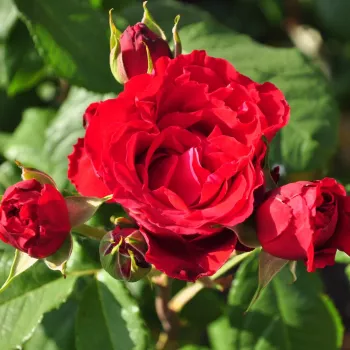
Large, very double rosette blooms with 40+ petals, typically borne in corymbs; repeat-flowering through the season, though the second flush is lighter, making it effective for both display and cutting. |
| Colour data and phenology |
Flowers open deep blood-red, holding a vivid dark red before slowly fading towards pinkish-purple; colour retention is good, with only a small pale throat, giving a consistently rich effect in most summer conditions. |
| Fragrance and aroma |
Mild, pleasantly rosy fragrance that complements rather than dominates seating areas; the many-petalled, enclosed bloom form is primarily ornamental and only modestly attractive to pollinating insects. |
| Hip characteristics |
Due to very double flowers, hips are few, but occasional small spherical orange-red hips 10–15 mm across may develop, adding a discreet seasonal accent without significant self-seeding. |
| Resistance and winter hardiness |
Rated to about −26 to −23 °C (RHS H7, USDA 5b), with strong resistance to black spot, powdery mildew and rust; copes well with summer heat, needing extra watering only during extended drought. |
| Horticultural recommendations |
Best in full sun with improved drainage, especially on clay; plant 140–150 cm apart for hedging or mass, 250 cm as a specimen, and provide support for climbing on arches, pillars, pergolas or walls. |
FLORENTINA ® offers rich red blooms, reliable health and compact climbing growth on a durable own-root plant, making it a thoughtful choice for long-lived structure and colour in a relaxed family garden.