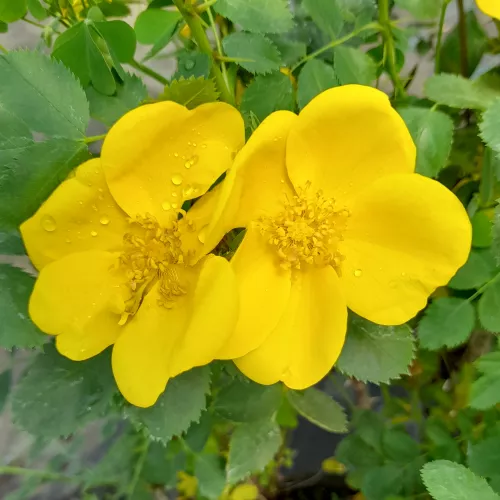
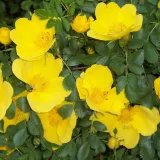
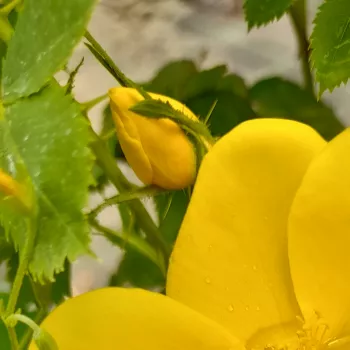
FOETIDA – yellow wild rose
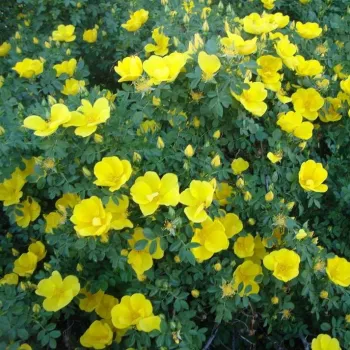
Bring a touch of wild coastal freedom to your family garden with FOETIDA – a golden-yellow wild rose that feels perfectly at home in bright, breezy conditions and copes well with exposed sites where wind and rain can test lesser plants. Its naturally arching habit and dark foliage create a loose, informal structure, ideal near shingle, gravel or sea-worn paving, while the once-a-year display of rich, luminous colour delivers a memorable flush that needs almost no intervention from you. As an own-root shrub it offers reassuring longevity, rebuilding itself from the base if ever damaged, and steadily settling into your borders with a firm, deep anchor. In a large 40–50 litre container on a veranda or terrace it adds height and a soft, wind-filtering screen, combining especially well with silvery grasses and seaside perennials to evoke sun, salt and refreshment.
Usage options
| Target area | Reasoning |
|---|
| Sunny coastal veranda in a large container |
FOETIDA thrives in full sun and handles breezy, exposed aspects, so it is well suited to a sheltered but airy coastal veranda in a 40–50 litre pot where its arching stems soften railings and frame sea views for relaxed tea-drinkers and beginners. |
| Informal hedge along a shingle path |
The upright, bushy habit and moderate prickliness lend themselves to an informal hedge that gently guides movement without feeling harsh, with the once-a-year yellow flush creating a natural highlight for pathway edges and family-gardeners. |
| Specimen shrub in a small family lawn |
Planted alone in grass, FOETIDA forms an airy, arching presence that draws the eye when in bloom yet remains textural and tidy afterwards thanks to good self-cleaning, making it a low-effort focal point for busy-owners. |
| Wind-filtering corner near a seating nook |
The tall, flexible framework of stems helps break up gusts, giving a softer microclimate for a seating area while echoing the feel of coastal scrub; the once-annual flower show suits gardeners who prefer seasonal rhythm and contemplative-users. |
| Low-maintenance mixed border with seaside character |
FOETIDA’s disease resistance and modest care needs make it a strong anchor plant among drought-tolerant companions such as sea kale, Festuca and Lavandula, ideal where you want structure without constant pruning for time-poor. |
| Naturalistic, climate-resilient planting strip |
With high hardiness and good heat and drought tolerance, this wild rose fits into resilient planting schemes that must cope with cold winters and dry spells, suiting those planning long-term, robust layouts for planners. |
| Own-root rose for long-lived family gardens |
As an own-root plant, FOETIDA ages gracefully, sending up replacement shoots from its own base if stems are damaged, so its character and flower colour remain true over many years, which reassures cautious first-time buyers. |
| Background shrub behind low perennials and grasses |
Placed at the back of a border, FOETIDA’s height, dark foliage and arching shape provide a natural backdrop that makes paler perennials and shingle tones shine, then steps quietly into the background for the rest of the year for stylists. |
Styling ideas
- Seaside-veranda screen – Train FOETIDA in a large container against simple railings, underplant with trailing Lobularia maritima to mimic sea foam – ideal for balcony and veranda owners seeking a coastal feel.
- Golden-dune border – Combine its yellow bloom with blue Festuca, sea kale and pale gravel for a dune-inspired strip beside paths – suited to homeowners wanting a relaxed, holiday-like frontage.
- Wild-hedge walk – Use FOETIDA as a loose hedge flanking a shingle walkway, interplanted with Verbena hastata ‘White Spires’ for light vertical accents – appealing to families who enjoy informal, nature-led garden structure.
- Tea-corner backdrop – Plant behind a small seating area with soft grasses and lavender, so its arching stems filter wind and frame evening light – perfect for those creating a calm coastal-style relaxation nook.
- Cottage-meets-coast – Set FOETIDA among herbs and hardy perennials in a mixed border, letting its once-a-year flowers mark early summer – good for beginners wanting character without intensive rose care.
Technical cultivar profile
| Trait | Data |
|---|
| Name and registration |
FOETIDA – yellow wild rose; commercial type wild rose, Botanical rose collection; American Rose Society exhibition name Rosa foetida; historical species valued in gardens since the late sixteenth century. |
| Origin and breeding |
Wild species originating from the Caucasus–Iran region; introduction to European cultivation recorded in 1583; breeding institution unknown; now offered as a premium own-root garden shrub for domestic landscapes. |
| Growth and structural characteristics |
Erect, arching, bushy shrub reaching around 160–240 cm high and 120–190 cm wide; moderately thorny with moderately dense dark green foliage; forms a naturally informal outline requiring only light structural pruning. |
| Flower morphology |
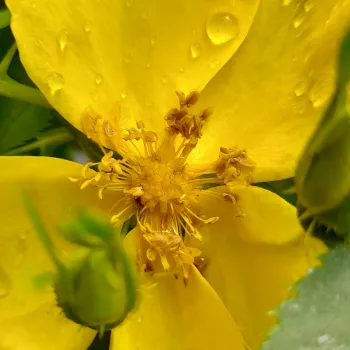
Single to semi-double blooms with about 5–12 petals, medium-sized flat flowers borne mostly solitary; non-remontant, giving a single main flowering period, after which spent petals drop cleanly and decorative hips may form. |
| Colour data and phenology |
Deep radiant golden-yellow flowers with warm tone; ARS Y, RHS 14A outer and 13B inner; buds open intense yellow, then age to straw yellow with creamy undertone; colour fade quicker in hot spells yet remains soft and attractive. |
| Fragrance and aroma |
Notable spicy fragrance of medium strength, clearly perceptible at close range; foliage and blooms contribute to the characteristic scent; suitable where a distinct, historical-style aroma is appreciated rather than a sweet perfume. |
| Hip characteristics |
Produces occasional small spherical red hips about 10–14 mm in diameter after flowering; hip set may be modest, adding discreet seasonal interest and potential wildlife value without overwhelming the shrub’s overall appearance. |
| Resistance and winter hardiness |
Excellent disease resistance to powdery mildew, black spot and rust; tolerates heat and moderate drought once established; very hardy, roughly USDA zone 3a, RHS H7, coping with severe winters in exposed garden positions. |
| Horticultural recommendations |
Best in sunny sites with reasonably well-drained soil; spacing from 90–165 cm depending on hedge or specimen use; low maintenance beyond occasional pruning; suits parks, naturalistic plantings and private family gardens. |
FOETIDA – yellow wild rose offers low-maintenance golden colour, strong resilience and long-lived own-root reliability, making it a thoughtful choice for relaxed coastal-style gardens and enduring family borders.