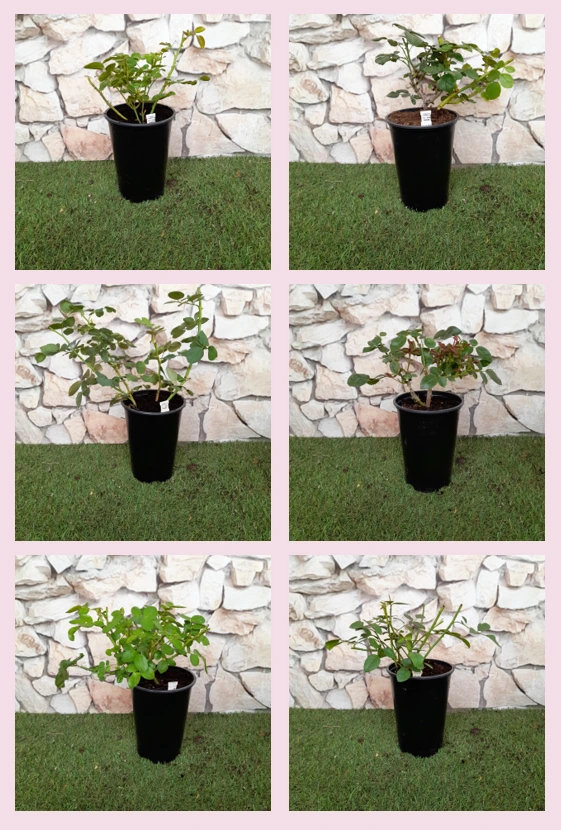
FOURTH OF JULY™ – red-and-white climbing rose - Carruth
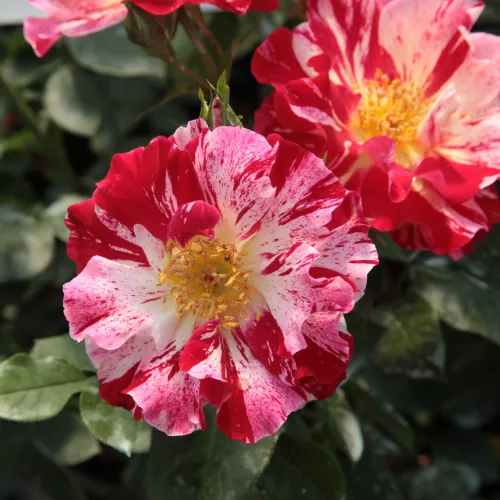
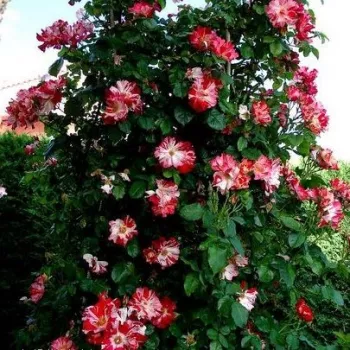
FOURTH OF JULY™ brings an instant feeling of seaside refreshment to small family gardens and coastal verandas, with bright red-and-white blooms that dance above glossy foliage in the sunlight. This award-winning climber is ideal if you want colour without fuss: medium maintenance, naturally resilient growth and moderate disease tolerance mean you simply enjoy its repeat-flowering display from early summer onwards. Planted in well-drained soil, it copes calmly with blustery weather and salt-laden breezes, holding its flowers well on sturdy canes. The semi-double blooms are strongly scented with a fresh apple-and-cinnamon fragrance, and their open form offers easy access to bees, adding a gentle wildlife note around your seating area. As an own-root rose it establishes steadily, supporting a long lifespan with reliable regrowth from the base. In a typical family garden you can expect roots to settle in the first year, taller flowering shoots in the second, and a fully developed ornamental show by the third season.
Usage options
| Target area | Reasoning |
|---|
| Sunny coastal veranda or balcony (large container) |
In a 40–60 litre container, FOURTH OF JULY™ climbs neatly up a trellis or railing, giving vertical colour and shade without taking much floor space, ideal for relaxed seaside seating areas and low-fuss balcony-owners. |
| Family garden seating area windbreak |
Trained along a pergola or fence, its dense foliage and medium-height canes form a light wind-filter that softens gusts while letting in sun, perfect for creating a sheltered spot to enjoy tea after a walk for coastal garden homeowners. |
| Feature arch over a path or gate |
The striking red-and-white striping and strong scent make this an eye-catching arch rose; repeat flowering gives interest all summer, so a single planting can lift a path or gateway for design-aware but time-poor beginners. |
| Wall-trained accent in small to medium garden |
Its moderate vigour and manageable spread suit typical house walls or garage sides; with simple tying-in a few times a year, it creates a long-lived vertical display that works well for busy family-garden gardeners. |
| Low-maintenance specimen in urban front gardens |
In a narrow bed or courtyard, one plant trained to a pillar or obelisk gives height, fragrance and colour without demanding complex pruning, matching the needs of urban residents seeking impact with minimal upkeep. |
| Pollinator-friendly strip along boundaries |
The semi-double, stamen-rich flowers attract bees across the season, so a line of plants along a fence provides both privacy and gentle ecological value, suiting families who want wildlife interest without specialist knowledge. |
| Coastal-style mixed planting with shrubs and grasses |
Partnered with sea kale, Festuca or lavender in free-draining soil, it weaves colour through shingle-style beds that cope with brisk onshore winds and occasional salt spray, an easy win for coastal-setting enthusiasts. |
| Long-term structure for pergolas and garden rooms |
As an own-root climber it builds a stable framework over the years, regenerating from the base if canes are damaged and supporting a dependable floral canopy, reassuring for planners of durable family-garden spaces. |
Styling ideas
- Harbour-porch trellis – Train FOURTH OF JULY™ up a slim trellis by the front door, underplanted with sea kale and Festuca for a shingle-harbour feel – for coastal-style lovers who want instant character.
- Tea-and-shells pergola – Let its striped blooms and scent frame a small pergola with gravel underfoot and a bistro set – for families dreaming of beach-evening relaxation at home.
- Striped-garden arch – Use a single arch over a path, with lavender and sage at the base to highlight the red-and-white flowers – for beginners seeking a simple yet dramatic focal point.
- Urban-veranda curtain – In a 50-litre container, fan the canes along balcony wires to make a living screen that still lets light through – for balcony gardeners wanting privacy and colour together.
- Coastal-fence rhythm – Repeat plants along a sunny fence with low Gaillardia and St John’s-wort between them for a low, warm-toned understorey – for homeowners creating an easy-care seaside rhythm.
Technical cultivar profile
| Parameter | Data |
|---|
| Name and registration |
Climbing, large-flowered rose; registered as WEKroalt, marketed as FOURTH OF JULY™ Climbing rose WEKroalt, an exhibition-grade climber in the vivianaROSE® ORIGINAL 2-litre own-root format. |
| Origin and breeding |
Bred by Tom Carruth (Weeks Wholesale Rose Grower Inc, USA) from ‘Altissimo’ × ‘Roller Coaster’; bred and introduced in 1999, with initial distribution by Weeks Wholesale Rose Grower, Inc. |
| Awards and recognition |
All-America Rose Selections (AARS) winner in 1999 and Royal Horticultural Society Award of Garden Merit, demonstrating proven garden performance and decorative reliability in varied conditions. |
| Growth and structural characteristics |
Vigorous climbing habit, about 250–400 cm high and 160–260 cm wide; densely thorned canes with abundant, glossy, dark green foliage; medium self-cleaning, some spent clusters may need light tidying. |
| Flower morphology |
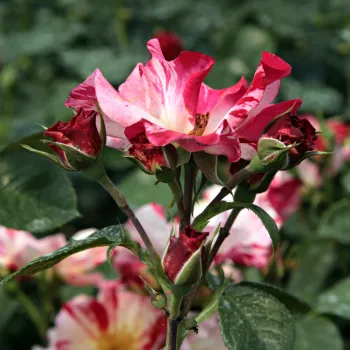
Semi-double, cup-shaped clusters with 13–25 petals and medium flower size; repeat-flowering with a notably strong second flush, offering extended seasonal interest on well-established climbing structures. |
| Colour data and phenology |
Bright red and white striped flowers (ARS rb; RHS 53A outer, NN155D inner); red tones fade to raspberry pink and creamy white, yet maintain irregular marbling; colour holds reasonably in sun before gently softening. |
| Fragrance and aroma |
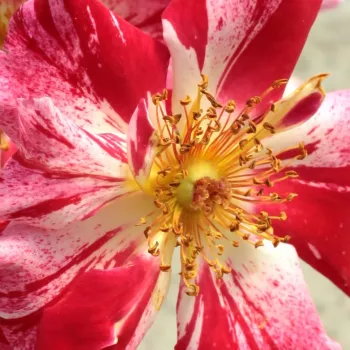
Strong, clearly perceptible scent with a fresh apple-and-cinnamon character; semi-double open form leaves stamens visible, giving partial pollinator value and additional sensory interest around seating areas. |
| Hip characteristics |
Moderately abundant spherical hips, about 12–18 mm across, in warm orange-red tones; they form later in the season and can add subtle decorative and wildlife interest where not deadheaded. |
| Resistance and winter hardiness |
Hardy to about −26 to −23 °C (RHS H7; USDA 5b; Swedish zone 4); tolerates heat and moderate drought with watering in prolonged dry spells; moderate resistance to black spot, mildew and rust, needing periodic care. |
| Horticultural recommendations |
Best in sunny spots with well-drained soil; ideal for walls, arches, pergolas and fences at 180–300 cm spacing; medium maintenance, occasional plant protection and tying-in keep plants neat and floriferous long term. |
FOURTH OF JULY™ offers vivid striped blooms, strong fragrance and space-saving vertical impact, while its own-root form supports long-term resilience and regrowth; an excellent choice if you would like lasting colour with modest care.