FRAU DR. SCHRICKER – pink historic China rose - Felberg-Leclerc
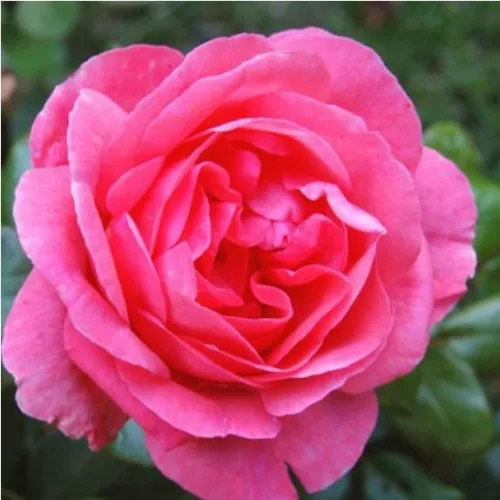
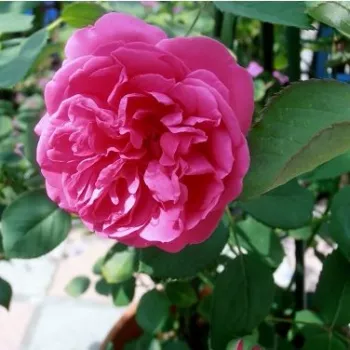
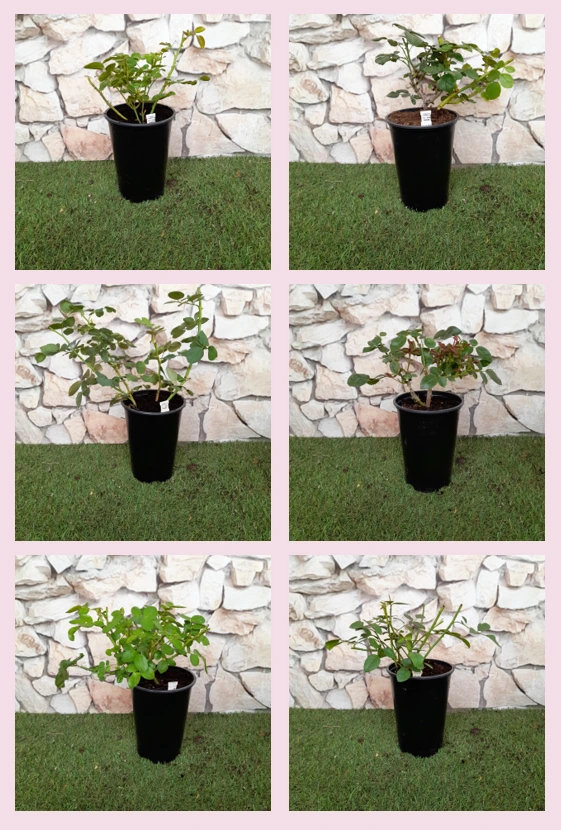
Imagine stepping onto your veranda after a breezy walk on the beach, salty air still in your hair, and being greeted by clusters of richly scented, raspberry-pink blooms: refreshment, heritage, and romance in one easy-care shrub. Frau Dr. Schricker is a compact historical China rose that fits beautifully into smaller coastal and family gardens, thriving in a sheltered spot where it can anchor itself securely despite lively seaside winds and changeable weather. Its upright habit and moderate height make it ideal for shingle beds, wind-filtering borders, or as a relaxed focal point near your seating area, while the strong, sweet fragrance lends an old-world character to modern outdoor living. As an own-root rose, its long-lived stability and capacity to regenerate quietly support a calm, low-maintenance gardening routine, gently evolving from root-building in the first year, to bolder top growth in the second, and a fully established ornamental presence by the third. Repeating flushes of double, cup-shaped flowers extend the season from early summer onwards, requiring only occasional deadheading to keep the shrub tidy. Exceptional disease resistance reduces the need for spraying, while its manageable size suits large containers of at least 40–50 litres on a breezy veranda. Subtle colour shifts from vivid raspberry pink through warm, powdery salmon to pearly-cream edged petals bring visual interest even as blooms age, creating a relaxed, sun-warmed coastal mood that feels effortlessly curated rather than overworked.
Usage options
| Target area |
Reasoning |
| Coastal shingle or gravel border |
The compact, upright shrub form works well in Cornwall or Devon-style shingle beds where space is at a premium and plants must cope with breezy, exposed conditions. Once anchored in free-draining yet moisture-retentive soil, it forms a stable, low-fuss backbone among drought‑tolerant perennials, allowing you to enjoy colour without constant watering or staking, ideal for the relaxed coastal-style beginner. |
| Wind-filtering veranda or patio corner |
In a 40–50 litre or larger container, this rose provides a soft visual screen that breaks up onshore winds without casting deep shade, perfect beside a favourite chair or small table. The medium height allows you to see over it towards the sea while still feeling sheltered, turning a blustery spot into a comfortable place for afternoon tea after beach walks for the time-poor homeowner. |
| Small family front garden focal point |
An upright, moderately dense shrub that stays within 80–130 cm is easy to fit beside a front path or near a doorway, where the strong fragrance can be enjoyed at close quarters. Its manageable size avoids overwhelming modest plots, yet the colourful, changing blooms provide a graceful welcome, especially valued by the space-conscious urbanite. |
| Low-maintenance mixed border with perennials |
Reliable resistance to powdery mildew, black spot and rust means it integrates smoothly into mixed borders without regular spraying or complex care, suiting environmentally aware plantings. Here it can be underplanted with thyme or low grasses, maintaining a healthy, tidy appearance mainly through light pruning, ideal for the relaxed weekend gardener. |
| Long-season seaside seating area |
Good repeat flowering with a plentiful second flush provides colour and scent over an extended season, so a single shrub can keep a small seating area cheerful from early summer well into late season. This sustained display suits compact patios where every plant must earn its place, rewarding the enjoyment-focused family. |
| Romantic historic-style corner of the garden |
As a 1927 historical China rose with an elegant, cup-shaped bloom form, this variety lends authenticity and charm to vintage planting schemes, especially when combined with heritage perennials. Its story and namesake add conversational interest for visitors, appealing strongly to the tradition-loving garden enthusiast. |
| Low-input, long-lived feature shrub |
Grown on its own roots, the plant builds strength steadily, regenerating well from the base and maintaining ornamental value for many years with modest pruning and feeding. This long lifespan reduces the need for replacement and delivers dependable structure in small gardens, reassuring the budget-conscious owner. |
| Scented retreat by a sheltered wall or fence |
Planted in a south or south-west facing position with some protection from the harshest gales, it appreciates warmth and responds with a strong, sweet rose fragrance that lingers on still evenings, even where weather and soil demand careful water management and firm anchoring; this transforms a simple bench corner into a restorative haven for the fragrance-seeking beginner. |
Styling ideas
- Coastal-Terrace Screen – Place in a 50–70 litre container with silver Festuca and a low drift of sea kale to create a breezy, semi-transparent screen around a small terrace – perfect for veranda-loving couples.
- Historic-Pathway Welcome – Flank a front path with two shrubs underplanted with creeping thyme, using their compact habit and fragrance to frame the entrance – ideal for period-property homeowners.
- Shingle-Romantic Border – Combine with Eupatorium and airy grasses in a shingle strip, relying on its disease resistance and long repeat flowering to keep the scene soft yet robust – suited to low-input gardeners.
- Scented-Tea Nook – Position near a bench in a sheltered corner, where the height and reblooming habit provide an intimate scented backdrop for afternoon tea – attractive to busy professionals seeking relaxation.
- Vintage-Feature Pot – Use a single shrub as a specimen in a large clay pot, pairing with trailing thyme for ground cover, celebrating its historic character and own-root longevity – appealing to rose collectors in small gardens.
Technical cultivar profile
| Trait |
Data |
| Name and registration |
Frau Dr. Schricker, a historical China shrub rose also traded as Felberg-Leclerc; heritage collection type, unregistered cultivar, recognised in shows as Frau Dr. Schricker. |
| Origin and breeding |
Bred in Germany by Johannes Felberg-Leclerc, introduced in 1927 by the Felberg-Leclerc Nursery; parentage is ‘Gruss an Teplitz’ crossed with ‘Souvenir de Madame Eugène Verdier’. |
| Growth and structural characteristics |
Upright shrub 80–130 cm high and 55–90 cm wide, moderately dense dark green foliage with slight gloss; moderately thorny stems, overall compact habit suited to borders and containers. |
| Flower morphology |
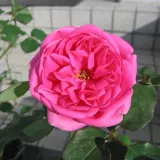
Large, double, cup-shaped flowers with 26–39 petals borne in clusters; repeat flowering with a generous second flush, medium self-cleaning so occasional manual deadheading is beneficial. |
| Colour data and phenology |
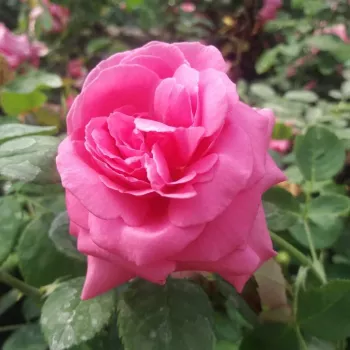
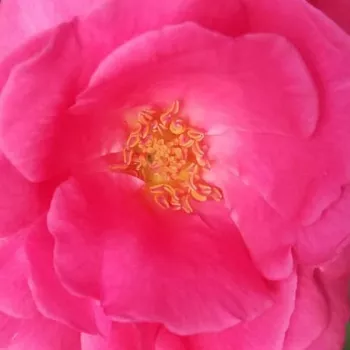
Vibrant raspberry-pink with carmine tones, ARS PB, RHS 46A outer and 42B inner; blooms fade through warm pink to salmon-powder with pearly-cream edges, giving a softly variegated display over time. |
| Fragrance and aroma |
Strong, long-lasting, sweet rose fragrance, particularly noticeable in warm, still conditions; primarily an ornamental variety as the double form limits access for pollinating insects. |
| Hip characteristics |
Hip set is generally sparse due to fully double blooms; where formed, small red spherical hips around 8–13 mm may appear, adding modest late-season interest on established plants. |
| Resistance and winter hardiness |
Good resistance to major rose diseases including black spot, powdery mildew and rust; rated RHS H7 and hardy to around –21 to –18 °C, corresponding roughly to USDA zone 6b and Swedish zone 3. |
| Horticultural recommendations |
Suited to borders, standards and specimen use at 55–100 cm spacing; prefers well-drained but not parched soil with irrigation during prolonged drought and light annual pruning to maintain structure. |
Frau Dr. Schricker offers compact, repeat-flowering historic charm with strong fragrance and reliable disease resistance in a long-lived, regenerating own-root form, making it a thoughtful choice for relaxed coastal and family gardens.