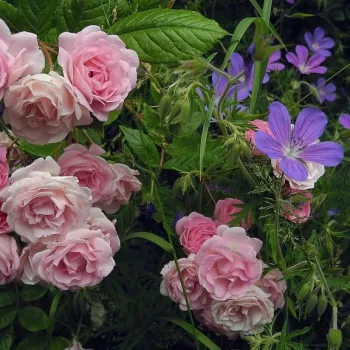
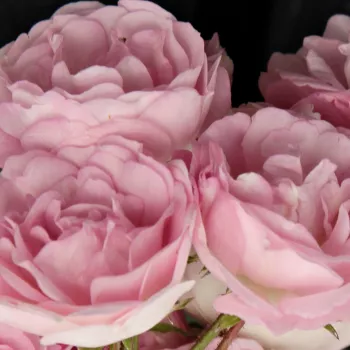
FRAU EVA SCHUBERT – pink rambler climbing rose – Tepelmann
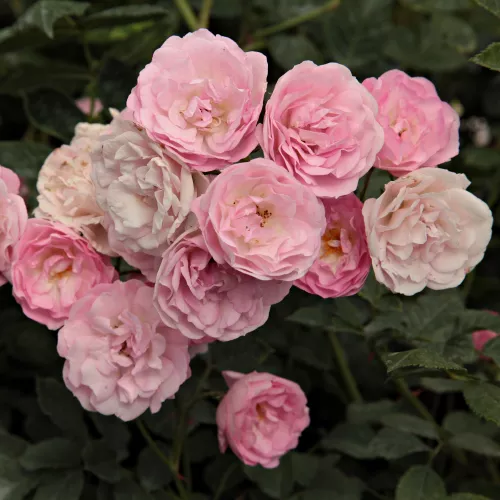
Let sunlight, soft breeze and an airy veil of pastel petals turn your coastal veranda or family garden into a calm retreat, with this almost thornless rambler elegantly clothing arches, fences and walls. In a sheltered spot it copes well with brisk coastal weather and manages salt-laced winds and steady rain while good drainage keeps its roots secure. Own-root planting supports a long-lived structure, settling in steadily so roots establish in the first year, shoots build in the second and by the third season the plant shows its full ornamental character, with porcelain-pink clusters that age to creamy white. The fine-textured, light green foliage adds refined garden style and pairs beautifully with silvery grasses and sea-kissed perennials, while the semi-double clusters offer a modest welcome to visiting pollinators. Choose a generous 40–50 litre container or free-draining soil, give it a support to climb, and enjoy its gentle rhythm of once-a-year abundance and the quiet grace of red hips that follow the flowers.
Usage options
| Target area |
Reasoning |
| Pergola in a small coastal garden |
Its long, flexible canes can be trained up and over a pergola, creating a light, pastel-pink summer canopy that echoes seaside cottage gardens while remaining visually airy rather than overpowering in modest spaces, suiting relaxed coastal-style beginners. |
| Rose arch at a family front gate |
The semi-double, porcelain-pink clusters flower in a generous flush, then self-clean reasonably, needing only occasional deadheading of stubborn clusters, so the arch stays tidy without constant work, ideal for time-poor homeowners. |
| Wall-trained accent on a sheltered veranda |
Its climbing habit and dense, fine foliage allow you to clothe a sunny, sheltered wall with a soft-textured, feminine screen that frames seating areas and morning tea spots, adding height without demanding intricate pruning from coastal-style gardeners. |
| Light, refined feature in a family play garden |
The almost thornless shoots reduce snagging and scratches, making access around play spaces or washing lines easier while still providing a romantic backdrop and seasonal show, appealing to safety-conscious families. |
| Large container on a balcony or roof terrace |
In a 40–50 litre or larger pot with free-draining compost, the own-root plant establishes steadily and maintains its framework over many years, making it a long-lived, movable feature that rewards patient, design-minded collectors. |
| Soft-focus boundary along a fence |
Once established, its height and spread allow you to weave a loose, romantic boundary along a fence, combining pastel flowers and light green foliage to soften hard lines without creating a dense hedge, well suited to informal cottage-style enthusiasts. |
| Romantic accent in a coastal-style planting |
Its shifting pink-to-cream palette harmonises with sea kale, blue fescues and lavender, giving a “girly” yet naturalistic note that suits seaside themes and copes with salt-laced winds and steady rain while good drainage keeps its roots secure for coastal owners. |
| Seasonal wildlife corner with hips |
After flowering, the modest red hips add autumn interest and a naturalistic feel, supporting a soft, in-harmony-with-nature corner when combined with groundcover sedums and bellflowers, attractive for quietly wildlife-aware gardeners. |
Styling ideas
- Seaside-Arch – Train it over a narrow arch with blue Festuca and sea kale beneath for a breezy, coastal entrance that fits compact front gardens – for relaxed cottage-style coastal lovers
- Veranda-Curtain – Fan the almost thornless canes along wires on a sunny veranda wall, underplanted with lavender in large tubs – for tea-on-the-terrace homeowners
- Pastel-Pergola – Let it scramble lightly over a slim pergola, softened with Campanula portenschlagiana at the posts for a romantic, “girly” walk-through – for hobby gardeners seeking gentle drama
- Container-Column – Grow in a 50 litre pot with a slim obelisk, paired with low sedums to spill over the rim, adding vertical interest on patios – for busy urban balcony and terrace owners
- Hip-Hedgerow – Combine along a fence with mixed grasses and dwarf honeysuckle, allowing hips to colour in autumn for a soft, nature-led boundary – for wildlife-friendly family gardens
Technical cultivar profile
| Parameter |
Data |
| Name and registration |
Garden climbing rambler sold as FRAU EVA SCHUBERT – pink rambler climbing rose – Tepelmann; unregistered variety without a separate registered cultivar name, for ornamental garden use. |
| Origin and breeding |
Historic German rambler bred by Hugo Tepelmann, introduced in 1937, from Rosa multiflora × Rosa moschata, reflecting early twentieth-century breeding for graceful, free-flowering climbing garden roses. |
| Growth and structural characteristics |
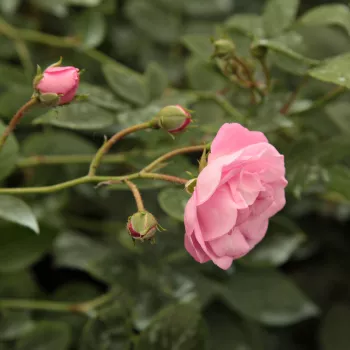
Vigorous climbing rambler reaching about 225–375 cm high and 150–250 cm wide, with dense, light green, slightly glossy foliage and almost thornless shoots suited to training on arches, pergolas and fences. |
| Flower morphology |
Semi-double clusters of small, pompon-like flowers, around 13–25 petals and 0.5–1.5 inch diameter, borne freely in branching trusses, non-remontant but creating a notable, once-a-season display in early summer. |
| Colour data and phenology |
Soft pastel pink blooms, porcelain-toned when opening, fading towards creamy white at the petal edges; colour softens more rapidly in strong sun, producing a gentle, variable palette through the flowering period. |
| Fragrance and aroma |
Fragrance is mild and restrained, offering a subtle, unobtrusive scent rather than a dominating perfume; semi-double flowers with partially exposed stamens give moderate pollinator interest in summer. |
| Hip characteristics |
Produces moderately abundant, small, spherical red hips about 7–11 mm across, adding discreet seasonal colour and a naturalistic character to trained walls, arches and pergolas into late summer and autumn. |
| Resistance and winter hardiness |
Winter hardy to around −21 to −18 °C (RHS H7, USDA 6b, Swedish zone 3), but very susceptible to powdery mildew, black spot and rust, so benefits from good airflow, hygiene and targeted plant protection. |
| Horticultural recommendations |
Best in a sunny, sheltered position with consistently moist yet free-draining soil; suitable for arches, pergolas, fences and large containers, but requires attentive disease management and some deadheading of old clusters. |
FRAU EVA SCHUBERT offers a soft pastel curtain of once-a-year blossom, almost thornless canes and long-lived own-root reliability; consider it for a refined, romantic highlight where you can enjoy its brief but memorable season.