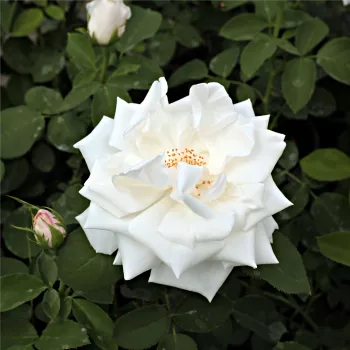
FRAU KARL DRUSCHKI – white historic perpetual hybrid rose - Lambert
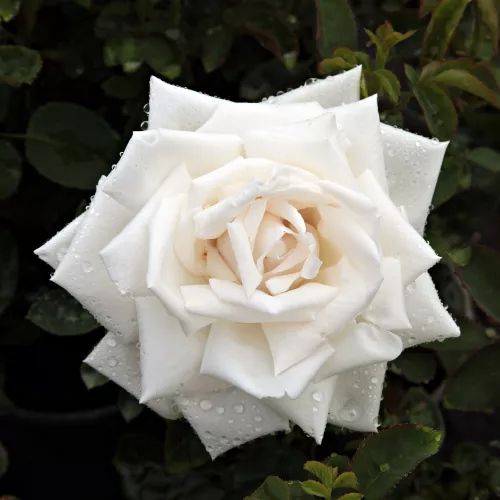
Imagine returning from a breezy walk on the shingle, rinsing off the salt and sitting down with your afternoon tea beside a border of snow white blooms: FRAU KARL DRUSCHKI offers a calm, luminous backdrop that suits compact coastal gardens and verandas where wind and rain can be frequent but soils still need sensible drainage and anchoring. This historic hybrid perpetual rose forms a tall, upright shrub with dense foliage, giving you privacy and a gentle windbreak effect while the extra-large, cup-shaped flowers open in a pure white that barely fades. Once established on its own roots, it settles into a long life with steady ornamental value and the ability to regenerate if winter or weather take their toll. In a 2-litre container it is easy to handle and plant, and when given a generously sized bed or a 40–50 litre pot, you can watch the natural rhythm unfold: in the first year it concentrates on roots, in the second on stronger shoots, and by the third it reveals its full historic character and serene coastal charm.
Usage options
| Target area | Reasoning |
|---|
| Coastal veranda in a large container |
In a 40–50 litre container this tall, upright shrub gives you a green, lightly scented screen that copes well with cool, breezy conditions while its dense foliage offers a feeling of shelter and seclusion for relaxed coastal tea-drinkers, especially beginners. |
| Small family garden as a bright focal point |
The extra-large, pure snow-white blooms draw the eye even in overcast weather, creating a luminous focal point that pairs beautifully with silvers and pastels, making a simple lawn-and-patio garden feel carefully designed yet still easy to manage for homeowners. |
| Wind-filtering backdrop along a boundary |
Its tall, upright habit and dense, slightly glossy foliage help filter breezes and provide a subtle privacy screen, particularly valuable in exposed Cornish or Devon gardens where you want movement without the harshness of a solid fence, ideal for coastal-style gardeners. |
| Mixed border with herbaceous perennials |
Planted with soft companions such as lamb’s ear, aubrieta or bee balm, the white flowers act as a calm anchor for summer colour, while the medium maintenance needs mean you can enjoy a traditional mixed border look without constant intervention, suiting time-poor owners. |
| Cutting corner for home arrangements |
Its very large, double, cup-shaped blooms and long, sturdy stems suit cutting for vases, giving you classic, refined white roses for the house once a year, perfect if you like to bring a little garden theatre indoors as a hobbyist. |
| Historic or cottage-style front garden |
The heritage character, early-1900s origin and softly sweet fragrance tie in beautifully with period properties, gravel drives and cottage-style planting, delivering a sense of continuity and story that appeals to romantically minded collectors. |
| Low-input, long-term planting scheme |
As an own-root rose that is hardy to around –30 °C and resistant to black spot and powdery mildew, it offers reliable structure and display over many years with only occasional tidying, appealing to practical, planning-focused garden planners. |
| Sheltered coastal bed with good drainage |
In a spot that tempers the strongest gusts yet avoids waterlogging, this variety thrives in the cooler summers of western coasts, benefiting from a site that handles frequent wind and rain yet maintains secure root anchorage for cautious coastal newcomers. |
Styling ideas
- Seaside-Veranda Screen – Plant in 40–50 litre tubs along a railing to form a soft, white-flowering wind filter, underplanted with silver Festuca, for coastal veranda dwellers.
- Shingle-Bed Glow – Set among pale gravel with sea kale and low lavender to echo beach tones while the tall white flowers rise like surf, for lovers of pared-back coastal schemes.
- Cottage-Front Welcome – Use as a pair flanking a path, backed by clipped box and edged with aubrieta, to give a traditional, storybook entrance for period-home enthusiasts.
- Heritage-Cut Corner – Dedicate a sunny square to several bushes at recommended spacing to produce generous, classic white stems for cutting, ideal for home flower-arranging fans.
- Soft-Border Anchor – Place at the back of a mixed border with lamb’s ear and bee balm in front, letting its height and foliage knit the planting together for relaxed family gardeners.
Technical cultivar profile
| Parameter | Data |
|---|
| Name and registration |
FRAU KARL DRUSCHKI, historic hybrid perpetual / hybrid tea heritage rose; American Rose Society exhibition name ‘Frau Karl Druschki’; unregistered cultivar widely known in traditional collections. |
| Origin and breeding |
Bred by Peter Lambert in Trier, Germany, from ‘Merveille de Lyon’ × ‘Madame Caroline Testout’, introduced in 1901 and now considered a classic white historical rose for temperate regions. |
| Awards and recognition |
Awarded a National Rose Society (United Kingdom) Gold medal as best hybrid perpetual rose around 1907, confirming its early 20th-century status as a benchmark white garden and show variety. |
| Growth and structural characteristics |
Upright shrub 140–190 cm tall, 100–160 cm wide, densely thorned with abundant, slightly glossy foliage; forms a strong, structural presence suited to hedging, back-of-border roles and specimens. |
| Flower morphology |
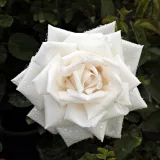
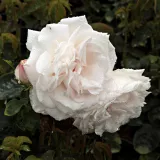
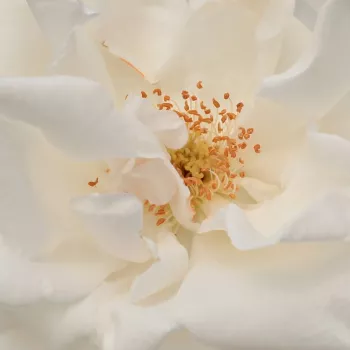
Very large, double, cup-shaped blooms with 26–39 petals, usually solitary on stems; non-remontant, flowering once with a concentrated main flush that creates a striking seasonal highlight. |
| Colour data and phenology |
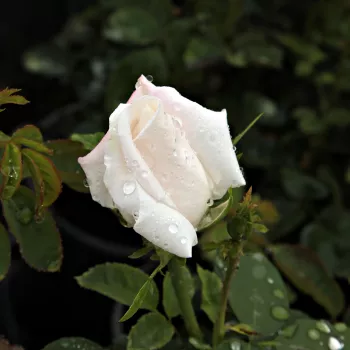
Pure snow-white petals (RHS 155C outer, 155D inner) that keep their colour without cream tints; buds may ball in wet weather but open in good conditions to brilliant, long-lasting white displays. |
| Fragrance and aroma |
Mild, softly sweet fragrance, noticeable at close quarters rather than across the garden; pleasant for seating areas and for cut flowers where a restrained, unobtrusive scent is preferred. |
| Hip characteristics |
If faded blooms are not removed, occasional 10–15 mm dark red, spherical hips may form, adding a small seasonal accent and modest wildlife interest in late summer or early autumn. |
| Resistance and winter hardiness |
Hardy to approximately –32 to –29 °C (RHS H7, Swedish zone 5, USDA 4b); good resistance to black spot and powdery mildew, moderate susceptibility to rust, prefers cooler, moist but not hot summers. |
| Horticultural recommendations |
Best in sunny, open positions with well-drained soil; avoid prolonged heat and drought. Space 110–200 cm depending on use, remove spent flowers for tidiness, and provide occasional pest and disease checks. |
FRAU KARL DRUSCHKI offers tall structure, pure white XL blooms and long-lived own-root reliability; consider it if you seek a calm, enduring feature for a family or coastal garden.