GAARD UM TITZEBIERG – lilac-pink park rose - Boudolf
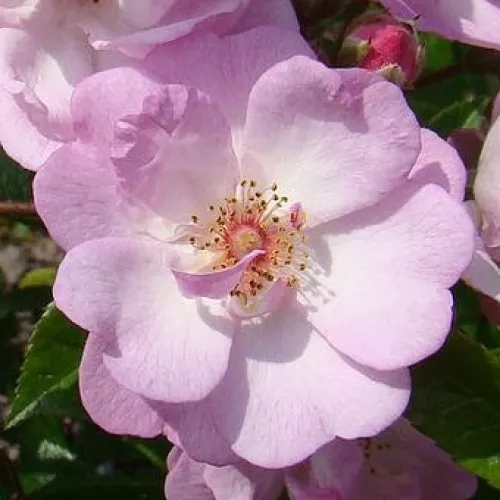
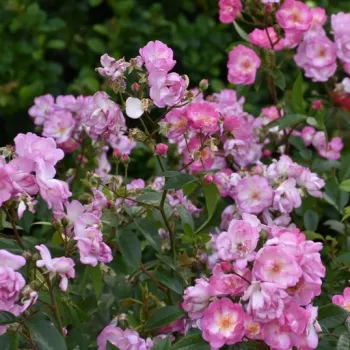
Imagine a sheltered coastal veranda where lilac blooms drift above shingle and sea kale, creating a soft, wind-brushed screen that feels quietly romantic rather than demanding. GAARD UM TITZEBIERG settles in steadily, its own-root strength promising a long-lived, reliable framework that copes well with brisk weather and gives you space to relax rather than work. Over three seasons it builds from root-first establishment to fuller top growth and then to its complete character, so you can simply watch it mature. Clusters of small, cup-shaped flowers open in pastel tones, with a mild honey-musk fragrance and open centres that welcome visiting pollinators. As summer slips into autumn, neat orange hips extend the display and help anchor the plant visually in your garden design. In a large pot from about 40–50 litres, or in a light, well-drained bed that stands firm against the wind near the coast, this shrub rewards even time-poor beginners.
Usage options
| Target area |
Reasoning |
| Coastal veranda in a large container |
Ideal in a 40–50 litre pot where space is tight yet you still want height, colour and texture around seating, with the shrub forming a gentle, wind-tolerant screen over time, suiting relaxed coastal-style homeowners. |
| Light, shingle or gravel planting near the sea |
Works well among shingle or gravel with good drainage, its upright habit giving structure while pastel flowers lighten the planting and cope with breezy, maritime conditions that challenge fussier roses, appealing to low-maintenance-focused gardeners. |
| Loose, informal hedge along a boundary |
Planted about 90 cm apart, it builds a semi-transparent hedge of mid-green foliage and lilac-pink clusters, providing a friendly boundary that screens without feeling heavy, well suited to family-garden-focused buyers. |
| Mixed border with perennials |
Its moderate height and upright shape let you underplant with catmint, Mexican daisy or low grasses, creating a long-season composition that remains attractive from first buds to autumn hips for creatively minded enthusiasts. |
| Own-root, long-term structural shrub |
As an own-root rose it regenerates well from the base and keeps a stable shape even after pruning or coastal weather, giving enduring framework and ornamental value without replanting, reassuring investment-conscious owners. |
| Season-long flowering focal point |
Remontant clusters bring several waves of bloom, with each flush softening from purplish buds to silvery-pink, so there is nearly always interest at eye level for those wanting reliable seasonal rhythm seekers. |
| Pollinator-friendly family garden corner |
Semi-double flowers with open centres and accessible stamens offer easy forage for bees, adding ecological value and movement to play-space planting, which will appeal to wildlife-aware families. |
| Autumn interest near seating or paths |
After flowering, plentiful small orange hips decorate the stems and attract birds, extending the season and giving a gentle sense of enclosure on cooler days in a spot that pleases nature-loving visitors. |
Styling ideas
- Coastal Veranda Screen – place one or two in 40–50 litre tubs with sea kale and blue fescue on a sunny, sheltered deck for a breezy yet soft wind-filter – for relaxed coastal veranda owners
- Shingle Drift – weave groups through pale gravel with low catmint and goldmoss stonecrop to echo a pastel dune landscape – for lovers of naturalistic seaside gardens
- Romantic Hedge – line a path or fence at 90 cm spacing, underplanting with Mexican daisy for an airy, flower-rich boundary – for families wanting friendly privacy
- Pastel Pollinator Border – combine with lavender, Nepeta and ornamental grasses so bees and hoverflies enjoy a soft-coloured, long-season buffet – for wildlife-conscious beginners
- Autumn Hip Focus – position near a bench with late perennials and grasses so the orange hips and visiting birds are easily seen – for contemplative garden sitters
Technical cultivar profile
| Property |
Data |
| Name and registration |
Shrub, Hybrid Musk park rose; registered as VELverd, traded as Gaard um Titzebierg Park - shrub rose VELverd, approved exhibition name Gaard um Titzebierg for horticultural shows. |
| Origin and breeding |
Hybrid Musk background in the Rosa × moschata line, bred by Ann Velle Boudolf at Lens Roses, Belgium, introduced and registered in 2005 by Lens Roses and Pépinières Louis Lens SA. |
| Growth and structural characteristics |
Upright shrub reaching about 120–170 cm high and 80–130 cm wide, with moderately dense, slightly glossy mid-green foliage and sparse prickles, forming a light yet structural presence in borders or hedges. |
| Flower morphology |
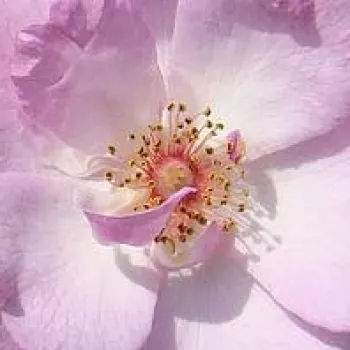
Semi-double, small cup-shaped clusters with roughly 13–25 petals, flower size around 0.5–1.5 inches, repeating well through the season with a particularly abundant second flush on established plants. |
| Colour data and phenology |
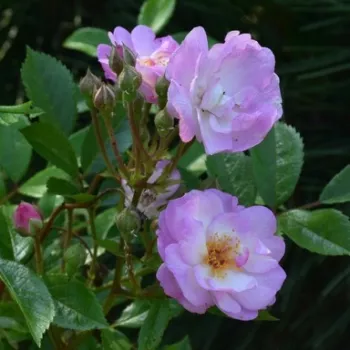
Pale lilac-pink flowers with whitish centres and very good colour retention; buds open purplish-pink, then soften to silvery-pink and almost white at the eye, creating gently changing pastel tones over time. |
| Fragrance and aroma |
Mild but noticeable scent with a honeyed, musky character typical of hybrid musk roses; fragrance is restrained yet perceptible at close range, lending a subtle perfume rather than dominating nearby seating areas. |
| Hip characteristics |
Produces many small, spherical orange hips about 6–9 mm across in autumn, adding decorative value and providing a food source that attracts birds, thereby extending seasonal interest well beyond the last flowers. |
| Resistance and winter hardiness |
Hardy to approximately −21 to −18 °C (RHS H7, Swedish Zone 3, USDA 6b); disease resistance is moderate to powdery mildew, black spot and rust, benefiting from basic preventative care in damp or enclosed sites. |
| Horticultural recommendations |
Best in sunny positions as a solitary, group, border, hedge or container shrub; plant roughly 1 per m², or 1.2 per m² in hexagonal layouts, with moderate maintenance including occasional pest control as needed. |
GAARD UM TITZEBIERG offers season-long pastel blooms, wildlife-friendly hips and dependable structure, and as an own-root shrub it promises enduring, low-fuss beauty in your garden, making it a thoughtful choice to plant this year.