GÄRTNERFREUDE ® – raspberry-red groundcover rose – Kordes
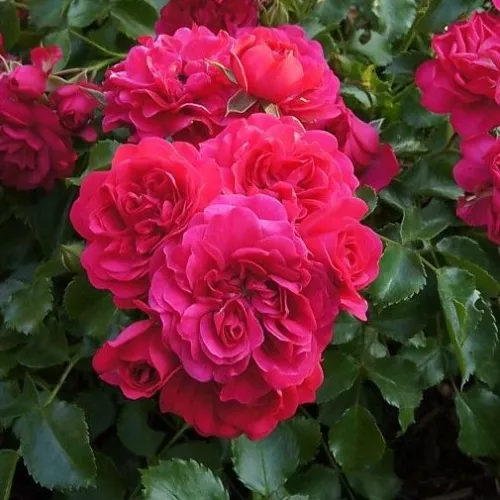
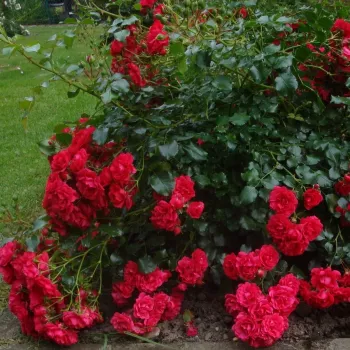
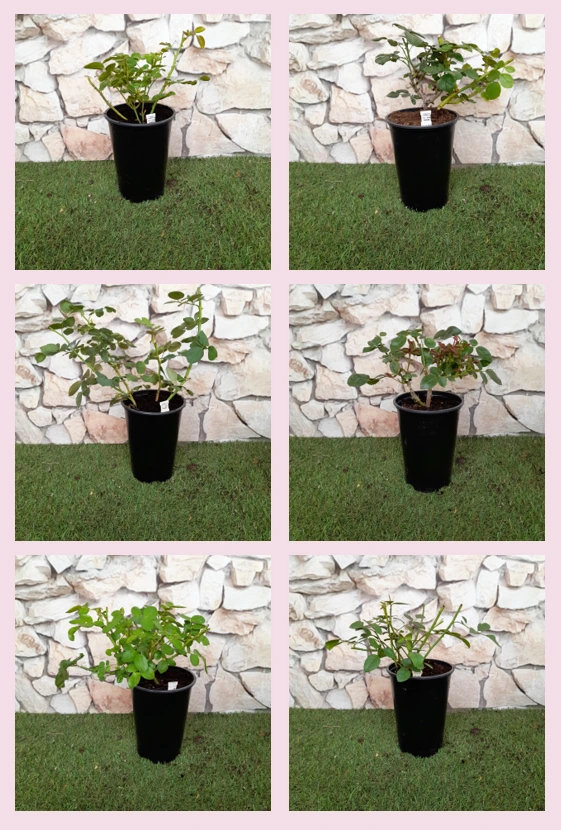
Imagine a low, shimmering carpet of raspberry-red roses along a shingle path or beside your coastal veranda: GÄRTNERFREUDE® settles in quickly, keeping its colour-rich blooms neat with minimal deadheading thanks to its naturally self-cleaning habit. Bred for reliability, it forms a dense, spreading shrub that helps stabilise light coastal soils while coping calmly with brisk weather and salt‑tinged breezes from the sea. As an own-root plant it builds life-long resilience, regenerating well if cut back and retaining its decorative character year after year. In a large 40–50 litre container or a small front garden bed, this compact rose offers outstanding coverage with very little effort, staying attractively clothed in glossy, dark foliage from spring to late autumn. From the first year’s quiet rooting period, through stronger second-year shoots, to its third-year peak of full flowering, it rewards patient gardeners with a long-lived, easy-care display.
Usage options
| Target area |
Reasoning |
| Coastal veranda containers (40–50 litre) |
Its compact, spreading habit and strong flower colour give generous impact from a single large container, while good heat tolerance and low maintenance needs suit sun-baked, windswept seating areas by the sea for the relaxed coastal-style beginner. |
| Shingle and gravel forecourts |
The dense, ground-hugging growth covers bare patches between stones, with self-cleaning, very double blooms that stay tidy without frequent deadheading, ideal where you want lasting coverage but little ongoing attention for the time-poor homeowner. |
| Small family front gardens |
A modest height yet generous spread allows one or two plants to fill narrow beds beneath windows, the own-root form building a durable framework that responds well to periodic hard pruning and remains reliable for the practical gardener. |
| Low-maintenance groundcover on slopes |
The spreading, well-branched shrub helps bind the soil on gentle banks, maintaining dense foliage that suppresses weeds and keeps its form with minimal trimming, making it reassuringly straightforward for families managing awkward levels outside. |
| Urban and coastal front boundaries |
Good disease resistance and an ADR background mean foliage stays healthy even in exposed, polluted or seaside positions, providing a tough, good-looking edging where spraying is undesirable for environmentally aware residents. |
| Mixed coastal beds with perennials |
Clustered raspberry-red blooms combine well with sea kale, Festuca or lavender, while the bushy, glossy base hides leggy stems of taller plants and keeps beds looking full across the season for design-conscious garden owners. |
| Family play-space borders |
Low, rounded shrubs frame lawns and play areas without towering over children, the stable own-root structure recovering steadily from the odd knock or accidental pruning mishap, reassuring for households with active children. |
| Rain- and wind-exposed beds |
Bred as a robust landscape rose, its rain-resistant flowers and strong framework withstand blustery showers and coastal gusts while still flowering freely, so beds remain colourful with very little intervention for busy seaside gardeners. |
Styling ideas
- Seaside-carpet – Plant in a wide drift along shingle paths, underplanting with Festuca and sea kale for a relaxed beach feel – for coastal-style admirers seeking effortless summer colour.
- Veranda-focus – One plant in a 50 litre container beside outdoor seating, paired with a low grey pot of lavender – for balcony and veranda users wanting structure with minimal care.
- Frontage-ribbon – Line a small front-garden bed with a continuous row, filling between with light gravel – for homeowners aiming for clean, modern kerb appeal.
- Play-border – Use as a low edging around lawns, with soft grasses behind to blur boundaries – for families needing tough but friendly-looking planting.
- Urban-pocket – Combine with Echinops and coneflowers in a compact, raised bed to maximise flower density – for city gardeners making the most of limited space.
Technical cultivar profile
| Parameter |
Data |
| Name and registration |
Groundcover shrub rose from the RigoRosen collection; registered as KORstesgli, marketed as Gärtnerfreude® and related trade names, with approved exhibition use in the shrub and groundcover categories. |
| Origin and breeding |
Raised by Wilhelm Kordes III in Germany (breeding year 1991); ‘The Fairy’ derivatives crossed with ‘Amanda’, introduced by W. Kordes’ Söhne in 1999 after registration in 1998 for landscape and garden use. |
| Awards and recognition |
Highly decorated landscape rose: ADR certified in 2001, multiple gold and silver medals at Baden‑Baden and Kortrijk, UK Gold Standard Award, and the Gerald Maylen Award as best groundcover in Australian trials. |
| Growth and structural characteristics |
Low, spreading shrub 40–65 cm high and 50–90 cm wide, forming dense, glossy dark green foliage with moderate prickles; naturally branching habit makes an even ground-hugging carpet with minimal formative pruning. |
| Flower morphology |
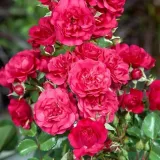
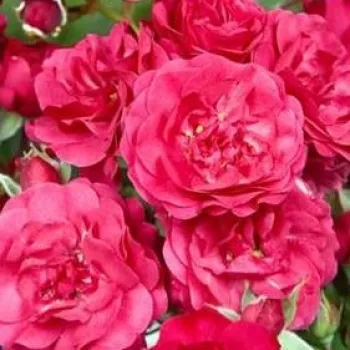
Small, very double pompon to spherical flowers, 0.5–1.5 inches across, produced in clusters; over 40 petals per bloom, repeat-flowering with a notably abundant second flush that maintains colour throughout the season. |
| Colour data and phenology |
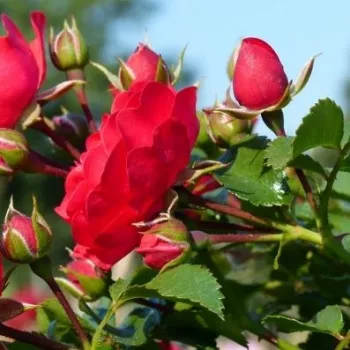
Raspberry-red blooms (RHS 53A outer, 53B inner) opening from deep buds to glossy, intense flowers that fade slowly towards rose-pink; colour remains stable in strong sun, providing a long-lasting, uniform display on the plant. |
| Fragrance and aroma |
Fragrance is very weak and barely perceptible; selected primarily for visual impact and resilience rather than scent, with highly double blooms offering an ornamental focus rather than pollinator support in mixed plantings. |
| Hip characteristics |
Only light hip set expected due to fully double flowers; when present, small spherical red hips around 4–7 mm across, adding modest late-season interest without significantly affecting repeat flowering performance. |
| Resistance and winter hardiness |
Excellent overall health with strong resistance to powdery mildew, black spot and rust; hardy to about –26 to –23 °C (RHS H7, USDA 5b), coping well with UK winters and performing reliably in colder, exposed situations. |
| Horticultural recommendations |
Suited to groundcover, slopes, beds and containers; prefers well-drained soil, tolerates partial shade, low maintenance once established; water in prolonged drought and allow room at 45–95 cm spacing depending on planting style. |
GÄRTNERFREUDE® offers compact, colourful coverage, excellent disease resistance and a durable, own-root structure that settles in for the long term; a thoughtful choice if you value lasting impact with little ongoing work.