GANYMEDES – orange-pink shaded park rose - Dittière
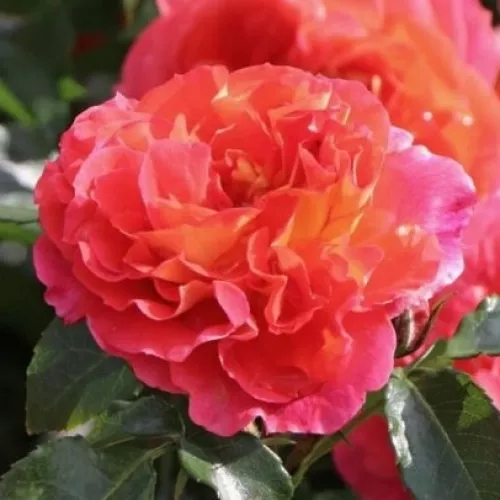
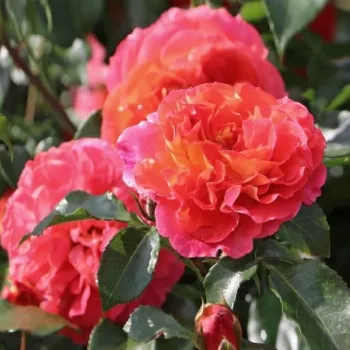
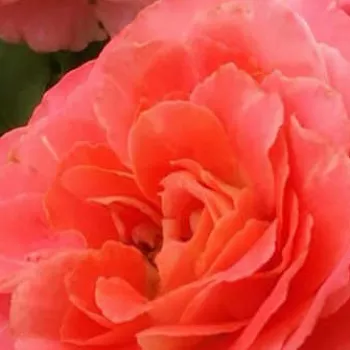
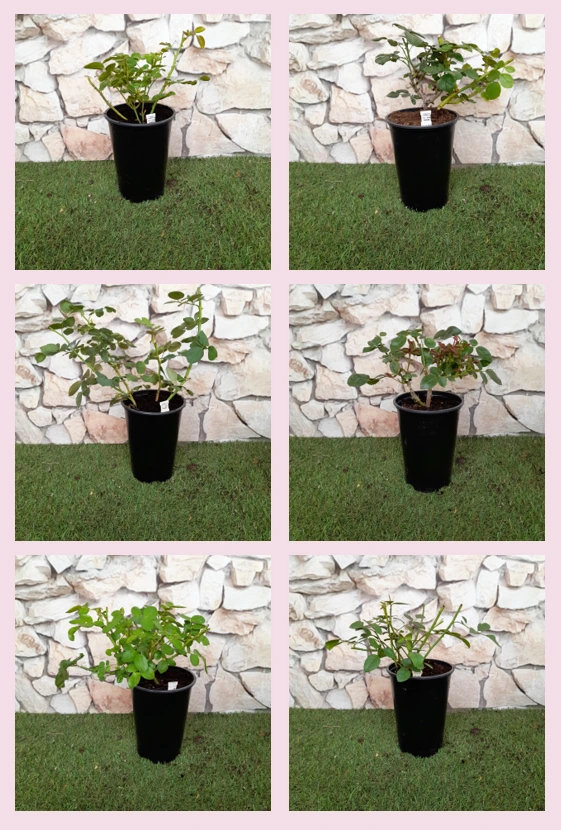
In a small coastal garden where shingle beds meet the breeze, GANYMEDES settles in quickly to give you relaxed, repeat flowering with minimal fuss, even when winds are brisk and soils need thoughtful drainage and water management. Its medium, bushy habit stays compact enough for family gardens yet substantial enough to shape a low, sheltering backdrop for your deckchairs or veranda seating. The generous clusters of double blooms open coral-orange with peach-pink overtones and a soft creamy veil as they age, bringing a sun-warmed, seaside glow against the slightly glossy, mid-green foliage. A fresh, fruity scent drifts around your tea table without becoming overpowering, while hardy, reliable growth down to typical UK winter lows promises a long-lived, own-root shrub that can regenerate well after pruning or storm damage. Choose one or two 2-litre plants for a large 40–50 litre container, or combine several in a short hedge; over three seasons roots, then framework, then flowering volume build steadily, turning this carefree shrub into a permanent feature of your coastal-inspired retreat.
Usage options
| Target area | Reasoning |
|---|
| Small coastal family garden border |
The compact 70–110 cm height and 60–100 cm spread make GANYMEDES easy to position in modest borders without overshadowing other plants, while wind-firm, bushy growth offers subtle shelter along paths and play areas for busy coastal homeowners. |
| Low, informal wind-filtering hedge |
Planted at 50–60 cm intervals, the dense, mid-green framework gradually forms a soft hedge that filters sea breezes rather than blocking them, helping you enjoy a corner of calm by the house with little more than annual pruning for time-poor beginners. |
| Large container on a coastal veranda |
In a 40–50 litre pot with good drainage, this medium-sized shrub rose stays well proportioned, giving reliable colour and fragrance on a breezy balcony or veranda while remaining easy to water, feed and move when needed for urban flat dwellers. |
| Season-long colour focus near seating |
Remontant flowering and a generous second flush ensure the coral, salmon and peach tones keep returning through the season, so one or two well-placed plants can hold the eye from your garden bench with only occasional deadheading for casual hobby gardeners. |
| Simple, low-input rose feature |
Moderate disease resistance, especially to black spot, and own-root resilience mean routine checks and light treatment are usually enough, avoiding demanding spray regimes and helping the shrub recover well after rough weather for practical-minded owners. |
| Long-lived structure in a mixed bed |
Hardiness to around -20 °C and a sturdy, branching framework allow GANYMEDES to serve as a semi-permanent backbone in mixed borders, maintaining shape and flowering performance year after year without frequent replacement for long-term planners. |
| Coastal-inspired, shingle-style planting |
The warm orange-pink palette and slightly glossy foliage sit naturally with silvery or blue-toned coastal companions, while its anchoring root system copes well where lighter shingle overlies heavier subsoil for Cornish and Devon gardeners. |
| Beginner-friendly own-root rose project |
From the first year of root establishment through stronger second-year shoots to full ornamental value by the third, this own-root rose builds up steadily, remaining stable and forgiving of minor mistakes for first-time rose growers. |
Styling ideas
- Seaside-Hedge – line a curving path with GANYMEDES at 50 cm intervals, underplant with Alchemilla mollis for lime-green froth that softens the coral-pink blooms – ideal for relaxed family front gardens.
- Veranda-Duo – plant two shrubs in separate 50 litre tubs flanking French doors, combining them with low Festuca grasses for a dune-like texture – perfect for coastal-style terrace owners.
- Sunset-Mix – weave GANYMEDES through a border of Verbena hastata ‘Blue Spires’ and pale ornamental grasses to echo evening sea colours – suited to design-conscious beginners.
- Shingle-Nest – set GANYMEDES amid gravel with pockets of Lychnis alpina ‘Magenta’ and small driftwood pieces for a beachcomber feel – appealing to seaside-weekend homeowners.
- Courtyard-Focus – use a single specimen in a 40–50 litre container as the central accent, surrounded by pots of lavender and thyme to extend scent and structure – great for compact courtyard gardeners.
Technical cultivar profile
| Parameter | Data |
|---|
| Name and registration |
Shrub rose from the Park collection, traded as GANYMEDES – orange-pink shaded park rose - Dittière; commercial type and group both classified as park shrub rose. |
| Origin and breeding |
Bred in France in 2016 by Jean-Pierre Dittière of Jardirose; introduced and initially distributed by Jardirose, with parentage not recorded in available documentation. |
| Growth and structural characteristics |
Bushy, medium-sized shrub reaching about 70–110 cm in height and 60–100 cm in spread, with moderately thorny stems and dense, slightly glossy, mid-green foliage providing a full, rounded outline. |
| Flower morphology |
Clusters of 3–5 large, cup-shaped double blooms per stem, typically 26–39 petals, with good remontancy and a generous second flush after the main flowering wave in average garden conditions. |
| Colour data and phenology |
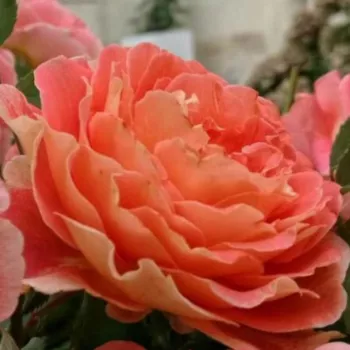
Coral-red to orange petals with a golden-yellow inner glow; buds deep coral-orange, flowers shifting through salmon and peach-pink with a delicate creamy veil as they age, with overall colour retention assessed as good. |
| Fragrance and aroma |
Fresh, fruity fragrance of medium strength, clearly perceptible at close range around the plant, enhancing seating areas without overwhelming, suitable for repeated enjoyment during warm, still periods. |
| Hip characteristics |
Rosehip set is limited by the double flower form; where present, hips are spherical, roughly 10–14 mm in diameter, colouring to an attractive orange-red by late season. |
| Resistance and winter hardiness |
Hardy to approximately -21 to -18 °C (RHS H7, Swedish zone 3, USDA 6b); disease profile indicates resistance to black spot with moderate susceptibility to powdery mildew and rust in typical seasons. |
| Horticultural recommendations |
Plant 60 cm apart for groups, 50 cm for hedging or 100 cm as a specimen; medium maintenance with occasional pest and disease control, plus regular watering and feeding in containers for best performance. |
GANYMEDES – orange-pink shaded park rose - Dittière offers compact, repeat-flowering structure, fresh fruity scent and durable own-root resilience; consider it as a long-term, easy-going highlight for your coastal-inspired garden.