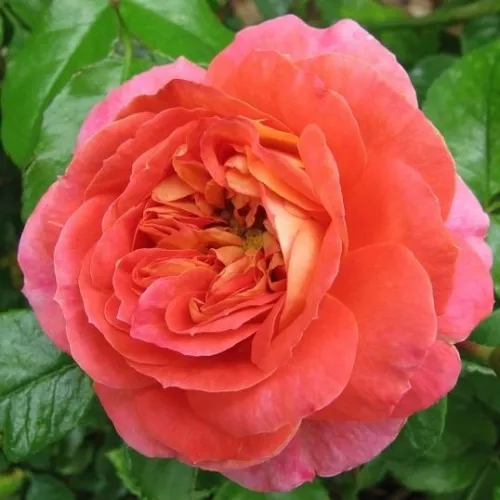
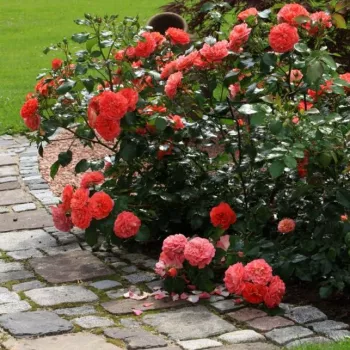
GEBRÜDER GRIMM® – orange bedding floribunda rose
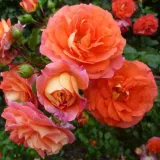
Bring a sense of coastal refreshment to your family garden with GEBRÜDER GRIMM®, a compact floribunda rose that thrives in breezy sites where good drainage supports firm anchoring in heavier soils. Its upright, bushy habit and dense dark foliage keep borders looking orderly, while clusters of rosette blooms shift from fiery orange and golden yellow to softer pink tones, echoing a salty, windy, sunny afternoon by the sea. Ideal for beginners, this own-root shrub develops steadily – roots in year one, more shoots in year two, and full ornamental value by year three – giving long-lived reliability with minimal fuss. It flowers in generous flushes through the season, needing only occasional deadheading to stay vibrant, and fits beautifully into smaller coastal-style plots and verandas where space must be used cleverly. Medium maintenance and ADR-level performance make it a practical, enduring choice for those who want colour without complicated routines, whether in mixed beds or a substantial 40–50 litre container for an easy-care seaside veranda accent.
Usage options
| Target area | Reasoning |
|---|
| Small coastal-style front garden bed |
The compact 85–115 cm height and 40–60 cm spread suit tight, exposed front gardens, where its upright habit and dense foliage create definition without overwhelming the space, especially valued by busy coastal homeowners. |
| Shingle or gravel planting strip |
Clustered, very double blooms provide vivid colour over a long season above shingle or gravel, with moderate self-cleaning so you only occasionally tidy spent flowers, making life simpler for low-maintenance gardeners. |
| 40–50 litre container on a veranda |
In a large pot it forms a neat, upright shrub that flowers repeatedly, with own-root vigour helping it recover if shoots are wind-rocked or pruned hard, ideal for a relaxed yet reliable display for veranda rose lovers. |
| Family seating area or tea corner |
The mild, fruity fragrance and warm orange-gold tones create a cosy backdrop for tea after a blustery walk, while the floribunda habit keeps new clusters coming so the area looks welcoming for family garden users. |
| Mixed border with perennials |
Uniform, upright growth and glossy foliage make a strong structure among perennials like sea kale, Festuca and low catmint, ensuring the border stays coherent even when perennials are cut back, appreciated by informal border designers. |
| Urban courtyard or small back garden |
The medium size, good heat tolerance and steady flowering fit paved or walled spaces where reflected heat can build, giving consistent colour without demanding complex care from time-pressed city gardeners. |
| Sheltered coastal garden corner |
Performs well in breezier regions when given a spot where soil drains freely yet stays moist, providing colourful structure in gardens that regularly face strong onshore winds for South West coastal residents. |
| Lightly shaded side path or boundary |
Tolerates partial shade, so it keeps flowering where many roses struggle, allowing you to brighten side paths and boundaries that receive only a few hours of sun, a useful option for problem-area planters. |
Styling ideas
- Fairy-tale border – Plant in a loose drift with Nepeta and soft grasses so the glowing orange-pink flowers feel storybook yet unfussy – ideal for families wanting charm without high upkeep.
- Veranda duo – Use two plants in 50 litre containers flanking patio doors, underplanted with trailing thyme for a simple, long-season welcome – perfect for coastal veranda owners.
- Sunset ribbon – Line a shingle path with a staggered row, echoing sunset colours against gravel while keeping maintenance straightforward – suited to busy hobby gardeners.
- Urban anchor – Combine one specimen with slate chippings, Festuca and a compact lavender in a small bed to give structure and fragrance in tight city plots – good for first-time homeowners.
- Play-corner screen – Plant as a low, colourful hedge near a seating area, mixing in obedient plant for extra vertical accents – appealing to families wanting a cheerful, easy-care backdrop.
Technical cultivar profile
| Attribute | Data |
|---|
| Name and registration |
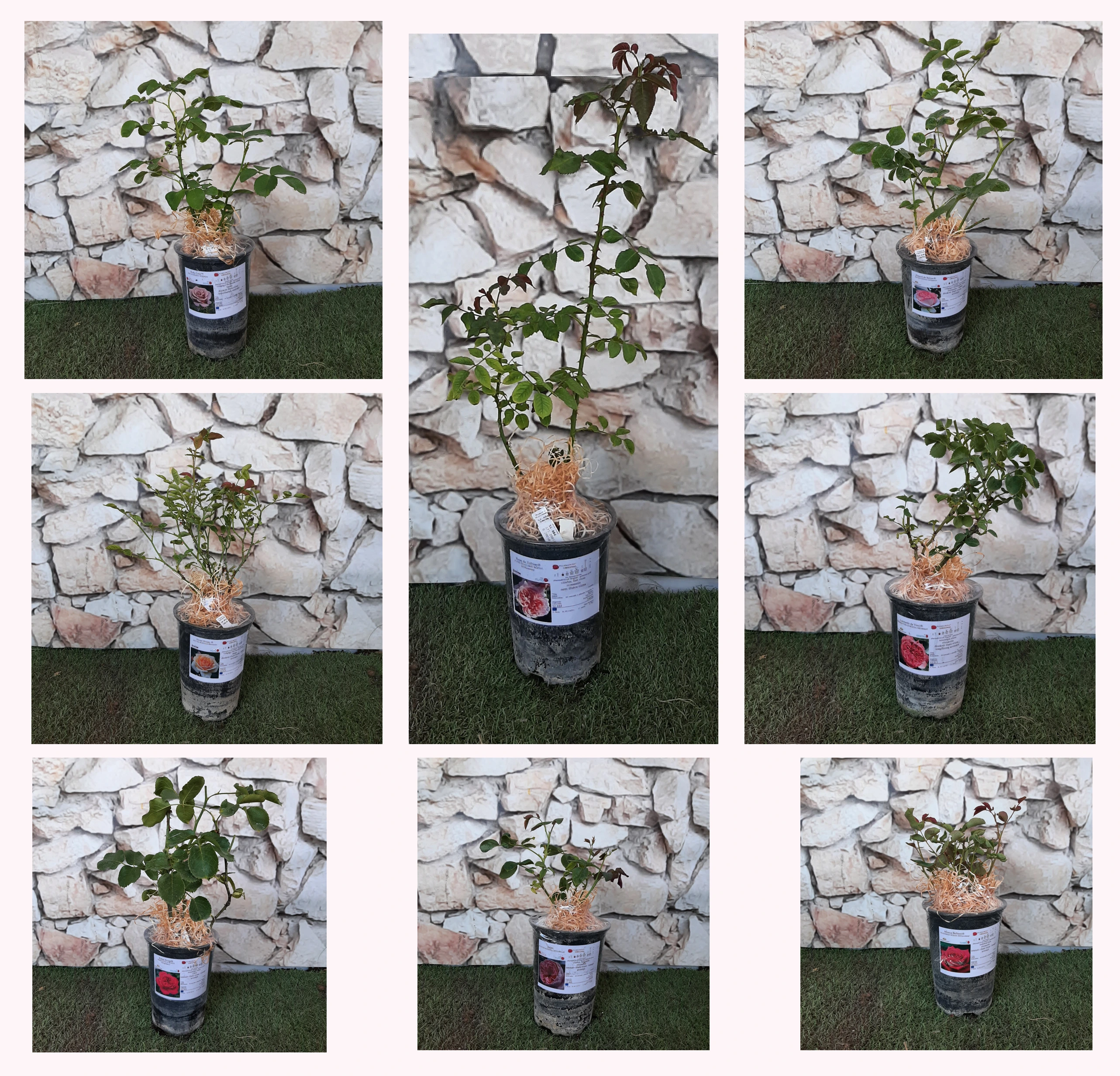
Gebrüder Grimm® MärchenRosen® (KORassenet), floribunda / bed rose; exhibition shrub category, own-root 2-litre container form for consumer family gardens. |
| Origin and breeding |
Bred by Wilhelm Kordes III, W. Kordes’ Söhne, Germany; ‘Bernsteinrose’ × (unknown seedling × ‘Immensee’); bred 2000, introduced and registered 2001 in Germany. |
| Awards and recognition |
ADR award 2002; BUGA Potsdam gold medal 2001; Kortrijk silver 2001; RNRS Trial Ground Certificate 2000; Rome bronze 2002; TOPROOS Netherlands 2006. |
| Growth and structural characteristics |
Upright, bushy shrub reaching about 85–115 cm high and 40–60 cm wide, moderately thorny, with dense, dark green, glossy foliage giving a well-filled appearance in beds and containers. |
| Flower morphology |
Medium-sized, very double rosette blooms, usually in clusters; over 40 petals per flower; repeat-flowering with generous second flush; moderate self-cleaning so light deadheading refines display. |
| Colour data and phenology |
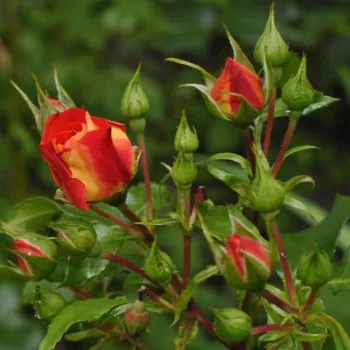
Vivid orange and golden-yellow tones; ARS YB, RHS 33A outer, 14B inner; fiery orange-red buds open warm, then fade to pinkish-orange, lightening faster in strong sunlight over the season. |
| Fragrance and aroma |
Mild, restrained scent with a slightly sweet, fruity character; noticeable at close range rather than distance, complementing the strong colour effect without overwhelming nearby seating areas. |
| Hip characteristics |
Sparse hip set due to very double flowers; occasional small, spherical orange-red hips around 6–10 mm diameter may appear, adding discreet late-season interest without heavy fruiting. |
| Resistance and winter hardiness |
Winter hardy to about −32 to −29 °C (USDA 4b, RHS H7); moderate resistance to powdery mildew and black spot, good rust resistance; tolerates heat but appreciates regular water in dry spells. |
| Horticultural recommendations |
Suitable for beds, hedging, containers and specimen use; partial shade tolerant; allow 35–70 cm spacing depending on effect; square planting 4.9/m², hexagonal 5.7/m²; medium maintenance, own-root longevity. |
GEBRÜDER GRIMM® rewards you with long-season colour, compact structure and dependable performance, while its own-root form supports a durable, regenerative shrub that suits gardeners seeking lasting ease and character.