GESCHWINDS ORDEN – purple-pink historic old garden rose - Geschwind
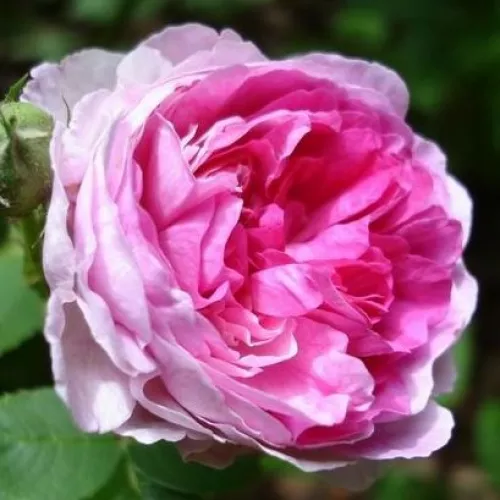
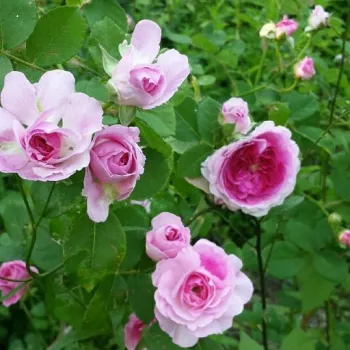
Bring a touch of nineteenth‑century romance to a modern coastal veranda with GESCHWINDS ORDEN, a heritage climbing rose chosen for its resilience and suitability to typical British family gardens. This once‑flowering beauty covers fences, arbours and pergolas with nostalgic, rosette blooms in purplish‑crimson pink that gently fade to silvery pastel, creating a soft statement backdrop for tea after a windswept walk. As an own‑root rose it develops steadily, with roots establishing first, then stronger shoots, and by the third year a stable display that rewards patient gardeners. In exposed Cornish or Devon gardens it copes confidently, offering secure anchoring and reliable growth even where wind and salt demand careful planting and drainage. Its sparsely thorned canes are easier to train along balustrades, where a classic screen effect is needed without constant fuss. Medium care needs suit time‑pressed homeowners who want historic charm with manageable upkeep, while the long‑lived own‑root habit supports responsible, value‑based choices for the future.
Usage options
| Target area | Reasoning |
|---|
| Coastal pergola in a small family garden |
This climber is ideal for structuring a compact seaside garden, forming a tall, airy curtain of foliage and once‑a‑year, showy blossom along a pergola. Its strong framework, good anchoring and tolerance of breezy, exposed conditions suit Cornish and Devon plots that need a steady, long‑term vertical accent with minimal interference for beginners. |
| Veranda windbreak with seaside character |
Trained along a veranda rail or screen, it creates a soft, flowering barrier that filters wind without feeling heavy. The sparsely thorned shoots are easier to tie in near seating, and the nostalgic flowers bring a “girly” coastal charm when paired with sea kale and grasses for seaside‑holiday atmosphere for veranda‑owners. |
| Romantic focal point arbour |
Over an arbour, its once‑per‑season flush becomes a highlight to look forward to, transforming a simple walk between house and garden into a scented, rose‑framed moment. Own‑root vigour means the framework thickens over time, giving a lasting, dependable structure with relatively light seasonal pruning for homeowners. |
| Historic feature against a fence |
Along a boundary fence it offers a living reminder of classic Central European breeding, with colour play from deep crimson buds to dusty pale pink rosettes. Planting at the recommended spacing lets it weave a semi‑formal historic tapestry that suits older properties and cottage‑style plots for heritage‑lovers. |
| Low‑maintenance “girly” coastal shingle border |
In a shingle or gravel strip it combines well with sea kale, Festuca and lavender, the feminine blooms rising above drought‑tolerant companions. Once established, its own‑root system supports good resilience, so day‑to‑day care is mostly tying in long shoots and occasional checks, not constant fussing for busy‑gardeners. |
| Family seating area backdrop |
Placed behind a seating nook, the tall, climbing habit forms a soft, leafy backdrop whose big seasonal flush frames family gatherings and summer teas. Because flowering is concentrated, maintenance revolves around a thoughtful winter prune and tying in, leaving the rest of the year largely carefree for time‑poor‑families. |
| Wildlife‑friendly yet ornamental corner |
Although the full blooms are not prime for pollinators, the moderate foliage density and occasional hips add shelter and seasonal interest in a mixed wildlife corner. Its strong hardiness and own‑root persistence support long‑term structure around which more pollinator‑rich plants can be arranged for nature‑conscious‑owners. |
| Large container on a sheltered terrace |
Given a generous container of at least 40–50 litres with good drainage, this rose can be grown on a terrace, where training it to a trellis gives height without taking ground space. Its development arc from root building to full ornamental presence rewards patient care while staying within a simple routine for container‑gardeners. |
Styling ideas
- Coastal‑romantic arch – Train GESCHWINDS ORDEN over a metal or wooden arch, underplant with sea kale and Festuca for a soft, windswept look – ideal for lovers of nostalgic seaside entrances.
- Veranda tea‑corner – Grow it in a large container against trellis beside bistro chairs, adding lavender and soft textiles to echo its gentle pink palette – perfect for relaxed afternoon tea drinkers.
- Historic boundary walk – Space plants along a fence to form a once‑flowering rose walk, interspersed with daylilies for summer colour succession – suited to families who enjoy seasonal garden rituals.
- Shingle fairy‑border – Combine on shingle with low grasses and pale perennials to highlight its pastel, fading blooms in a “girly” coastal scheme – appealing to those wanting charm with little upkeep.
- Heritage focal pergola – Let it cloak a central pergola beside a lawn, pairing with coneflowers for late‑season interest once the roses finish – for gardeners who value long‑lived, characterful structures.
Technical cultivar profile
| Parameter | Data |
|---|
| Name and registration |
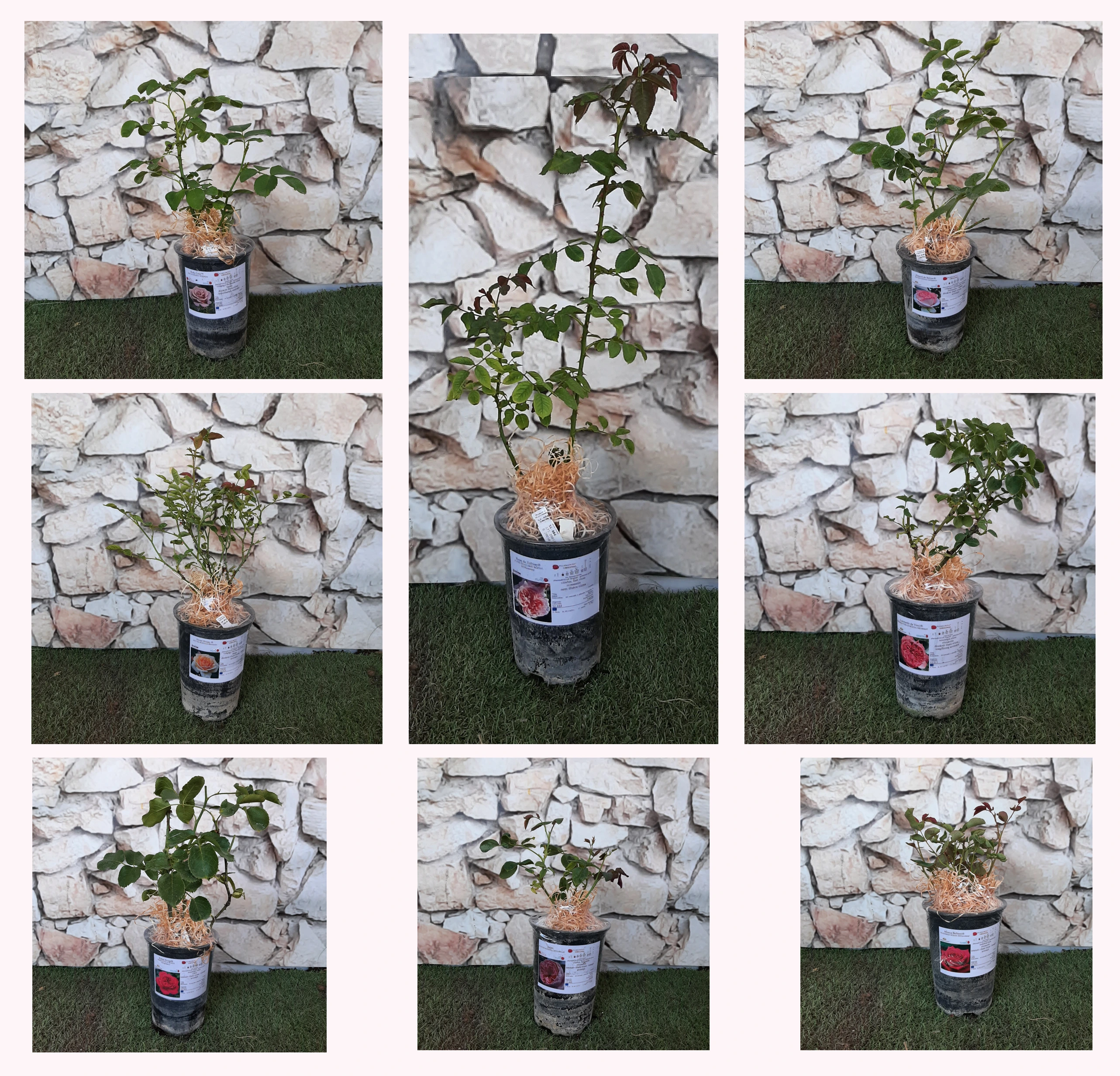
Historical climbing hybrid Multiflora old rose, traded as GESCHWINDS ORDEN, a heritage collection cultivar; unregistered but authenticated, grown on its own roots in the pharmaROSA ORIGINAL 2‑litre range. |
| Origin and breeding |
Bred by Rudolf Geschwind in Hungary around 1880 from complex rugosa–multiflora parentage; first distributed by Ketten Frères, Luxembourg, and introduced to gardens in 1885 as a vigorous climbing variety. |
| Growth and structural characteristics |
Strong, tall climbing habit to about 3,5–5,5 m high and 2,4–3,8 m wide, with moderately dense, matt dark green foliage; sparsely thorned canes make training and maintenance on supports more convenient. |
| Flower morphology |
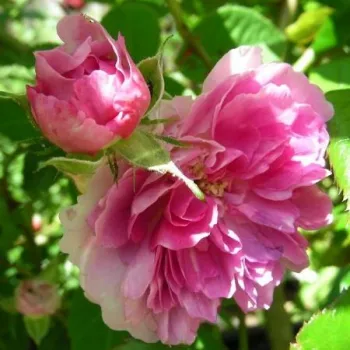
Medium, very double, rosette to quartered blooms in clusters; petal count exceeds forty, giving plush, old‑rose character. Once‑flowering type, producing a single, generous main flush in early to midsummer. |
| Colour data and phenology |
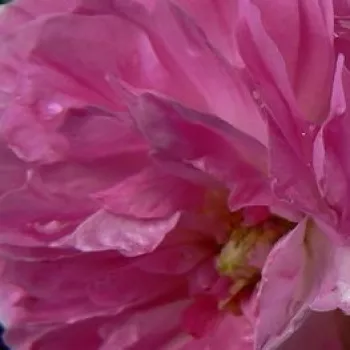
Crimson‑pink buds open vivid purplish‑crimson within pale outer petals, then shift through silvery pink to dusty light tones; outer rims remain almost white, offering prolonged visual interest as blooms age. |
| Fragrance and aroma |
Fragrance is reported as very weak and often barely noticeable, so this cultivar is chosen primarily for its historic value, colour transitions and structural climbing effect rather than for scented display. |
| Hip characteristics |
Rose‑hip set is usually sparse because of the very double flowers, but occasional small, spherical orange‑red hips, around 10–14 mm, may develop and add modest autumn interest amongst the foliage. |
| Resistance and winter hardiness |
Rated very winter hardy, tolerating about −37 to −34 °C (RHS H7, Swedish zone 6, USDA 3b). General disease resistance is medium, so occasional monitoring and timely treatment may be needed in damp seasons. |
| Horticultural recommendations |
Best on pergolas, arbours, fences or as a solitary climber, at 1,8–3,3 m spacing. Needs a firm support, regular tying‑in and basic pruning. Suits responsible gardeners seeking durable, value‑based plantings. |
GESCHWINDS ORDEN offers romantic historic blossom, strong climbing structure and long‑lived own‑root reliability, making it a thoughtful choice for gardeners who value characterful, easygoing roses; consider it where you want lasting beauty with measured effort.