GIPSY BOY – crimson historic-Bourbon rose - Geschwind
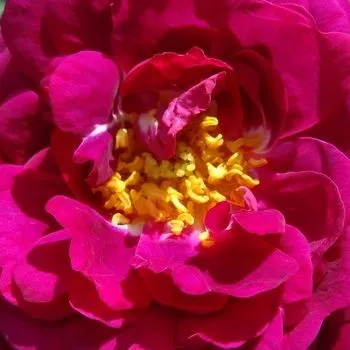
Bring a sense of windswept heritage romance to a small coastal garden with Gipsy Boy, a historic Bourbon shrub rose that thrives where breeze and light constantly shift. Its arching, well-anchored framework feels naturally at home behind shingle or gravel, quietly coping with weather that would rattle fussier plants as it steadies itself against brisk coastal gusts and passing showers. Once each summer it erupts into a memorable show of crimson and mauve-toned blooms, creating a single, dramatic flush rather than demanding constant deadheading or feeding. In a typical family plot, its upright, fountain-like shape provides privacy and a gentle windbreak without overwhelming tight spaces, especially when kept to a modest hedge or specimen. The strong, old-world fragrance drifts beautifully around a veranda or seating area, turning a cup of tea after a beach walk into a quietly luxurious ritual. Own-root plants offer reassuring longevity and the ability to regenerate if cut back hard, so you can expect the shrub to mature steadily year by year rather than tiring out. Think of the first year as building roots, the second as developing taller shoots, and by the third enjoying its full ornamental value as a relaxed, salt-tolerant backdrop to family life.
Usage options
| Target area | Reasoning |
|---|
| Coastal veranda windbreak |
The tall, arching shrub structure forms a natural screen that slows wind without creating a harsh, solid barrier, ideal for shingle or gravel seating areas near the sea; the height gives privacy yet stays in scale for beginners. |
| Small family garden focal point |
Its once-a-year, generous flowering creates a seasonal highlight that feels special rather than constant work, with one main pruning and a light tidy of hips when needed, suiting those who prefer a reliable feature over intensive upkeep for busy-owners. |
| Historic-style hedge in front garden |
Planted at hedge spacing, the dense foliage and thorny shoots knit into a characterful, traditional boundary that discourages unwanted traffic while offering a soft, romantic look, working well where families want charm as well as a practical edge for homeowners. |
| Mixed border with ornamental grasses |
In a border, the rich red-to-mauve blooms contrast beautifully with airy grasses such as Stipa or Pennisetum, while the rose’s upright, arching habit adds form and contour, supporting a sustainable, textural layout that evolves gracefully for design-lovers. |
| Flower bed with classic scent focus |
Its strong, bourbon-like perfume makes it a natural choice near paths and terraces where you pass frequently, so a simple flower bed planting can feel indulgent, giving fragrance without the need for an extensive collection for scent-seekers. |
| Partially shaded side garden |
Tolerance of partial shade means it can be used where sun is limited to a few hours, such as side returns or between buildings, letting you green up awkward corners without relying solely on foliage shrubs for urban-gardeners. |
| Low-maintenance period-style park corner |
As a once-flowering historic cultivar with moderate disease resistance, it suits more relaxed management in park or large garden corners, where a single, abundant summer show and a modest pruning routine are all that is expected by park-owners. |
| Anchoring shrub in windy coastal beds |
The substantial height and deep root system help anchor planting schemes where breeze and light sandy or stony soils can destabilise smaller plants, offering a steady structural presence that copes calmly with exposed, changeable conditions for coastal-lovers. |
Styling ideas
- Seaside-veranda hedge – line a shingle edge with Gipsy Boy and underplant with low Festuca and sea kale to frame a sheltered tea spot – ideal for coastal veranda owners seeking privacy and romance.
- Historic-feature bed – place a single shrub as a focal point in a small lawn island, encircled by lavender, to echo Edwardian charm – suited to homeowners who enjoy a period feel with limited maintenance.
- Grass-and-rose drift – weave several plants through ribbons of Stipa and Pennisetum for movement and colour contrast – perfect for design-conscious gardeners wanting sustainable texture with one main summer show.
- Fragrant-entry walk – plant on either side of a front path with simple groundcover at the base to enjoy scent on arrival – for families wanting a welcoming, characterful entrance without complex pruning regimes.
- Part-shade cottage corner – combine with globe thistle and hardy perennials in a north-east bed where sun is limited – good for beginners turning an awkward side space into a soft, traditional nook.
Technical cultivar profile
| Characteristic | Data |
|---|
| Name and registration |
Gipsy Boy is a historic Bourbon shrub rose from the Geschwind stable, marketed as a historical rose; it is an unregistered cultivar without a separate registered name, sold under this trade name. |
| Origin and breeding |
Bred by Rudolf Geschwind from a ‘Russelliana’ seedling and introduced by Peter Lambert in Germany in 1909, this Austrian-bred cultivar reflects early twentieth-century Central European shrub rose selection. |
| Growth and structural characteristics |
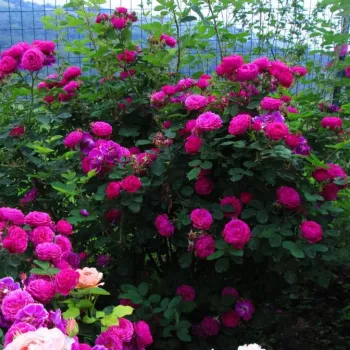
Forms an upright, arching shrub about 130–180 cm tall and 100–150 cm wide, densely thorned with matt mid-green foliage, giving strong structural presence for hedging, beds and specimen planting in family gardens. |
| Flower morphology |
Produces medium-sized, double, cup-shaped to flat clusters with roughly 26–39 petals; it is non-remontant, giving one main flowering period, and has weak self-cleaning so some spent blooms age into decorative hips. |
| Colour data and phenology |
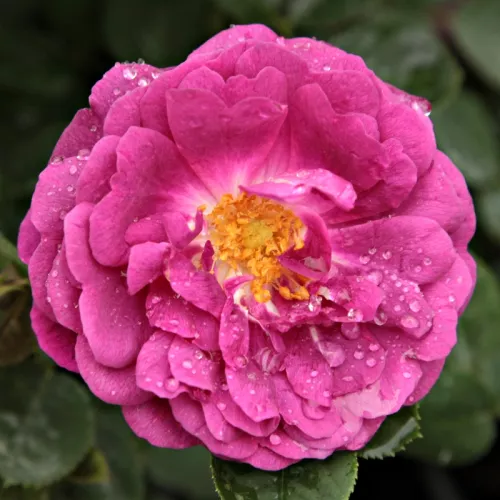
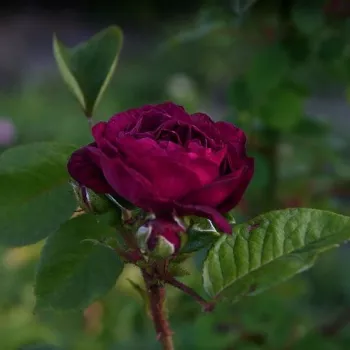
Flowers open deep crimson with purplish-violet centres, then soften through lilac-purple to smoky mauve tones; colour holds well but may lighten slightly in strong sun, creating a varied, antique palette across the flush. |
| Fragrance and aroma |
Strong, full-bodied Bourbon scent with a classic historic-rose character, noticeable both on the plant and when blooms are cut for short-term indoor enjoyment; fragrance is typically long-lasting through the main flowering phase. |
| Hip characteristics |
Double blooms set hips only occasionally, but when they do, they form small spherical orange-red fruits around 12–18 mm across, adding modest ornamental interest in late season once petals have fallen. |
| Resistance and winter hardiness |
Hardy to about −32 to −29 °C (RHS H7, roughly USDA zone 4b), with moderate resistance to black spot, mildew and rust; benefits from basic hygiene and, in humid or very wet areas, occasional preventive care. |
| Horticultural recommendations |
Suited to beds, hedges, specimens and parks; plant about 105–200 cm apart depending on use; accepts partial shade and prefers reasonable drainage plus irrigation in extended drought to support healthy growth and flowering. |
Gipsy Boy offers a richly fragrant, once-a-year crimson display on a long-lived, own-root shrub that matures steadily with minimal fuss, making it a thoughtful choice for relaxed coastal and family gardens.