GOLDFINCH – yellow historic old garden rose - Paul
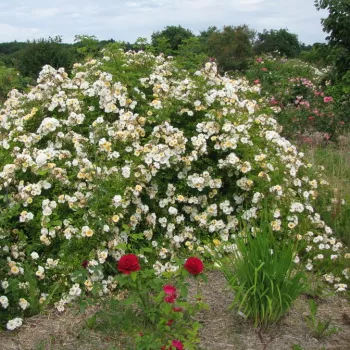
Imagine stepping onto your veranda after a blustery day on the beach: Goldfinch spilling soft yellow clusters over a railing, its fresh, fruity scent pairing with the salty breeze and giving your family garden gentle coastal charm. This historic rambler is striking yet undemanding – its naturally healthy foliage and low-input care regime suit busy gardeners who want long-season structure rather than constant chores, while its once-a-year flower show becomes a reliable early-summer highlight. Own-root planting means the plant ages gracefully, rebuilding from below ground for a longer-lived, low-fuss framework over arches, fences or verandas. In typical coastal conditions it copes with brisk air and needs only sensible drainage to handle heavier soils and secure anchorage. With minimal pruning and no complex spraying schedules, you gain a stable, lightly thorned green curtain that offers shelter, privacy and scent for years. Over time it settles into place – roots establishing in year one, top growth filling out in year two and full ornamental presence by year three – turning a compact space into a relaxed seaside retreat for easygoing garden moments.
Usage options
| Target area | Reasoning |
|---|
| Small coastal veranda screen |
Trained along a light trellis or wire, this tall, flexible rambler forms a soft, semi-transparent screen without taking up much floor space, so you keep room for furniture on a narrow veranda while gaining seasonal privacy and scent for the beginner. |
| Wind-filtering pergola in a family garden |
Over a modest pergola, its once-a-year flush creates a roof of soft yellow clusters that gently diffuse coastal breezes rather than blocking them, giving a sheltered spot for outdoor tea and relaxed gatherings suited to the homeowner. |
| Low-maintenance fence or boundary cover |
Good disease resistance and self-cleaning blooms mean little deadheading or spraying, so a long fence can be clothed in glossy foliage and pastel flowers with minimal work, ideal along boundaries for the busy gardener. |
| Romantic arch over a path to the front door |
The strong fragrance and accessible blossoms turn a simple arch into a welcoming feature, offering a single, memorable flowering period that is easy to anticipate and enjoy each year for the coastal-style lover. |
| Space-efficient vertical feature in a small garden |
By growing mainly upwards with a relatively narrow spread, it adds height and character without overwhelming compact plots, giving vertical interest where ground space is precious for the urban terrace owner. |
| Historic focal point in a relaxed cottage corner |
This century-old variety brings old-garden character and soft colour shifts from golden yellow to cream, offering a sense of continuity and charm that matures attractively over time, rewarding the patient rose collector. |
| Semi-shaded side passageway or narrow yard |
Its suitability for partial shade lets you use awkward, less-sunny side spaces, creating a scented, leafy tunnel where other roses might struggle, particularly useful along a shaded path for the practical plot owner. |
| Coastal pergola on heavy, moisture-retentive soil |
Once established, the own-root system anchors the plant firmly, and with sensible drainage it copes well where winds, showers and heavier soils coincide, keeping structure and coverage reliable for the seaside garden beginner. |
Styling ideas
- Seaside-veranda arc – Train Goldfinch along a curved rail with blue containers of sea kale and Festuca below, creating a light, wind-filtering veil of scent and blossom – ideal for coastal-style enthusiasts.
- Cream-and-lilac cottage – Let its soft yellow-to-cream clusters tumble over an arch, underplanted with lavender and tall verbena for a nostalgic, pollinator-friendly walkway – perfect for relaxed family gardeners.
- Minimal-care fence run – Space plants along a back fence, leaving room for a simple mown strip beneath so you gain height and privacy without complex maintenance – suited to busy homeowners.
- Historic feature pergola – Use a sturdy pergola in a small lawn, combining Goldfinch overhead with low grasses and sea kale at the posts for a calm, old-world coastal mood – appealing to romantic traditionalists.
- Shingle-side passage – On a gravel path beside the house, fan the canes along the wall and keep planting to tough, grey-leaved perennials for a cool, airy tunnel – great for low-effort beginners.
Technical cultivar profile
| Parameter | Data |
|---|
| Name and registration |
Goldfinch is a historic Hybrid Multiflora rambler from the old rose group, sold as Goldfinch Historic rose Goldfinch; an unregistered, authenticity-verified cultivar in the Historical rose commercial group. |
| Origin and breeding |
Bred by George Paul Jr. in the United Kingdom in 1907 from ‘Hélène’ × unknown seedling, introduced by Hazlewood Bros. in Australia and originating from Paul & Son, Cheshunt Nurseries. |
| Growth and structural characteristics |
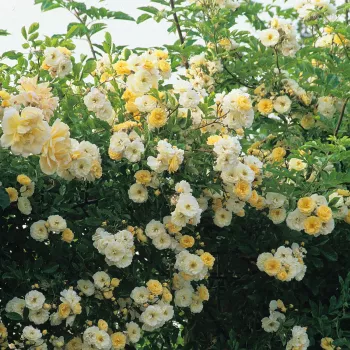
Strong climbing habit reaching about 320–500 cm in height with a 180–280 cm spread, moderately dense glossy dark green foliage, good self-cleaning clusters and notably low prickliness along the canes. |
| Flower morphology |
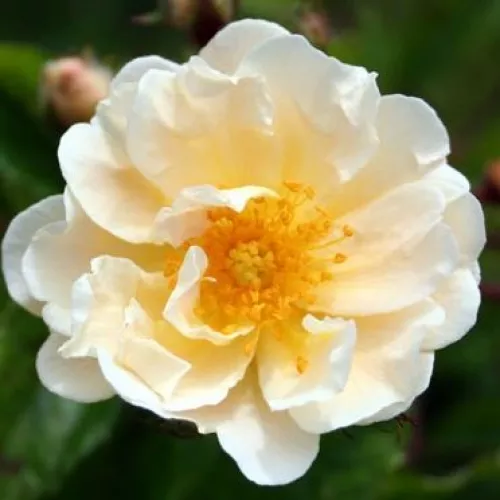
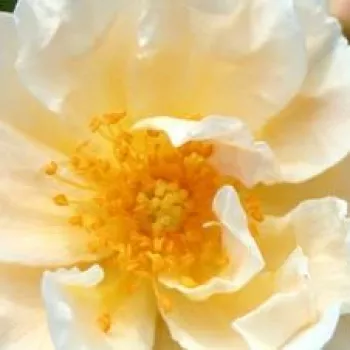
Semi-double clusters with around 13–25 petals, small flowers of about 0.5–1.5 inches, cupped then flat-opening, produced abundantly in a single, non-remontant early-summer flush on established plants. |
| Colour data and phenology |
Initially deep golden-yellow buds open vivid lemon-gold, then fade through pastel creamy yellow to almost white; ARS colour LY, RHS 11C outer and 4D inner, with colour retention modest in strong sun. |
| Fragrance and aroma |
Noted for a strong, fresh fruity fragrance typical of old garden ramblers, combining intensity with lightness so it is noticeable around arches and pergolas without becoming overpowering in small spaces. |
| Hip characteristics |
After flowering, it can develop moderately sized spherical red hips about 6–9 mm across, adding a light decorative effect in late season and modest wildlife interest without heavy fruit load on the canes. |
| Resistance and winter hardiness |
Shows good resistance to powdery mildew, black spot and rust, needs watering only during longer droughts, and is winter-hardy to about -15 to -12 °C, corresponding roughly to RHS H6 and USDA zone 7b. |
| Horticultural recommendations |
Best on pergolas, walls, arches or fences with support; plant 120–220 cm apart, avoid waterlogging, and give at least a 40–50 litre container for pots, with only light pruning needed after flowering. |
Goldfinch offers fragrant historic charm, low-maintenance disease resistance and space-saving vertical coverage on a durable own-root framework; consider it if you want relaxed structure and seasonal drama with little fuss.