GOLDSPATZ ® – light yellow park rose - Kordes & Kordes
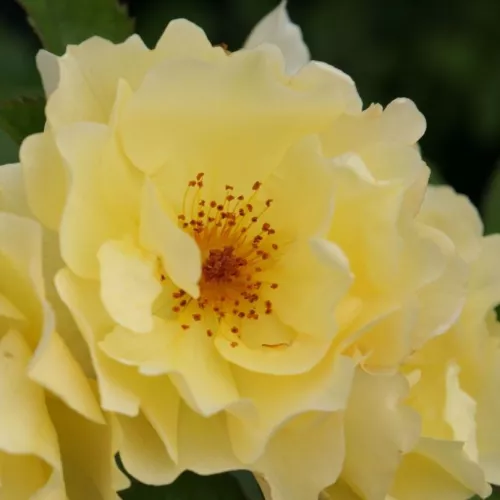
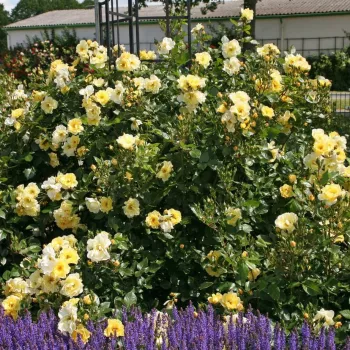
Imagine a sheltered seaside corner where you can sip tea after a blustery walk, the air still bright with sun and the mood marked by a sense of light, breezy ease. GOLDSPATZ® settles naturally into this scene: a bushy shrub rose with clear straw-yellow blooms that repeat generously from summer into autumn, staying neat thanks to its good self-cleaning habit. Its own-root form gives reassuring long-term stability, quietly building a deeper root system for better anchoring and more balanced growth in exposed British gardens. Over time you can enjoy how it works with wind and weather, coping calmly with blustery showers and briny breezes where good drainage helps it find firm footing. Year by year it becomes a familiar presence – year one mostly roots, year two stronger shoots, and by year three a full, glowing display you can trust to return. Low maintenance care and high disease resistance keep your workload light, even if you are a busy or occasional gardener, while the semi-double, pollen-rich flowers add subtle bee interest for a softer, more natural coastal or family-garden planting. Give it a decent-sized container or bed, a little seasonal feeding and pruning, and this rose will reward you with quietly confident, long-lived colour.
Usage options
| Target area | Reasoning |
|---|
| Coastal veranda in large containers |
Best in a large 40–50 litre container where its bushy structure and reliable rebloom create a soft windbreak effect without dominating a small seating area. Own-root stability supports steady growth for those wanting unfussy, lasting structure – busy urban veranda owners |
| Low-maintenance family hedge |
Planted at 80–90 cm, it knits into a dense, glossy hedge with self-cleaning flowers that keep the line tidy without constant deadheading. Minimal pruning and feeding are sufficient, ideal where time is short but year-round framework matters – time-poor family gardeners |
| Small coastal front garden |
Its moderate height and arching habit suit narrow front beds, giving generous colour without overcrowding paths. Good disease resistance reduces the need for sprays in damp, windy coastal weather with salt-tinged air and free-draining soil preparation – coastal-style homeowners |
| Mixed border with perennials and grasses |
Clustered, semi-double flowers thread light yellow through plantings of sea kale, Festuca and hardy perennials, while own-root vigour helps it settle in among companions over the first three seasons as roots, then shoots, then full ornamental value develop – creative border planners |
| Naturalistic bee-friendly strip |
Semi-double blooms with open centres offer accessible pollen, adding steady foraging interest along a fence or boundary. Repeat flushes extend the useful season for pollinators without you needing to manage complex succession planting – wildlife-conscious beginners |
| Urban courtyard focal shrub |
As a single specimen at about 150 cm spacing, it forms a structured, bushy presence that softens hard landscaping. Moderate height, glossy foliage and tidy self-cleaning flowers give a composed look in tight spaces with limited maintenance time – design-led city dwellers |
| Clay-based but improved beds |
Once established, its robust root system and own-root resilience give confidence in typical British clay where drainage has been improved, holding its shape and display through changeable seasons with only basic, routine care – practical home gardeners |
| Public-facing front border or drive |
ADR and award-backed disease resistance keep foliage presentable beside drives and pavements, while the long flowering window provides a consistently welcoming look with minimal input beyond annual pruning and occasional feeding – house-proud homeowners |
Styling ideas
- Coastal-Nook – Pair GOLDSPATZ® in a 50 litre tub with sea kale and blue Festuca beside weathered timber furniture for a light, seaside retreat – for coastal veranda owners
- Sunny-Hedge – Run a loose hedge along a boundary, underplant with low lavender to echo soft yellows and purples while keeping maintenance minimal – for family gardeners
- Pastel-Drift – Weave through a pastel border of Brunnera, soft grasses and white perennials for a gentle, wind-tousled effect – for romantic border planners
- Urban-Anchor – Use a single shrub in a large square container to anchor a courtyard, backed by a simple trellis and pale walls – for style-conscious city owners
- Bee-Ribbon – Plant a staggered row along a path, allowing semi-double flowers to mingle with meadow-style perennials for quiet pollinator support – for wildlife-friendly households
Technical cultivar profile
| Parameter | Data |
|---|
| Name and registration |
Shrub rose, park type; registered as KORgellan, marketed as Goldspatz ® Heckenzauber® KORgellan, ADR-certified garden rose in the Heckenzauber® collection. |
| Origin and breeding |
Bred by Wilhelm-Alexander Kordes, W. Kordes’ Söhne, Germany; registered 2009, introduced 2011, with parentage undisclosed but selected for robust garden performance. |
| Awards and recognition |
ADR certification 2009; Concours International de Roses Nouvelles de Paris–Bagatelle Silver Medal 2009; St Albans Trial Ground Certificate, United Kingdom, 2010. |
| Growth and structural characteristics |
Bushy shrub 120–180 cm tall, 60–110 cm wide, upright when young then arching; dense, glossy dark green foliage and strong thorniness create a substantial, screening structure. |
| Flower morphology |
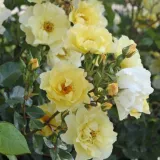
Semi-double, cup-shaped flowers with 13–25 petals, 7–10 cm across, borne in clusters; remontant habit with abundant second flowering and good self-cleaning of spent blooms. |
| Colour data and phenology |
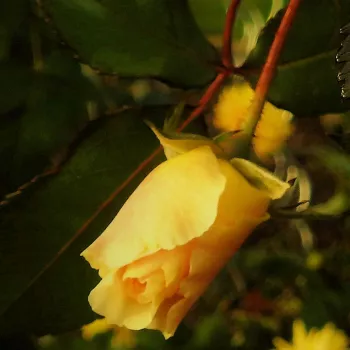
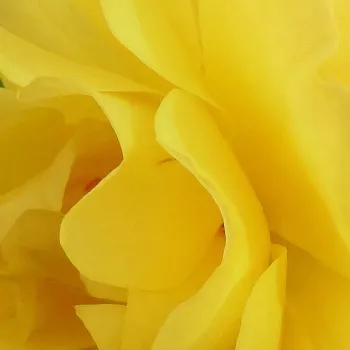
Fresh straw- to butter-yellow with lemon tinge; RHS 8C outer, 11D inner; colour fades gently to pale cream-yellow, giving a soft, pastel effect from bud through full bloom. |
| Fragrance and aroma |
Very light, almost imperceptible sweet character; chosen primarily for colour, structure and health rather than scent, making it suitable where fragrance sensitivity is a concern. |
| Hip characteristics |
Forms moderate numbers of small, spherical orange-red hips, 7–12 mm across, which can add a discreet ornamental accent in autumn without overwhelming the shrub’s outline. |
| Resistance and winter hardiness |
High resistance to powdery mildew, black spot and rust; reliably hardy to about −26 to −23 °C (RHS H7, USDA 5b), coping well with typical UK winters and cool, wet spells. |
| Horticultural recommendations |
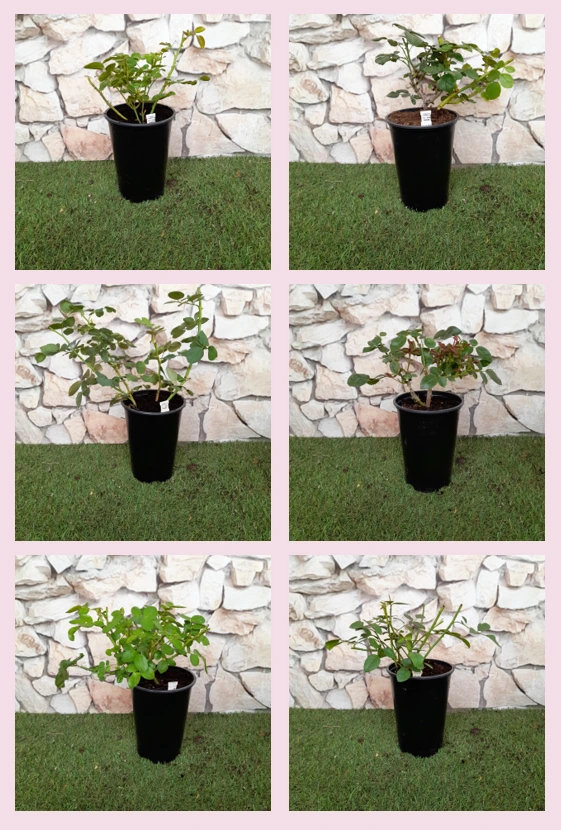
Low-maintenance shrub for hedges, beds, parks and naturalistic plantings; thrives in sun or light shade with improved drainage, especially in heavier soils, and suits own-root 2-litre planting. |
GOLDSPATZ ® Heckenzauber® offers long-season yellow colour, robust disease resistance and easy own-root longevity, making it a reassuring choice for relaxed coastal or family gardens you can enjoy with confidence.