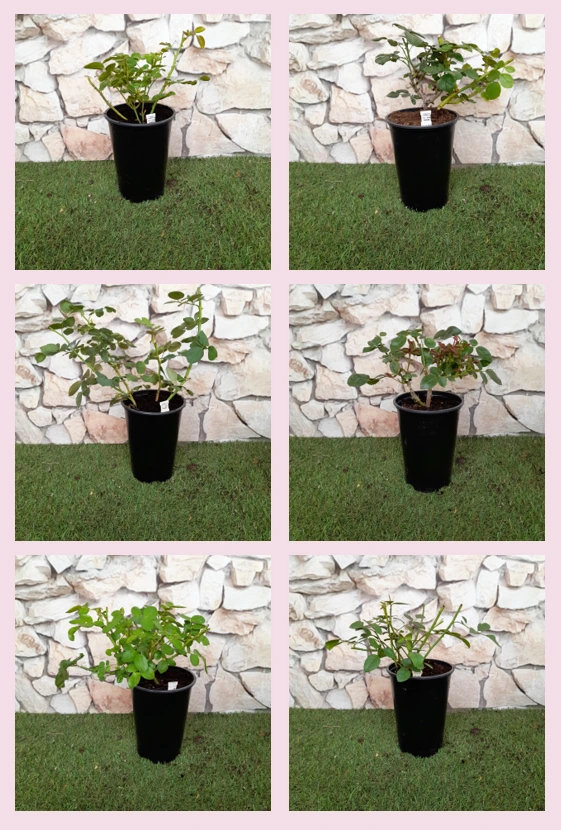
GRANDE AMORE ® – red tea-hybrid rose – Kordes
Imagine returning from the seaside, brushing sand from your shoes and sitting down with a cup of tea while this classic hybrid tea rose glows steadily in a sheltered corner: Grande Amore brings sculpted, long-stemmed blooms and a reliably upright habit to compact coastal gardens. Its blooms hold their intense red colour even in strong sun and rain, while sturdy roots anchor well in breezy sites with careful drainage and watering. As an own-root plant it offers quiet longevity, rebuilding itself if cut back hard and settling into pots or borders without fuss. Think in terms of a gentle progression – first the roots, then stronger shoots, and by the third year a fully developed display that becomes a calm, dependable backdrop to salty, windy, sunny afternoons.
Usage options
| Target area | Reasoning |
|---|
| Compact feature by a coastal veranda |
The upright, medium-sized framework fits neatly beside railings or patio doors, giving height without overwhelming a small space while flowers stay neat if you deadhead occasionally, ideal for a calm everyday focal point for beginners. |
| Cutting corner for home bouquets |
High-centred, long-stemmed blooms are bred for exhibition-style cutting, so you can take classic, florist-quality red roses indoors repeatedly through the season from a single, manageable plant, perfect for homeowners. |
| Romantic accent in a family border |
Its dense, dark green foliage and rich red flowers punctuate mixed borders without sprawling, bringing a romantic note that children and adults notice on the way to the lawn or washing line, reassuring for busy families. |
| Small hedge or low screen near seating |
Planted at closer spacing, the upright habit knits into a low visual screen that filters coastal breezes while allowing light through, giving you a sense of enclosure without needing constant clipping, attractive to relaxed gardeners. |
| Large container on a sheltered terrace |
Performs well in a 40–50 litre or larger container with good compost, rewarding you with long-stemmed blooms at eye level; the contained root space keeps size in check, convenient for neat, paved terraces and balconies. |
| Heat-tolerant focus in sunny, windy spots |
Handles warm, exposed positions if watered regularly, and its petals hold their colour and shape better than many reds in strong sun and showers, giving reliable structure in places you cross daily, supporting coastal-style owners. |
| Long-season highlight in shingle or clay-improved beds |
Good repeat-flowering means the plant cycles through flushes from early summer well into autumn, so once established you enjoy colour for months with modest care, especially where shingle or heavier soils are managed by attentive hobbyists. |
| Long-lived own-root planting for evolving gardens |
As an own-root rose, it regrows true to type from the base after hard pruning or winter damage, building a stronger framework year by year with the development from roots to shoots to full display supporting long-term planners. |
Styling ideas
- Coastal-Veranda Trio – Place Grande Amore with sea kale and blue Festuca in a broad tub for a salty-breeze look – ideal for coastal-style lovers.
- Sunset-Border Ribbon – Thread it through a narrow border with lavender and low grasses for a warm, evening glow – suited to busy homeowners.
- Romantic-Cut Corner – Group three plants with Hypericum ‘Miracle’ for foliage contrast and plentiful cutting stems – appealing to cut-flower enthusiasts.
- Shingle-Entry Accent – Sink containers into shingle with dwarf yew for structure and scarlet highlights – practical for small front gardens.
- Clay-Garden Upgrade – Improve a clay strip with compost and plant a short hedge that anchors windy spots – helpful for novice coastal gardeners.
Technical cultivar profile
| Parameter | Data |
|---|
| Name and registration |
Hybrid tea rose; registered as KORcoluma, marketed as Grande Amore ® Eleganza®. Part of the Eleganza® collection and approved for exhibition as ‘Grande Amore’ by the ARS. |
| Origin and breeding |
Bred by Tim-Hermann Kordes, W. Kordes’ Söhne, Germany, from ‘Christoph Columbus’ × unknown seedling; bred 1995, introduced and registered internationally in 2004 by Kordes. |
| Awards and recognition |
Golden Rose of The Hague 2004; Gold Medal Lyon 2006; Gold Medal Rose Hills International 2011; RHS Award of Garden Merit 2012; Best Hybrid Tea, Portland International Rose Garden 2013. |
| Growth and structural characteristics |
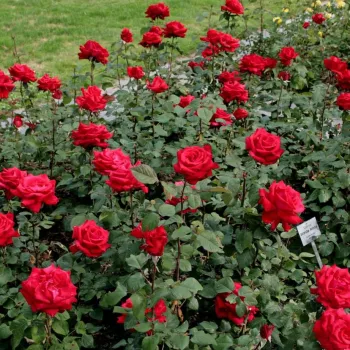
Upright, medium-height bush reaching around 80–105 cm with a 50–70 cm spread; moderately dense, dark green foliage, slightly glossy, and moderately thorny stems suited to formal planting. |
| Flower morphology |
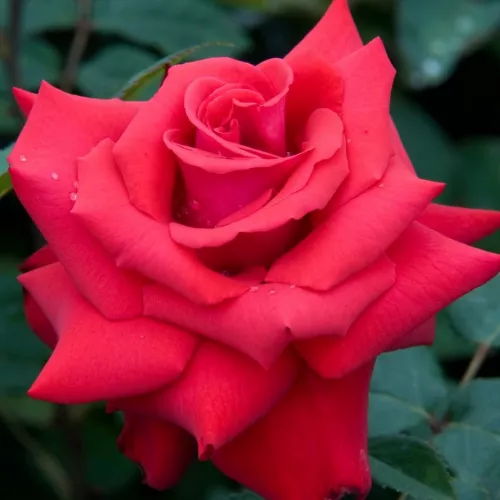
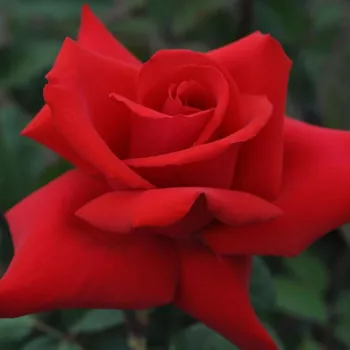
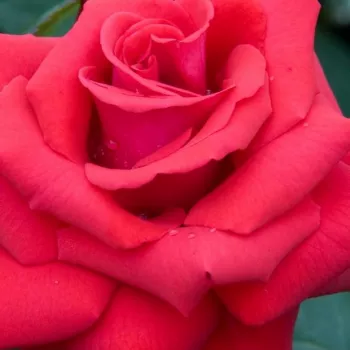
Classic high-centred, pointed-budded hybrid tea blooms, double with 26–39 petals, borne mostly singly on long stems; large flower size and good repeat-flowering with abundant second flushes in season. |
| Colour data and phenology |
Radiant, uniform bright red with slight gloss; newly opened petals vivid fire-red, deepening to wine-red tones before ageing, with excellent colour retention in sun and rain and little fading at full bloom. |
| Fragrance and aroma |
Delicate, tea-like fragrance that is very weak and barely perceptible in most conditions; valued primarily for its visual presence rather than scent and only marginally attractive to pollinating insects. |
| Hip characteristics |
Rose-hip production is usually limited because of the full double flowers; occasionally small, spherical orange-red hips 8–12 mm across may appear, adding modest late-season interest. |
| Resistance and winter hardiness |
Hardy to about −21 to −18 °C (RHS H7, USDA 6b, Swedish zone 3); tolerates heat with regular watering; disease resistance is moderate to powdery mildew, black spot and rust, needing some protection. |
| Horticultural recommendations |
Best in well-drained soil with regular feeding and deadheading; suitable for borders, specimens, hedging and cutting; space 45–90 cm depending on use, with 3.3–3.8 plants/m² for mass planting schemes. |
Grande Amore ® offers classic cutting blooms, a compact upright habit and a long-lived own-root structure that rebuilds reliably over time, making it a thoughtful choice for enduring colour in everyday family gardens and terraces.