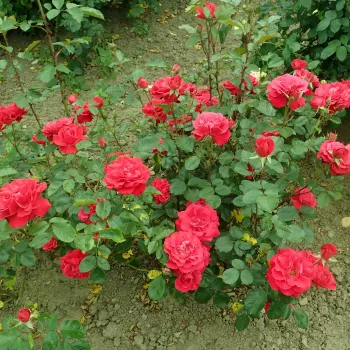
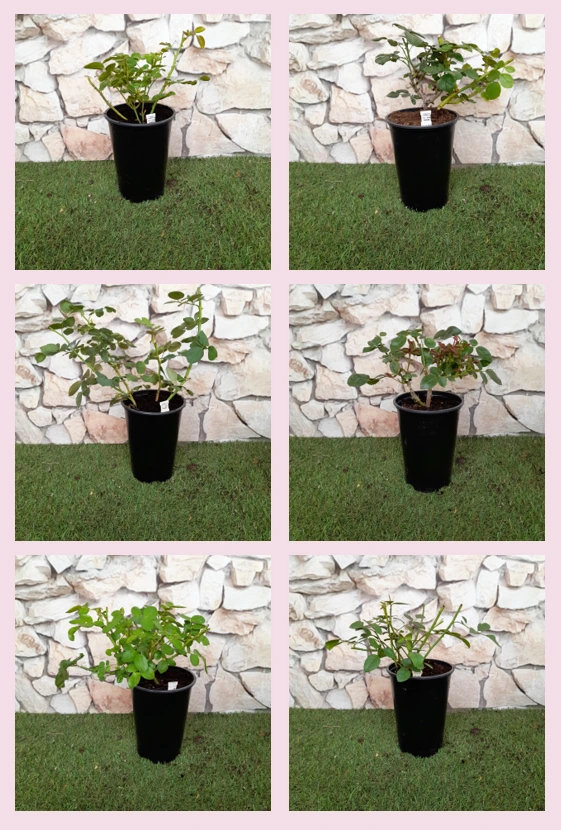
GRUSS AN HEIDELBERG® – carmine red climbing rose - Kordes
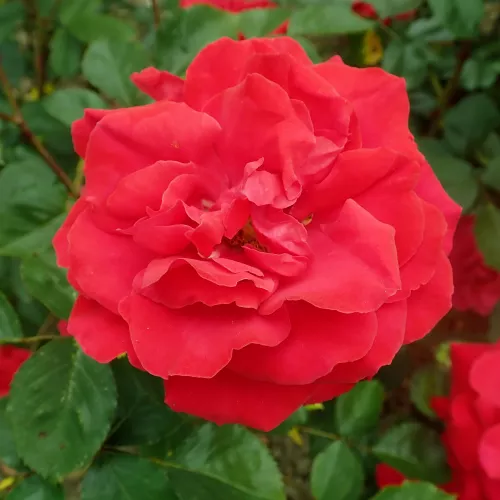
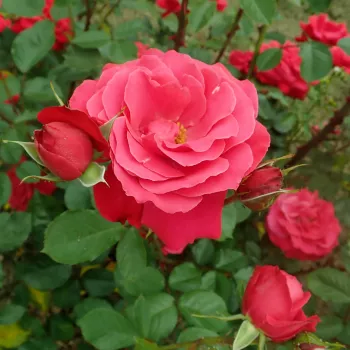
Sea-breeze memories meet garden calm in this carmine-red climbing rose, bringing refreshment and reliable colour to family plots that contend with brisk, salt-tinged winds and changeable weather near the coast. Gruss an Heidelberg® forms an upright, leafy screen that offers natural shelter on arches, pergolas and verandas, while its own-root vigour underpins long-term stability and graceful renewal after pruning. Flowers appear in generous clusters through the season, giving repeating waves of colour with only medium care, suited to hobby gardeners rather than specialists. Its glossy, dark green foliage frames the cup-shaped blooms, helping this climber sit comfortably beside grasses, sea kale and other textured planting. In a typical UK setting, you can expect roots to establish in the first year, stronger shoots and structure in the second, and a fully developed ornamental presence by the third, creating a lasting coastal-style backdrop for relaxed outdoor tea and evening sunsets.
Usage options
| Target area |
Reasoning |
| Coastal veranda windbreak |
Trained along a railing or light trellis, its upright habit and dense foliage create a living screen that softens sea breezes while still letting in light, ideal for relaxed outdoor seating for the busy coastal homeowner. |
| Rose arch or pergola |
The height and repeat-flowering clusters quickly dress an arch or simple timber frame, giving you a generous, classic rose look with medium upkeep and a long-lived, own-root framework that suits the family garden enthusiast. |
| Climbing accent on house wall |
Against a sunny or lightly shaded wall, it forms a vertical ribbon of carmine-red blooms, using modest ground space while providing years of structural interest and seasonal colour for the space-conscious homeowner. |
| Fence and boundary softening |
Planted along a fence, its dense, glossy foliage and steady repeat flowering soften hard edges and provide privacy, offering a durable, low-fuss alternative to repainting panels for the practical garden owner. |
| Small shingle or gravel garden |
In well-drained shingle with improved planting pockets, this climber anchors the scene, rising above lower perennials and coping well with exposed conditions that often bring brisk, salt-laden winds in coastal UK gardens for the seaside style lover. |
| Feature plant in medium container |
In a 40–50 litre or larger pot with a sturdy support, it offers vertical colour on patios and balconies while remaining manageable to prune and water, an accessible way into climbers for the beginner gardener. |
| Part-shade side passage |
Its tolerance of partial shade lets you use narrower side paths or east-facing aspects, bringing flowers to areas where many climbers underperform, adding interest along everyday routes for the busy household. |
| Long-term specimen near seating area |
Once established, the own-root structure supports reliable regrowth and repeat blooms year after year, so your investment in training and support repays you with enduring, gently scented colour for the long-term planner. |
Styling ideas
- Cornish-veranda – Train along a simple timber balustrade above shingle, underplant with sea kale and Festuca for a soft, maritime look – ideal for coastal holiday-home owners.
- Classic-arch – Let it climb a narrow metal arch over a path, paired with lavender at the base to echo its carmine tones – suited to traditional cottage-garden lovers.
- Patio-screen – Grow in a 50-litre container with a fan trellis to form a movable privacy screen, softened by dwarf artemisia – perfect for compact urban patios.
- Family-fence – Space plants along a boundary, weaving stems along wires for a colourful, child-friendly backdrop above play lawns – good for young families.
- Evening-pergola – Combine on a pergola post with airy Coreopsis and ornamental grasses beneath, so the crimson flowers glow at sunset – appealing to relaxed entertainers.
Technical cultivar profile
| Property |
Data |
| Name and registration |
Gruss an Heidelberg® – carmine red climbing rose; registered as KORbe, ARS exhibition name ‘Heidelberg’; large-flowered climber in the climbing rose commercial group. |
| Origin and breeding |
Bred by Reimer Kordes, W. Kordes’ Söhne, Germany, from ‘World’s Fair’ × ‘Floradora’; introduced in Germany in 1959 as an unregistered climbing cultivar. |
| Awards and recognition |
ADR award in Germany (1960) and multiple American Rose Society Classic Shrub Rose exhibition awards, confirming enduring ornamental and garden value. |
| Growth and structural characteristics |
Upright, vigorous climbing habit reaching about 200–320 cm high and 120–200 cm wide, with dense, dark green glossy foliage and strongly thorned, well-clad canes. |
| Flower morphology |
Double, cup-shaped blooms with 26–39 petals, large-flowered clusters on shoots; remontant with a notably abundant second flush given basic deadheading and feeding. |
| Colour data and phenology |
Carmine-red buds and newly opened blooms (RHS 46A, 53A), lightening towards rose-red at the edges; moderate fading before petal fall while centres retain deeper carmine tones. |
| Fragrance and aroma |
Subtle, rosy fragrance of mild intensity; scent is detectable at close range around seating but not overwhelming, complementing rather than dominating mixed plantings. |
| Hip characteristics |
Hip set is usually sparse due to double flowers; where present, produces small, spherical red hips about 6–10 mm in diameter, with limited visual impact in most seasons. |
| Resistance and winter hardiness |
Hardy to around -29 to -26 °C (RHS H7, USDA 5a); medium overall disease resistance, with good tolerance to powdery mildew and rust, black spot resistance moderate. |
| Horticultural recommendations |
Suited to arches, pergolas, walls and fences; plant 140–225 cm apart, allowing 0.4–0.5 plants/m²; performs in full sun to partial shade with regular watering in dry spells. |
Gruss an Heidelberg® – carmine red climbing rose - Kordes offers repeat flowering, strong vertical impact and durable own-root growth; consider it if you seek a lasting, easy-going climber for your garden.