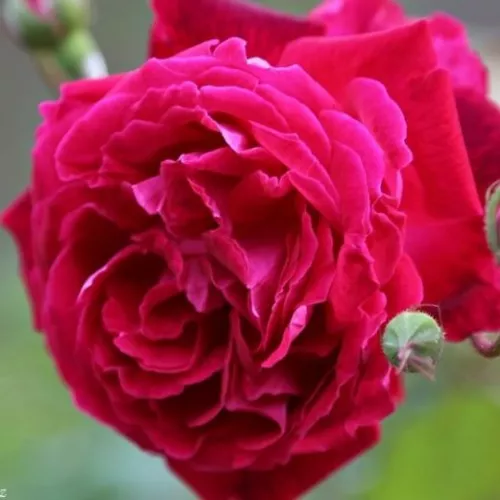
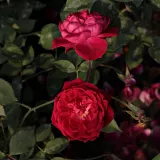
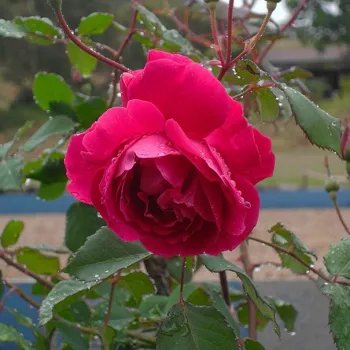
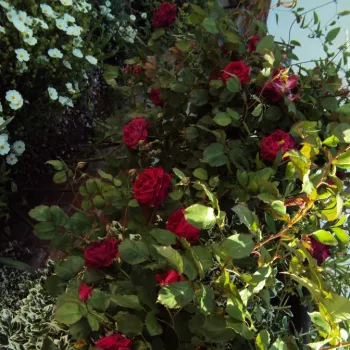
Gruss an Teplitz – deep crimson historic China rose
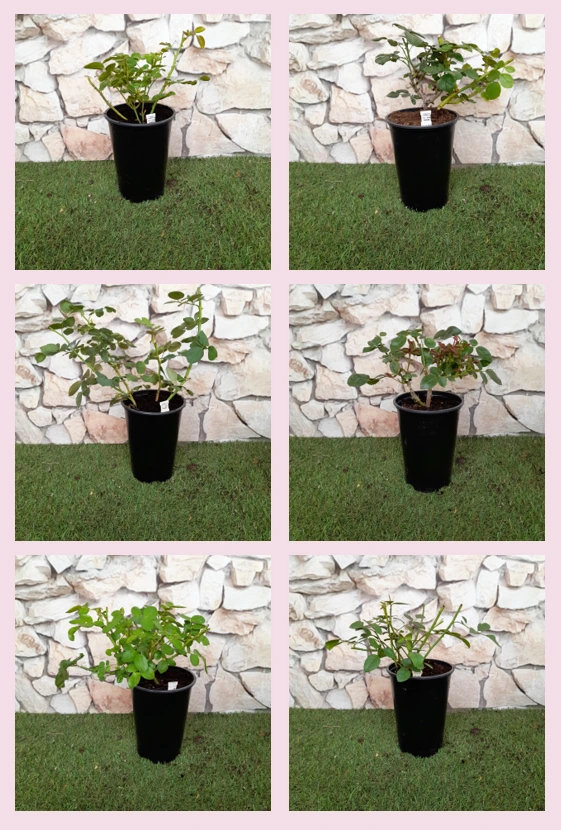
Imagine sipping tea behind a sun-warmed coastal windbreak, sheltered from brisk Atlantic breezes, with crimson blooms glowing above shingle and driftwood. Gruss an Teplitz is a historic China rose that feels perfectly at home in salty, sunny gardens, coping calmly where rain-laden storms and gusts are part of everyday life by rooting deeply and anchoring securely in well-prepared soils. Season-long flowering and a rich, spicy fragrance make it a charismatic choice for family plots and compact verandas, while its own-root form supports a long-lived, reliable structure that can regenerate if nipped by winter or coastal exposure. In a 2-litre pharmaROSA® ORIGINAL pot it establishes steadily – think year one for roots, year two for framework, year three for full presence – rewarding you with generous colour and scent for years with only modest, straightforward care.
Usage options
| Target area | Reasoning |
|---|
| Small coastal veranda in large containers |
Compact, upright growth and moderate spread fit well into a 40–50 litre pot on a veranda, giving vertical colour without crowding. Good heat tolerance means it copes with reflected warmth from walls and paving for coastal balcony gardeners. |
| Shingle or gravel border near the house |
Once established, its bushy, deep-rooting habit offers reliable anchoring in free-draining shingle with improved subsoil, coping well in sites exposed to strong coastal winds and frequent rain for those gardening close to the sea. |
| Fragrant seating area or tea corner |
Strong, long-lasting spicy fragrance and repeat flowering make it ideal beside a bench or small terrace, where regular deadheading can be done in a few minutes, suiting fragrance lovers who still prefer an uncomplicated routine. |
| Historic-style feature in a family flower bed |
This classic 1897 variety brings heritage character while behaving like a modern repeat-flowering shrub, flowering in flushes through summer with only moderate feeding and pruning, appealing to beginners who appreciate living history. |
| Mixed border with drought-aware planting |
Good heat tolerance and ability to cope with moderate drought suit borders with lavender, sea kale or ornamental grasses; with mulch and sensible watering, it offers stable colour in increasingly dry summers for time-pressed home gardeners. |
| Low, informal rose hedge |
Bushy, upright canes and moderate density foliage allow planting at hedge spacing to define paths or driveways; own-root plants fill out steadily and recover well from pruning, reassuring those wanting a long-term, low-fuss boundary. |
| Cut-flower picking corner |
Medium-sized, double, richly coloured blooms on clustered stems provide atmospheric, old-fashioned stems for the house; steady rebloom means the plant replaces what you cut, making it rewarding for home flower arrangers. |
| Beginner’s first “proper” crimson rose |
Moderate disease resistance, self-cleaning tendencies and forgiving structure mean routine deadheading and annual pruning are usually enough to keep it attractive, even if care is occasionally missed, suiting new or busy rose growers. |
Styling ideas
- Coastal Veranda Pot – plant Gruss an Teplitz in a 40–50 litre container with pale gravel mulch and low Festuca around the base to echo shingle – ideal for coastal-style balcony owners wanting impact from one statement rose.
- Shingle Drift Bed – combine with sea kale and silver foliage plants in a raised, well-drained bed to create a salty, breezy feel – suited to homeowners near the coast who enjoy relaxed, naturalistic planting.
- Tea Corner Scent – position beside a small seating nook, underplant with lavender and Nepeta for layered fragrance – perfect for those who like to unwind outdoors with a cup of tea and a book.
- Historic Ribbon Hedge – use as a loose, low hedge along a path, weaving in Brunnera for spring foliage interest – good for families wanting gentle structure without a formal, high-maintenance clipped look.
- Crimson Feature Border – make it the focal shrub in a mixed border, backed by tall ornamental grasses and variegated Ampelopsis for contrast – attractive for gardeners who want a romantic, dramatic highlight with minimal complexity.
Technical cultivar profile
| Trait | Data |
|---|
| Name and registration |
Historic China rose, registered cultivar and exhibition name Gruss an Teplitz, also traded as Gruss an Teplitz Historic rose Gruss an Teplitz; unregistered in formal registration year terms. |
| Origin and breeding |
Bred by Rudolf Geschwind in Hungary and introduced in 1897 by Peter Lambert, with a complex China and hybrid tea background combining ‘Sir Joseph Paxton’, ‘Fellenberg’, ‘Papa Gontier’ and ‘Gloire des Rosomanes’. |
| Awards and recognition |
World Federation of Rose Societies Old Rose Hall of Fame inductee since 2000, with an ARS garden rating of 8.0, reflecting sustained worldwide appreciation for garden performance and historic character. |
| Growth and structural characteristics |
Bushy, upright shrub reaching about 120–170 cm high and 75–110 cm wide, with moderately dense, slightly glossy medium-green foliage and moderate prickliness, forming a well-balanced, versatile garden bush. |
| Flower morphology |
Double, cupped blooms with 26–39 petals and medium flower size, carried mostly in clusters of 3–7 per stem; repeat flowering through the season, with moderate self-cleaning that still benefits from occasional deadheading. |
| Colour data and phenology |
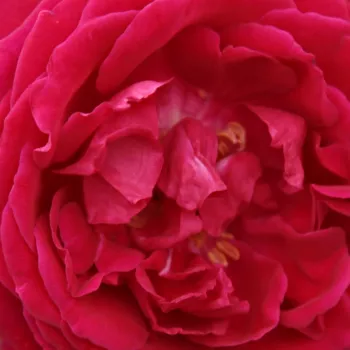
Crimson-red with a strong dark base tone and carmine tint; buds open vivid purplish crimson, deepening to velvety burgundy, then gradually pale slightly in strong heat while remaining richer in cooler conditions. |
| Fragrance and aroma |
Strong, rich, spicy fragrance that lingers around the plant in warm, still air, adding a traditional old-rose scent dimension to seating areas and entrances where its perfume can be fully appreciated. |
| Hip characteristics |
Forms only slight crops of small, bright red spherical hips, typically 8–12 mm across, adding discreet late-season detail without significantly reducing repeat flowering when deadheading is occasionally left. |
| Resistance and winter hardiness |
Hardy to around −21 to −18 °C (RHS H7, USDA 6b, Swedish zone 3), with good heat and moderate drought tolerance, plus resistance to black spot and powdery mildew and moderate susceptibility to rust. |
| Horticultural recommendations |
Best in a sunny position with reasonably drained soil; plant 55–60 cm apart for hedges, 2.5–3 plants/m² for massing, provide irrigation in prolonged drought and maintain with light annual pruning and simple plant protection as needed. |
Gruss an Teplitz offers season-long crimson colour, rich fragrance and a durable, regenerating own-root shrub for small coastal gardens and verandas; consider it if you value easy-care historic character that matures gracefully over time.