Gypsy Dancer – yellow‑orange park rose – Dickson
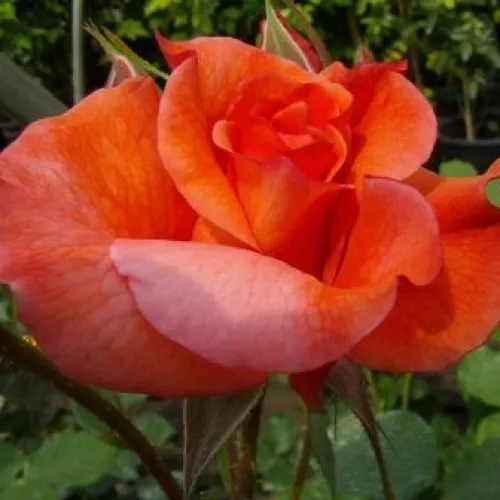
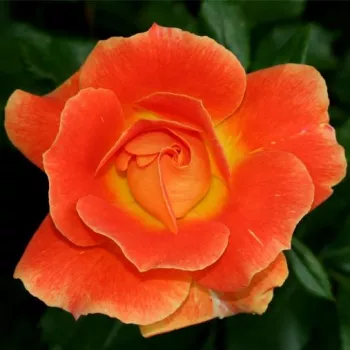
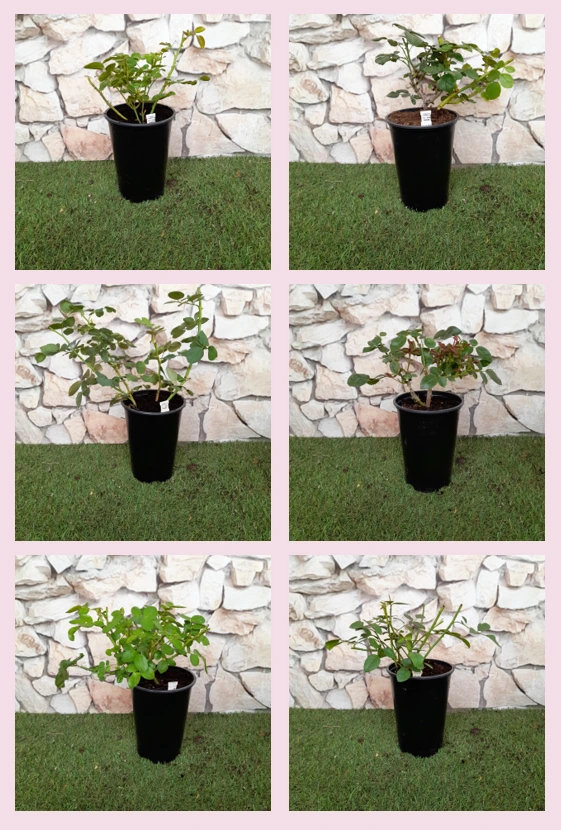
Imagine stepping onto your coastal veranda after a breezy walk, the air still sharp with sea spray yet softened by the fresh, fruity scent of Gypsy blooms. This compact, upright shrub rose settles comfortably into small family gardens, coping steadily with brisk hillside air and the kind of windbreak-friendly conditions that demand good anchoring and sensible water management in heavier soils. Its semi-double, hand-painted flowers appear in generous clusters from early summer, then repeat enthusiastically, so your shingle beds and pots are rarely without colour. Own-root plants build a quiet lifespan advantage, forming strong roots in year one, bushing out in year two and reaching full ornamental value by year three with reassuring stability and the ability to regenerate if cut back hard. In medium-sized containers of at least 40–50 litres, on patios or sheltered decks, the glossy dark foliage and neat height range keep the overall maintenance pleasantly low, asking mainly for regular watering and light deadheading. The vivid yellow and orange speckling reads as subtly girly against sea kale, Festuca or lavender, while red hips in autumn extend the season for wildlife and bring an easy sense of continuity to your planting. Choose this variety if you want relaxed refreshment from a rose that rewards simple, regular care rather than specialist attention.
Usage options
| Target area | Reasoning |
|---|
| Small coastal front garden border |
The compact 85–135 cm height and 60–90 cm spread make this shrub ideal for narrow beds between driveway and house, giving long, repeat flowering without dominating the space; it copes well where breezes and damp air are everyday realities, and suits time-poor coastal homeowners and beginners. |
| Shingle or gravel planting by a veranda |
Planted into well-prepared pockets within shingle, its upright habit and dense, glossy foliage create a colourful, almost Mediterranean feel, especially when underplanted with fragrant alyssum; maintenance is largely limited to watering in dry spells for relaxed coastal-style gardeners. |
| Feature rose in a large container (40–50 L+) |
In a sufficiently large pot with good drainage, this variety offers impressive repeat flowering and tidy structure on a veranda or terrace, with easy access for light deadheading and watering, making it an excellent focal point for busy urban balcony and patio owners. |
| Mixed border with sea-themed perennials |
The yellow-orange, brushstroked flowers pair beautifully with blue-grey Festuca and sea kale, evoking sunlit beaches and seashell tones while providing summer-long colour; moderate fragrance and pollinator interest add gentle life and movement for coastal-style planting enthusiasts. |
| Low informal hedge along a path |
At 50 cm spacing, plants knit into an informal edging that guides you through the garden, delivering colour in waves without becoming a rigid barrier; own-root plants reshoot reliably after harder pruning, offering a long-term, flexible solution for family garden planners. |
| Family play garden backdrop |
The medium height, upright growth and moderately thorny canes provide a soft visual screen without creating an impenetrable thicket, while the cheerful, painterly blooms keep the space friendly; steady health and structure suit low-fuss family-focused households. |
| Wildlife-friendly ornamental corner |
Semi-double flowers offer moderate value to pollinators in summer, followed by red, spherical hips that extend interest and support birds later in the year, giving subtle ecological benefit without complex management, appealing to nature-aware but time-limited gardeners. |
| Exhibition-style floribunda and cutting patch |
Clustered, semi-double blooms with distinctive yellow-orange speckling lend themselves to small vases and informal arrangements, and the plant’s repeat-flowering habit ensures a steady supply; performance is reliable where drainage and watering are sensibly managed in heavy soils for keen but non-expert rose growers. |
Styling ideas
- Seaside Veranda Nook – Combine Gypsy Dancer in a 50 L tub with blue Festuca and white alyssum to echo surf and foam, ideal for beginners wanting a breezy, low-effort sitting area.
- Shell-Path Border – Line a shingle path with repeating clumps, interplanted with sea kale and dwarf lavender, for a gentle wind-filtering ribbon of colour suited to family gardens.
- Painter’s Cutting Corner – Grow three shrubs together with soft peach and cream perennials to pick painterly stems for the house, perfect for creative homeowners who like informal bouquets.
- Wildlife Retreat Edge – Back a small wildlife lawn with Gypsy Dancer and airy ornamental alliums, letting hips and nectar support visiting birds and insects for nature-curious children and adults.
- Courtyard Focus Pot – Place a single specimen in a generous container by a bench, framed with scented alyssum, to create a simple, repeating highlight for busy urban veranda users.
Technical cultivar profile
| Parameter | Data |
|---|
| Name and registration |
Gypsy Dancer (DICquiet), shrub / floribunda park rose, ARS exhibition name Gypsy Dancer; part of the Park - shrub rose collection, commercial type park rose. |
| Origin and breeding |
Bred by Patrick Dickson, Dickson Roses, Newtownards, Northern Ireland, from DICmagic × MACmanly; bred 1992 in the UK and introduced internationally in 1994 with verified authenticity. |
| Awards and recognition |
1er Prix at the Bagatelle (Paris) international rose competition 1992, plus shrub class wins at Rhode Island Rose Society Show 2000 and Fort Worth Rose Society Show 2001. |
| Growth and structural characteristics |
Compact, upright shrub reaching about 85–135 cm high and 60–90 cm wide, with dense, glossy dark green foliage and moderate prickles; self-cleaning is partial, so some deadheading is needed. |
| Flower morphology |
Semi-double, cup-shaped blooms with roughly 13–25 petals, produced in clusters of medium-sized flowers; strongly remontant with an abundant second flush and regular repeat through the season. |
| Colour data and phenology |
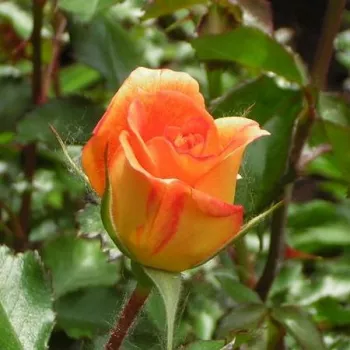
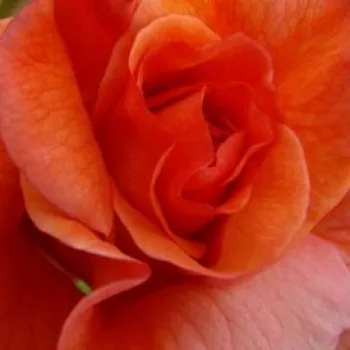
Light lemon-yellow base enlivened by irregular orange brushstrokes (RHS 14B outer, 24B inner); colour softens to cream and peach in strong sun, staying more vivid in cooler, milder conditions. |
| Fragrance and aroma |
Mild, fresh, fruity fragrance that does not overwhelm nearby seating areas; scent is noticeable at close range but restrained enough for compact patios and verandas where people sit frequently. |
| Hip characteristics |
Produces moderate numbers of small, spherical red hips around 9–15 mm in diameter, extending visual interest into autumn and offering incidental value to local birds in established plantings. |
| Resistance and winter hardiness |
Hardy to about -21 to -18 °C (RHS H7, USDA 6b, Swedish Zone 3); disease resistance is moderate for black spot, mildew and rust, with regular watering needed during extended summer droughts. |
| Horticultural recommendations |
Best in full sun with well-drained but moisture-retentive soil; plant 50–60 cm apart for hedging or 100 cm as specimens, allow 2.8–3.2 plants/m² in mass plantings, and water steadily in dry spells. |
Gypsy Dancer offers compact structure, repeat flowering and seasonal hips in an own-root form that builds lasting strength and recovery, making it a thoughtful choice for relaxed, long-term coastal and family gardens.