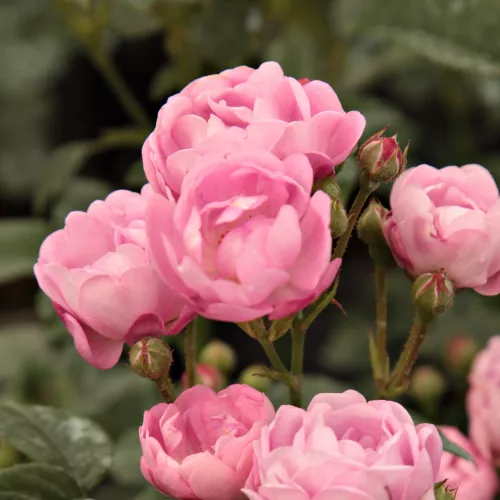
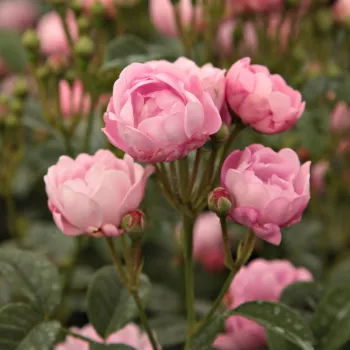
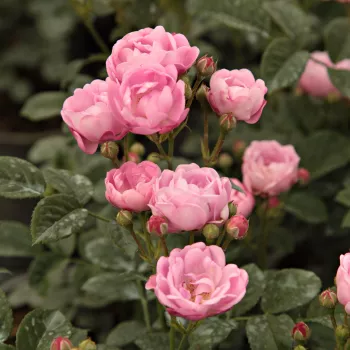
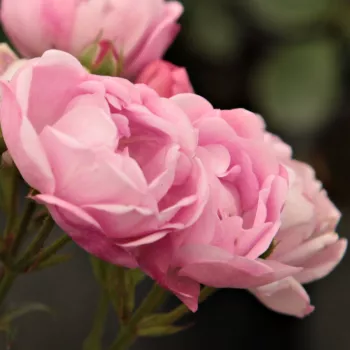
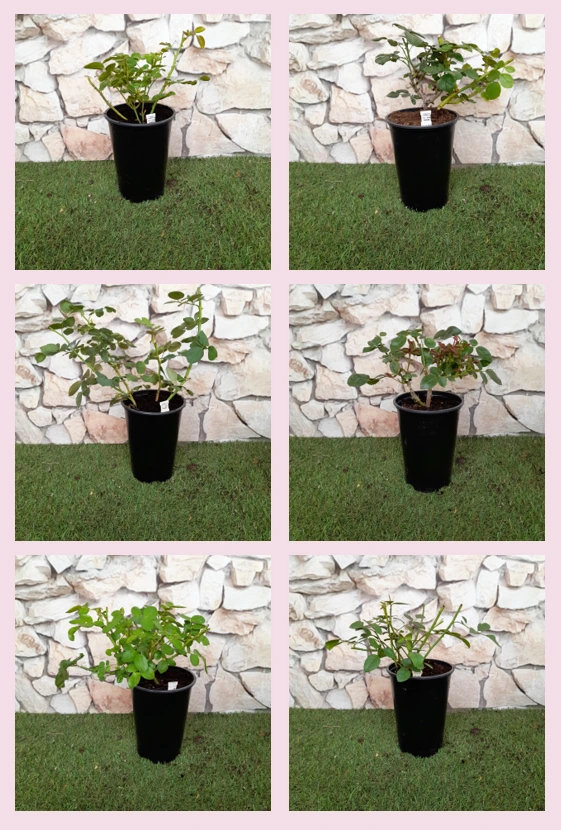
HADIKFALVA – pink bedding polyantha rose - Márk
Imagine stepping onto your veranda after a breezy walk along the shore: HADIKFALVA settles into this relaxed, coastal rhythm with compact habit, low-maintenance planting and a steady stream of soft pink clusters for small family gardens. Its own-root resilience supports a long garden life with reliable regeneration and stable ornamental value, while its finely sized blooms sit neatly above mid-green foliage. In a well-drained spot that copes confidently with persistent wind and rain near the coast, it anchors borders and shingle beds without demanding constant attention. Over three seasons it quietly matures – first building roots, then stronger shoots, before reaching full flowering potential as a calm, seaside-inspired backdrop.
Usage options
| Target area |
Reasoning |
| Coastal veranda containers |
Its compact polyantha habit stays neat in a large 40–50 litre pot, giving a gentle pink focus without overwhelming a small sitting area. The bushy form copes well with breezy conditions, ideal for a sheltered coastal veranda user such as the busy beginner. |
| Front-of-border edging |
The modest height and dense branching create a low, tidy edging line that frames paths and lawns without blocking views. Regular clusters of small flowers provide colour for much of the season, suiting the practical yet beauty‑seeking homeowner. |
| Low informal hedge |
Planted at the recommended hedge spacing, plants knit together into a soft, flowering barrier that marks garden boundaries without harsh lines. The bushy structure gives visual separation and privacy while remaining manageable for the hobby gardener. |
| Small family garden beds |
Its moderate maintenance needs and steady repeat flowering make it easy to slot into mixed beds where time is limited. Own‑root durability supports long-term structure, giving reassurance to a time‑pressed family‑garden owner. |
| Coastal shingle and gravel planting |
Described as drought-tolerant, it copes well with heat and moderate dryness in free-draining shingle or gravel, echoing relaxed seaside planting. This makes it a sound option for coastal-style enthusiasts. |
| Wind-exposed corners |
The low, bushy framework and dense foliage help it sit firmly without rocking, giving structure even in blustery spots that often defeat taller roses, particularly useful for storm-prone coastal garden owners. |
| Colour-coordinated pink schemes |
The stable pale pink with lilac tint and soft fading pattern lends itself to harmonious pastel palettes. It blends elegantly with blues, silvers and creams, pleasing design‑conscious rose lovers. |
| Urban patio planters |
Its restrained size and polite fragrance make it suitable for close seating areas where overpowering scent or bulk would be intrusive, offering a calm, low-fuss accent for compact urban‑space users. |
Styling ideas
- Shingle-border calm – Set HADIKFALVA in a gravel strip with sea kale and blue Festuca to echo relaxed Cornish shingle gardens – ideal for coastal-style appreciators.
- Veranda-tea corner – Use one plant in a 50-litre tub with lavender at the base beside a bistro set, creating a soft pink focus for seaside veranda loungers.
- Pastel-ribbon edge – Line a path with repeating HADIKFALVA and low creeping thyme to form a gentle, scented edging ribbon – perfect for family-garden path planners.
- Soft-screen hedge – Plant a loose row near a seating nook, backed by cherry laurel, for a layered, wind-softening screen – suited to privacy-seeking homeowners.
- Urban-coastal pot – Combine HADIKFALVA in a large container with silvery grasses and pale accessories to bring a coastal mood to city patios – great for balcony gardeners.
Technical cultivar profile
| Parameter |
Data |
| Name and registration |
HADIKFALVA – pink bedding polyantha rose - Márk; polyantha bed rose group, marketed as a compact bedding shrub for mass or specimen use in family gardens and urban spaces. |
| Origin and breeding |
Bred by Hungarian rosarian Márk Gergely around 2000; distributed by PharmaRosa® Ltd. as an own-root bedding rose, with detailed parentage and exact introduction date currently unknown. |
| Growth and structural characteristics |
Bushy, compact shrub 35–55 cm high and 30–50 cm wide, with moderately thorny shoots and dense, mid-green, slightly glossy foliage forming a low, cohesive mound for edging or bedding. |
| Flower morphology |
Small, double, cup-shaped blooms (0.5–1.5 in) borne in clusters, with 26–39 petals; remontant, producing an abundant second flush that maintains garden presence over a long flowering window. |
| Colour data and phenology |
Pale pink with a delicate lilac tint; ARS LP, RHS 73C outer and 73D inner, fading through silvery pink to touches of cream while retaining a gentle, uniform effect even as blooms age. |
| Fragrance and aroma |
Very faint, discreet rosy fragrance best appreciated at close range; chosen primarily for visual impact rather than scent, so it suits seating areas where strong perfume may be unwelcome. |
| Hip characteristics |
Occasional dark-red spherical hips form after flowering, around 10–14 mm in diameter, adding modest late-season interest without significantly affecting the plant’s main ornamental role. |
| Resistance and winter hardiness |
Rated H4, suitable for much of the UK; tolerates heat and moderate drought, with medium disease resistance that may call for occasional protection in high-pressure seasons or exposed sites. |
| Horticultural recommendations |
Best at 30–65 cm spacing depending on use; prefers well-drained soil with regular watering in containers, and benefits from light pruning and periodic health checks to sustain reliable flowering. |
HADIKFALVA – pink bedding polyantha rose - Márk offers compact habit, season-long clustered flowering and own-root longevity, making it a thoughtful choice for relaxed coastal or urban gardens where ease and durability matter, should you wish to add it.