HONEY MAYA – orange bedding floribunda rose
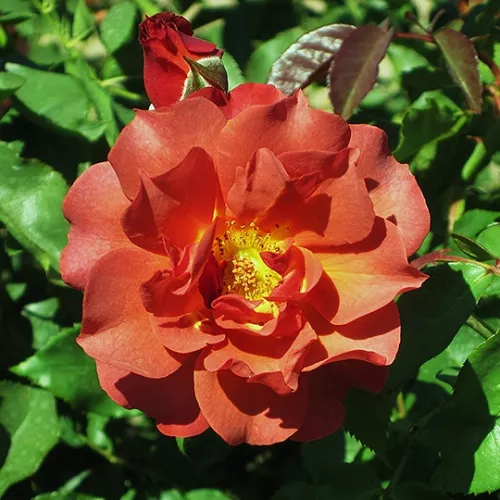
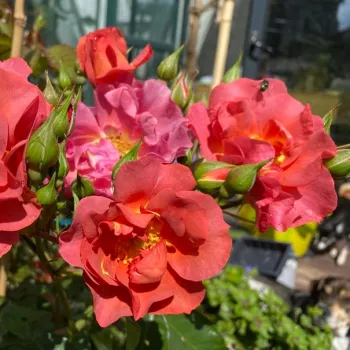
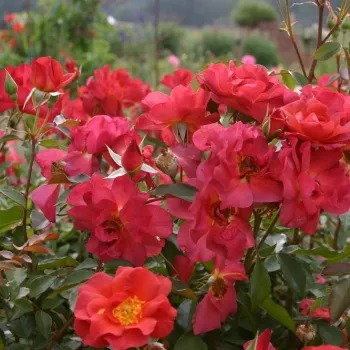
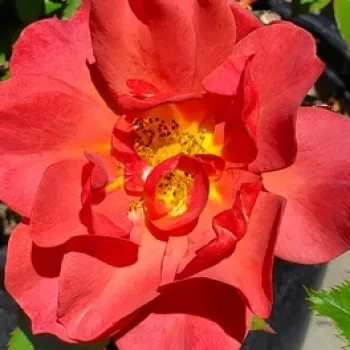
HONEY MAYA brings a relaxed coastal feel to family gardens, combining vivid colour with a calm, easy-going habit that suits busy lives. Its compact, bushy growth makes it ideal for small beds or containers, where it forms a low, shimmering hedge of fiery orange-red blooms with a warm, golden centre. The semi-double flowers release a gentle, honeyed perfume and their open stamens invite visiting bees, adding quiet movement around your seating area. Once planted in free‑draining soil it copes steadily with blustery weather and exposed positions, offering a reassuring anchor as your garden matures. In its own-root form this rose builds strength from the inside out – roots first, then shoots, then full display – giving you a quietly dependable partner for long-term coastal verandas and sheltered patios, shingle borders, small beds, low hedging, compact shrubs, bee-friendly planting and relaxed seaside-inspired gardens.
Usage options
| Target area |
Reasoning |
| Front-of-border bedding in a small family garden |
The compact 60–90 cm height and 50–70 cm spread make HONEY MAYA easy to place at the front of mixed borders without overwhelming nearby perennials, ideal when you want consistent colour but have limited space or time, for beginners. |
| Low informal hedge along a coastal path or drive |
Planted at around 50 cm, its bushy, densely foliated habit forms a low, semi-formal line that softens paths or drives, giving a neat but not rigid look that suits breezy, seaside-style gardens, for coastal owners. |
| Feature rose in a large container on a veranda |
In a 40–50 litre pot with good drainage, this floribunda builds a stable, own-root framework that copes well with regular pruning and repositioning, making it a dependable long-term focal point near your seating, for balcony users. |
| Mass planting in front gardens or communal beds |
With planting distances of 60 cm and a density of roughly three plants per square metre, HONEY MAYA quickly creates a unified, vivid carpet of orange blooms, simplifying design decisions for those who prefer straightforward schemes, for homeowners. |
| Bee-friendly, family-friendly play-space edging |
Semi-double flowers with exposed stamens provide easy access for bees, adding gentle wildlife interest along lawn edges or play areas while maintaining a tidy, medium-height outline that is simple to keep in check, for families. |
| Coastal-style mixed planting with grasses and sea thrift |
Its warm orange flowers combine naturally with Armeria and small ornamental grasses, while the steadily anchoring root system helps it sit securely in breezier, free-draining sites where persistent wind would trouble taller roses, for stylists. |
| Long-season colour by terraces and seating areas |
Remontant flowering ensures repeated flushes from early summer, so even with modest care you enjoy months of colour and honeyed fragrance around your terrace, suiting those who want visible reward from minimal input, for busy gardeners. |
| Medium-care, low-chemical garden concepts |
Moderate disease resistance and average water needs mean you can manage with sensible spacing, mulching and occasional pruning rather than intensive spraying, fitting breathable, low-chemical planting schemes in changeable UK weather, for eco-conscious buyers. |
Styling ideas
- Harbour-edge – Pair HONEY MAYA with Armeria maritima and silver grasses in a shingle bed to echo Cornish harbour colours – perfect for coastal-style enthusiasts.
- Veranda-Glow – Grow a single plant in a 50‑litre terracotta pot by your seating to enjoy repeated orange blooms and honey fragrance – ideal for time-poor veranda owners.
- Shell-Path – Line a short path with a loose hedge of HONEY MAYA and low lavender to frame shell-decorated gravel – suited to families who like simple, cheerful structure.
- Sunset-Drift – Mass-plant three to five roses in a front bed with blue Ceanothus behind for an easy, sunset-toned display – good for first-time homeowners.
- Bee-Ribbon – Edge a lawn with alternating clumps of HONEY MAYA and sea thrift to give bees a colourful corridor – appealing to wildlife-minded beginners.
Technical cultivar profile
| Parameter |
Data |
| Name and registration |
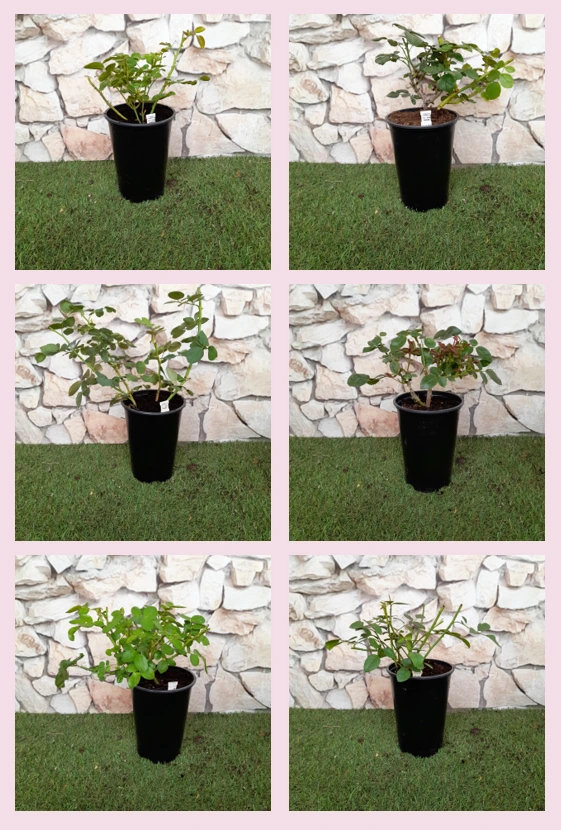
HONEY MAYA – orange bedding floribunda shrub rose, commercial bed rose type; current trade name from Delbard, sold in the vivianaROSE ORIGINAL 2‑litre own-root range. |
| Origin and breeding |
Parentage and breeder data are not recorded; introduced by PharmaRosa Ltd. from Hungary, first released to the market in 2023 as a modern bedding floribunda. |
| Growth and structural characteristics |
Bushy, compact shrub to around 60–90 cm high and 50–70 cm wide, with dense, glossy dark-green foliage and moderate prickliness, forming a rounded, bedding-friendly outline. |
| Flower morphology |
Semi-double, cupped blooms with 16–24 petals, produced in clustered inflorescences of medium size; flowers repeatedly through the season with a strong second flush. |
| Colour data and phenology |
Fiery orange-red flowers with a golden-yellow centre; RHS 14B outer and 14C inner, fading gradually to warm salmon-coral pink while maintaining good overall colour retention. |
| Fragrance and aroma |
Noticeable, medium-strength perfume described as sweet and honey-like, contributing a gentle background scent suitable for seating areas without becoming overwhelming. |
| Hip characteristics |
Produces spherical orange-red hips in moderate quantities; typically 6–10 mm in diameter, offering additional seasonal interest and a subtle wildlife food source into autumn. |
| Resistance and winter hardiness |
Hardy to about −21 to −18 °C (RHS H7, roughly USDA 6b); moderate tolerance of heat and drought, with average disease resistance requiring routine but not intensive care. |
| Horticultural recommendations |
Best in full sun with well-drained soil; spacing from 50 to 95 cm depending on use, with approximate densities of 2.8–3.2 plants per square metre in mass plantings. |
HONEY MAYA offers compact, colourful bedding, repeat flowering and gentle fragrance in a long-lived, own-root form that settles in reliably over time, making it a thoughtful choice for relaxed coastal-inspired gardens.