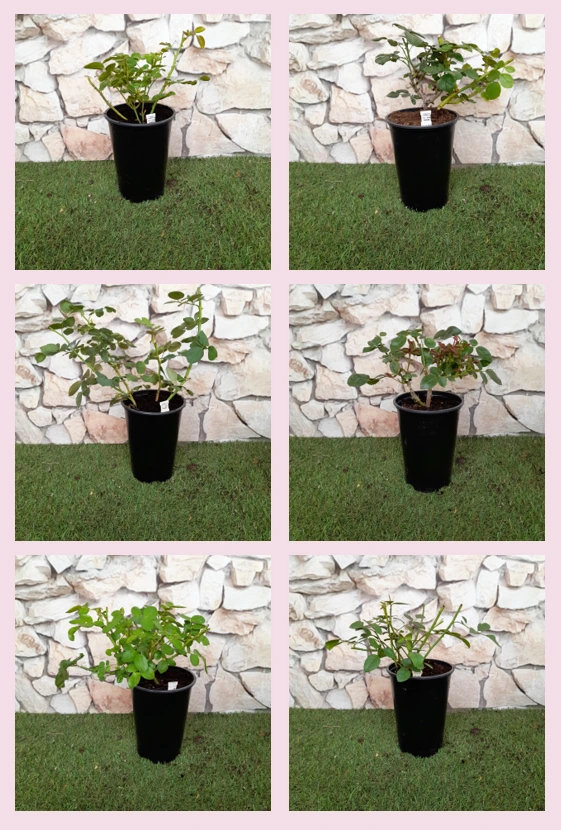
ROSA PIMPINELLIFOLIA FRÜHLINGSMORGEN – pink-yellow landscape shrub rose - Wilhelm J.H. Kordes II
Bring the feeling of a breezy coastal spring morning into your garden with this easy-going shrub rose, ideal for relaxed hedges and mixed borders where wind-tolerant planting helps your space feel sheltered yet open. Its once-a-year flush of large, single flowers in luminous pink and cream-yellow creates a soft pastel haze, followed by abundant crimson hips that extend the season well into autumn. Own-root plants make long-term stability simple – they regenerate from the base, age gracefully and demand little more than light pruning. RHS Award of Garden Merit quality underpins reliable performance, even for beginners, while the strong fragrance and open, pollen-rich blooms draw bees and butterflies to the patio. In a 40–50 litre container or a small family plot, it settles in steadily – roots in year one, framework in year two, then full ornamental impact by year three.
Usage options
| Target area | Reasoning |
|---|
| Informal coastal-style hedge along a boundary |
Dense, bushy growth and upright habit make this rose a natural choice for loose hedging that feels soft rather than formal fencing, gently filtering coastal breezes while remaining robust in exposed, breezy UK gardens for privacy-seeking homeowners. |
| Low-maintenance family border in a small to medium garden |
Once established, this rose asks very little: light, occasional pruning and no complex spraying regime, thanks to its general resistance to powdery mildew, black spot and rust, making it ideal for time-poor but style-conscious beginners. |
| Pollinator-friendly corner near a seating area |
The large, single flowers with prominent golden stamens provide easy access for bees and other beneficial insects, combining nectar value with a natural look that suits relaxed family gardens enjoyed by wildlife-loving gardeners. |
| Seasonal focal point with decorative autumn interest |
Although it flowers once, the generous flush of spring blooms is followed by many crimson-red hips that hold into autumn, giving colour and structure long after the petals fall, appealing to those who appreciate evolving, multi-season planting. |
| Long-lived structure plant in cottage or naturalistic schemes |
As an own-root shrub with strong hardiness down to severe winter temperatures, it forms a durable framework that responds well to rejuvenation pruning over the years, suiting planners who value investment in enduring garden structure. |
| Coastal veranda or terrace in large containers |
In a 40–50 litre pot, the bushy habit, sturdy branching and tolerant foliage give a substantial presence that copes with breezy conditions while anchoring well in its compost, ideal for coastal-style lovers creating sheltered outdoor rooms for relaxed living. |
| Semi-shaded side garden or north-east facing border |
Its ability to flower with around three hours of direct sun per day makes it useful where light is limited, such as side passages or near taller shrubs, helping to green up awkward spots for space-conscious urban owners. |
| Responsible, wildlife-supporting planting in family gardens |
This rose’s robust health, cold hardiness and generous hips make it a sound, low-intervention choice that supports birds and beneficial insects while needing minimal chemical input, ideal for environmentally aware coastal gardeners seeking resilient choices. |
Styling ideas
- Shell-Pink Hedge – create a loose, meandering hedge with shrubs spaced for gentle overlap, underplanting with Stachys byzantina to echo shingle greys – perfect for families wanting a soft boundary children can grow up alongside.
- Tea-On-The-Veranda – place a single plant in a 50 litre tub by a sheltered chair, combining it with Nepeta in smaller pots for a salty-breeze, seaside-tea atmosphere – ideal for veranda owners seeking low-effort charm.
- Wildlife Ribbon – weave this rose through a mixed strip of grasses and perennials, letting its open blooms and hips feed pollinators and birds – suited to gardeners prioritising nature-friendly structure over formal bedding.
- Pastel Anchor – use it as the taller, structural shrub at the back of a small border, with Heuchera and soft grasses in front, to give year-round backbone – a good fit for beginners wanting one dependable focal shrub.
- Spring Moment – group three shrubs in a loose triangle in a lawn corner, mimicking a coastal thicket that explodes into blossom then hips – for homeowners seeking a single, memorable seasonal event in the garden.
Technical cultivar profile
| Parameter | Data |
|---|
| Name and registration |
Rosa pimpinellifolia Frühlingsmorgen, shrub/landscape rose from the Spring collection; ARS exhibition name ‘Fruhlingsmorgen’; botanical-style landscaping shrub suited to hedging and naturalistic planting. |
| Origin and breeding |
Bred by Wilhelm J. H. Kordes II (W. Kordes’ Söhne, Germany); parentage (‘E. G. Hill’ × ‘Cathrine Kordes’) × Rosa spinosissima var. altaica; bred 1941 in Germany and released to commerce in 1942. |
| Awards and recognition |
Holds the RHS Award of Garden Merit (United Kingdom, 2012), recognising reliable garden performance, relative ease of cultivation and strong disease resistance under typical UK growing conditions across multiple seasons. |
| Growth and structural characteristics |
Bushy, upright shrub with dense foliage and many thorns; medium-dark, matt, slightly grey-green leaves give a natural, understated texture; vigorous habit makes it suitable for hedges and larger border positions. |
| Flower morphology |
Large, single, flat blooms with roughly 5–12 petals, borne in clusters; non-remontant, providing one pronounced main flowering period; flower diameter typically in the 2.75–3.95 inch range, giving strong visual presence. |
| Colour data and phenology |
Medium-intensity pink–carmine flowers with paler, cream to yellowish centres; open flowers show a clear two-tone effect, with golden-yellow to reddish-brown stamens; colour retention is moderate through the main bloom period. |
| Fragrance and aroma |
Medium-strength, clearly perceptible scent with muscatel, wild-rose and violet-floral notes; fragrance is most noticeable around fully open bloom stage, adding sensory interest when planted close to paths or seating. |
| Hip characteristics |
Produces numerous ornamental, crimson-red, egg-shaped hips, around 10–20 mm diameter; hips follow the main spring flowering and contribute decorative and wildlife value into late season borders and hedges. |
| Resistance and winter hardiness |
Excellent winter hardiness, around –35 °C, RHS H7, Swedish zones 1–4, USDA 6b; generally resistant to powdery mildew, black spot and rust under garden conditions, supporting low-spray or no-spray maintenance approaches. |
| Horticultural recommendations |
Suited to hedges, screening, mixed borders, cottage and wildflower gardens, and pollinator plantings; plant at 135 cm for massing, 80 cm for hedges, 205 cm as specimens; tolerates partial shade with about three hours of sun daily. |
ROSA PIMPINELLIFOLIA FRÜHLINGSMORGEN offers low-maintenance health, pollinator-friendly spring display and long-lived own-root reliability, making it a thoughtful choice for relaxed, enduring coastal or family gardens you wish to enjoy for many years.