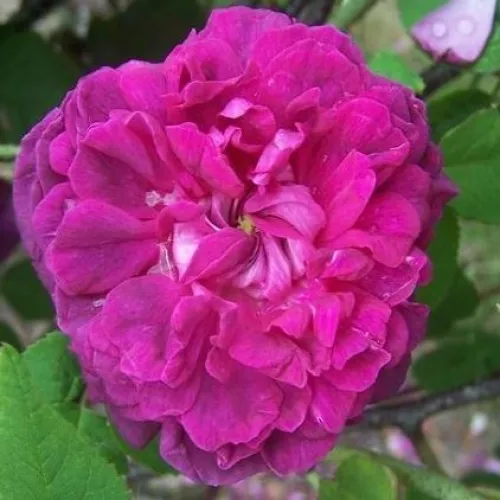
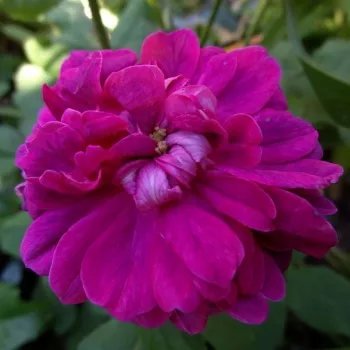
INDIGO – violet historic Portland rose - Laffay
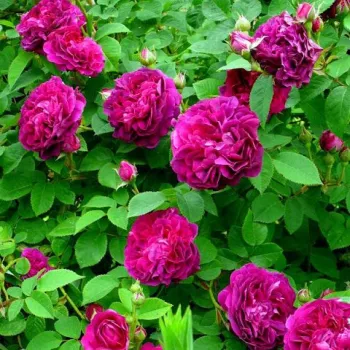
Bring a hint of Cornish harbour to your garden with Indigo, a compact historic Portland rose that settles calmly into breezy plots and copes well with coastal wind and salt‑tinged air. Its upright, medium‑sized shrub shape is easy to place in smaller family gardens or on verandas, while the own‑root form promises reassuringly long‑term stability and recovery after harsh seasons. Deep violet, slate‑shaded blooms appear in generous flushes with a strong, far‑carrying fragrance, ideal beside a favourite garden chair for evening tea. This low‑maintenance, disease‑resistant heritage rose fits busy lives: basic watering, feeding and light pruning are usually enough. Over time the plant anchors itself, with year‑by‑year structure becoming sturdier as the root system fills the soil. In its first season it focuses on roots, the second on new framework shoots, and by the third year you can enjoy its full ornamental impact in a relaxed coastal‑inspired veranda or small shingle border, pairing beautifully with fine grasses, sea‑toned foliage and soft summer breezes.
Usage options
| Target area | Reasoning |
|---|
| Small coastal front garden bed |
Indigo’s compact, upright structure fits a narrow front border where space is limited but you still want a clear focal shrub that stands above low gravel or shingle. It weathers wind and salt‑tinged air well, ideal for seaside homeowners and beginners. |
| Veranda container (40–60 litre) |
A large, well‑drained pot from 40–60 litres lets Indigo root deeply, stabilising the plant for blustery verandas while keeping maintenance simple; regular watering and a spring feed support reliable flowering for relaxed coastal‑style gardeners. |
| Romantic “girly” seating nook |
Plant close to a bench or bistro set so the strongly scented violet blooms perfume a sheltered tea corner; combine with soft grasses and pale cushions to create a nostalgic yet manageable retreat for busy urban owners. |
| Low, informal flowering hedge |
At 90–100 cm spacing, Indigo forms an airy, low hedge that defines paths or boundaries without dominating, while remontant flowering adds colour across the season for families wanting discreet structure with minimal upkeep. |
| Mixed historic rose border |
Use Indigo as a mid‑height anchor among lighter roses and perennials; its dense foliage and repeat flowering lend continuity and depth, suiting enthusiasts who appreciate period character but still prefer straightforward care. |
| Clay soil family garden corner |
With improved drainage, Indigo establishes well even where heavier soils are typical, its own‑root system gradually building resilience in real‑world British conditions for homeowners managing ordinary plots and modest budgets. |
| Cutting patch for scented stems |
The medium, double blooms on upright stems provide characterful, richly coloured flowers for the house; light deadheading encourages repeat flushes, rewarding those who like home‑grown arrangements without technical skills. |
| Park or shared green planting |
Low maintenance and good disease resistance make Indigo suitable for lightly tended communal beds, where consistent foliage and periodic flowering matter more than daily attention, supporting caretakers and community groups. |
Styling ideas
- Harbour-Veranda – Large terracotta tub with gritty compost, paired with blue Festuca and a low sea kale substitute for a relaxed, salty-breeze look – ideal for coastal balcony and veranda users.
- Romantic-Nook – Indigo by a painted bench, underplanted with Scabiosa and soft Mexican feather grass, creates a powdery violet, “girly” reading spot – suited to cottage-style dreamers.
- Historic-Row – A short run of shrubs along a front path, edged in gravel and shells, echoes old walled gardens – perfect for heritage lovers in compact town plots.
- Clay-Corner – Raised, well-drained bed in a heavy-soil garden, mixed with Euonymus japonicus ‘Microphyllus’ for neat evergreen structure – good for pragmatic family gardeners.
- Cutting-Patch – Informal square in a lawn with several Indigo plants, allowing easy picking of scented stems through the season – attractive for home florists and creative teenagers.
Technical cultivar profile
| Attribute | Data |
|---|
| Name and registration |
Indigo is a historic Portland rose sold as a heritage shrub; an unregistered cultivar commonly traded as Indigo – violet historic Portland rose – Laffay in specialist collections. |
| Origin and breeding |
Raised by Jean Laffay in France around 1844–1845, with unknown parentage; an early remontant shrub from the Portland, Damask Perpetual group, preserved via traditional vegetative propagation. |
| Growth and structural characteristics |
Medium upright shrub, typically 100–150 cm tall and 80–120 cm wide, moderately thorny with dense mid-green, slightly glossy foliage, forming a bushy, balanced outline in mixed plantings. |
| Flower morphology |
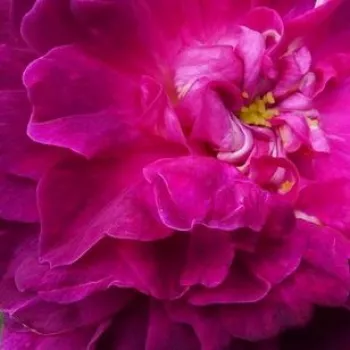
Medium, flat, double blooms with around 26–39 petals, usually borne in clusters; remontant, offering an initial flush then a generous second flowering period in suitable conditions. |
| Colour data and phenology |
Rich, velvety deep violet with slate-grey shading; buds are dark and matt, opening to dusky violet, then gently fading towards lilac-grey and brownish edges, with colour deepening in cooler spells. |
| Fragrance and aroma |
Strong, far-carrying scent of traditional old roses; exact notes are undocumented, but intensity is high enough to perfume nearby seating areas and small gardens during main flowering. |
| Hip characteristics |
Hip set is generally sparse; where present, small spherical orange-red hips of about 10–15 mm add subtle late-season interest without dominating the plant’s overall appearance. |
| Resistance and winter hardiness |
Good overall disease resistance, with noted resilience to black spot, mildew and rust; hardy to approximately −29 to −32 °C (RHS H7, USDA 4b), coping well with typical UK winters. |
| Horticultural recommendations |
Best in well-drained soil with sun to light shade; suitable for beds, hedging, specimen use and cutting. Requires deadheading, annual pruning and watering during prolonged drought for best display. |
INDIGO – violet historic Portland rose - Laffay offers compact structure, strong fragrance and dependable disease resistance on a long-lived own-root shrub; a thoughtful choice if you value characterful colour with relatively light care.