INDIGOLETTA – purple climbing rose - Laak
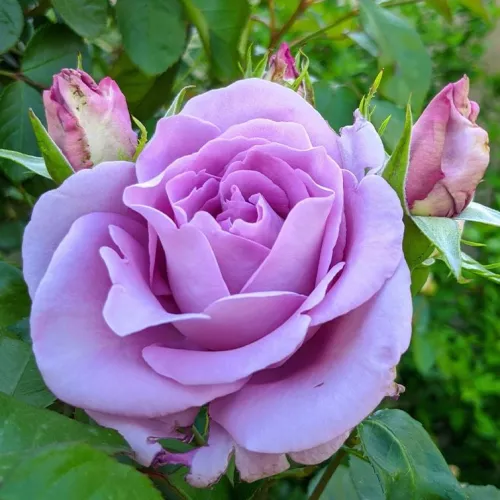
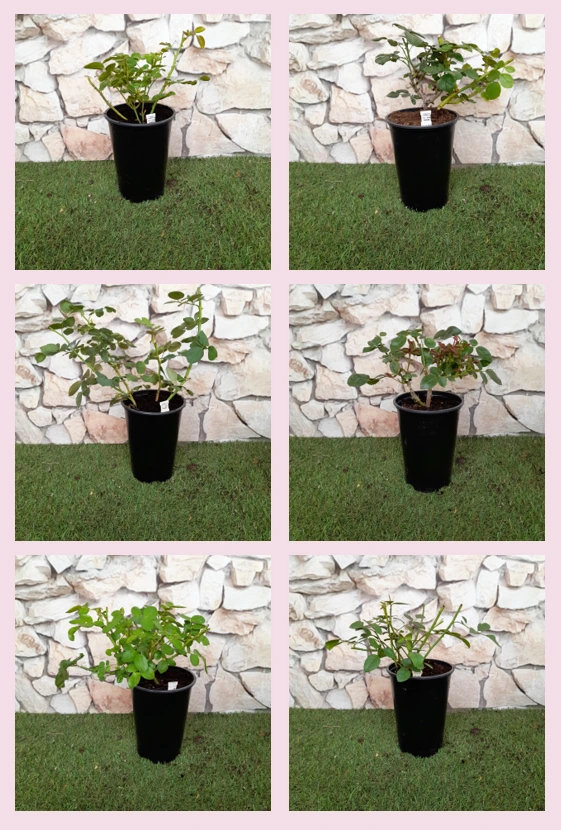
Along a breezy Cornish veranda or Devon garden wall, INDIGOLETTA settles in as a quietly reliable partner: an own‑root climber chosen for ease, long‑term stability and sea‑side resilience in gardens where wind and salt spray meet summer light. Its deep violet blooms with a bluish veil bring a refined colour accent above shingle, gravel or low dunes, while the strong, sweet‑spicy fragrance drifts around your seating area as you pause after a day collecting shells. In a 40–50 litre container or rooted into well‑drained coastal clay, it offers dependable coverage for fences, arches and pergolas, needing only moderate care and light pruning. Over time the own‑root plant matures from settling roots to building generous shoots and finally achieving full ornamental presence in the third season.
Usage options
| Target area | Reasoning |
|---|
| Coastal veranda windbreak |
Trained along a rail or light trellis, this climber forms a filtered screen that softens wind while still letting sea views and light through; dense foliage and a flexible habit anchor it well in exposed positions near the coast for owners of breezy seafront balconies and decks. |
| Small family garden pergola |
Its medium vigour and 2.4–3.6 m height suit compact pergolas, giving vertical interest without overwhelming the structure; repeat flowering offers colour for much of the season with only occasional deadheading and tying‑in for busy families wanting impact without complex training. |
| Climber for shaded house wall |
INDIGOLETTA tolerates partial shade, with its violet tones often richer on cooler, east‑ or north‑facing walls; this makes it useful for British plots where sun is limited, extending flowering structure into less favoured corners for homeowners making the most of awkward aspects. |
| Statement rose in large container |
Planted in a 40–50 litre pot with good drainage, it becomes a movable accent for patios or roof terraces; the own‑root form establishes gradually but then offers stable flowering and easy renewal if canes are damaged by weather for urban gardeners relying on pots for structure. |
| Arch over garden path |
With its relatively uniform, upright climbing growth, it clothes arches neatly, carrying flowers at eye level where the strong sweet‑spicy scent is most noticeable; medium thorniness makes routine tying manageable for gardeners who enjoy walking through scented features. |
| Fence or trellis boundary |
Planted at 1.4–1.5 m intervals, it forms a floral partition that defines boundaries without creating a heavy hedge; its own‑root longevity allows the line to fill out steadily over years, with simple annual pruning to maintain height for owners planning long‑term garden layouts. |
| Coastal clay border with drainage |
Given improved drainage in heavier soils, its strong framework and medium height offer reliable vertical colour in windy, rain‑washed gardens where sea air and exposure quickly test weaker plants, reflecting the need for roses that hold up in blustery maritime weather for coastal‑style enthusiasts gardening near the shore. |
| Refined evening seating area |
Near a terrace table or bench, the fragrant blooms and silvery‑violet tones create a calm, romantic backdrop; the repeat flowering pattern means intermittent but memorable flushes across summer, rewarding minimal maintenance with lasting atmosphere for those who wish to unwind outdoors after work. |
Styling ideas
- Seaside pergola walk – Train INDIGOLETTA along a simple timber pergola over shingle with sea kale and blue Festuca edging, for a salty, beach‑walk feel – suited to coastal homeowners wanting relaxed structure.
- Lavender terrace screen – Grow it in a 50 litre container by a balcony rail, underplanted with Lavandula angustifolia for a layered violet palette and fragrance – ideal for small urban terraces with a coastal mood.
- Soft boundary fence – Use plants at regular spacing along a garden fence, weaving canes horizontally and underplanting with evergreen St John’s‑wort for year‑round green – for families wanting privacy without a solid hedge.
- Shaded courtyard focus – Place an obelisk in a semi‑shaded corner and let INDIGOLETTA climb it, with pale gravel and verbena nearby to highlight its cool tones – for town gardens making the best of limited sun.
- Evening tea corner – Position a bench beneath an INDIGOLETTA‑clad arch beside potted grasses, letting the strong sweet‑spicy scent frame twilight tea – perfect for couples seeking a calm retreat after busy days.
Technical cultivar profile
| Parameter | Data |
|---|
| Name and registration |
Large-flowered climbing rose; registered as ‘Azubis’, marketed as INDIGOLETTA. American Rose Society exhibition name INDIGOLETTA. Part of the climbing rose collection for pergolas, walls and fences. |
| Origin and breeding |
Shoot mutation of ‘Mainzer Fastnacht’, bred by G. L. M. Van de Laak in the Netherlands, 1981. Introduced by Verschuren & Sons in 1985; selected for its unusual violet-lilac flower colour. |
| Growth and structural characteristics |
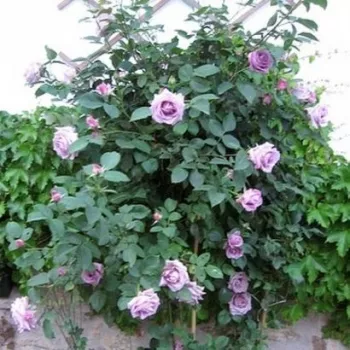
Climbing habit with dense, slightly glossy dark green foliage. Reaches around 2.4–3.6 m high and 1–1.7 m wide. Moderately thorny canes suit training on pergolas, arches, fences or sturdy trellis structures. |
| Flower morphology |
Large, double cup-shaped blooms with 26–39 petals, borne mainly singly on stems. Repeat flowering, with a lighter second flush later in the season. Flower diameter typically 7–10 cm under normal garden conditions. |
| Colour data and phenology |
Deep violet with a slightly bluish tone and silvery sheen; ARS mau, RHS 77A/76B. Buds crimson-purple, opening lilac-blue, then paling in strong sun. Colour richest in cooler weather and semi-shade, with good retention. |
| Fragrance and aroma |
Strong, distinct scent combining sweet rose notes with a gentle spicy aspect. Best appreciated near seating areas or paths. Primarily ornamental; double form means relatively low value for pollinator attraction in the garden. |
| Hip characteristics |
Hip set generally sparse due to fully double flowers. Where present, hips are small, ellipsoid and red, around 8–12 mm. They may add a discrete seasonal accent but are not a principal decorative feature of the cultivar. |
| Resistance and winter hardiness |
Hardy to approximately −23 to −21 °C (RHS H7, USDA 6a, Sweden zone 3). Disease resistance medium; monitor for black spot, mildew and rust. Performs best with good air circulation, feeding and regular watering in dry spells. |
| Horticultural recommendations |
Plant 1.4–2.25 m apart depending on use; give support for climbing canes. Prefers fertile, well-drained soil; improve heavy clay. Suitable for partial shade. Winter prune to shape, and deadhead to encourage repeat flowering. |
INDIGOLETTA – purple climbing rose - Laak offers scented violet blooms, adaptable climbing coverage and the long-term steadiness of an own-root plant; a thoughtful choice if you enjoy calm structure with character in your garden.