INES SASTRE® – pink‑white climbing rose – Meilland
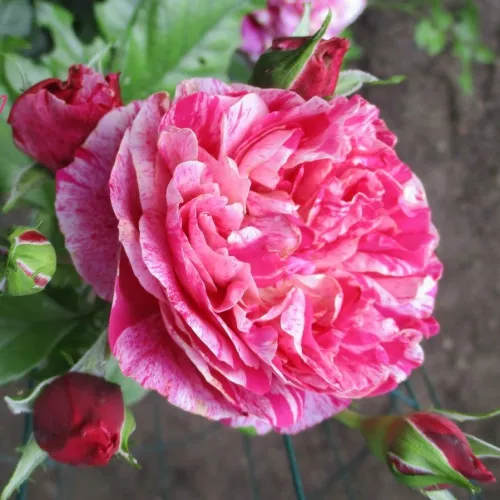
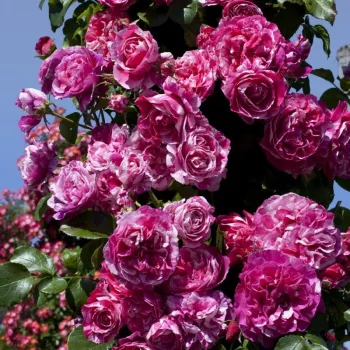
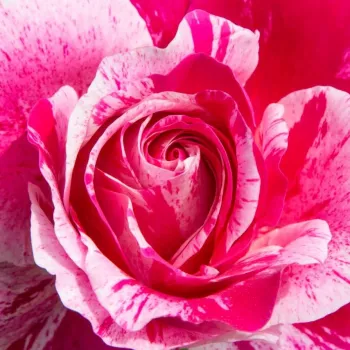
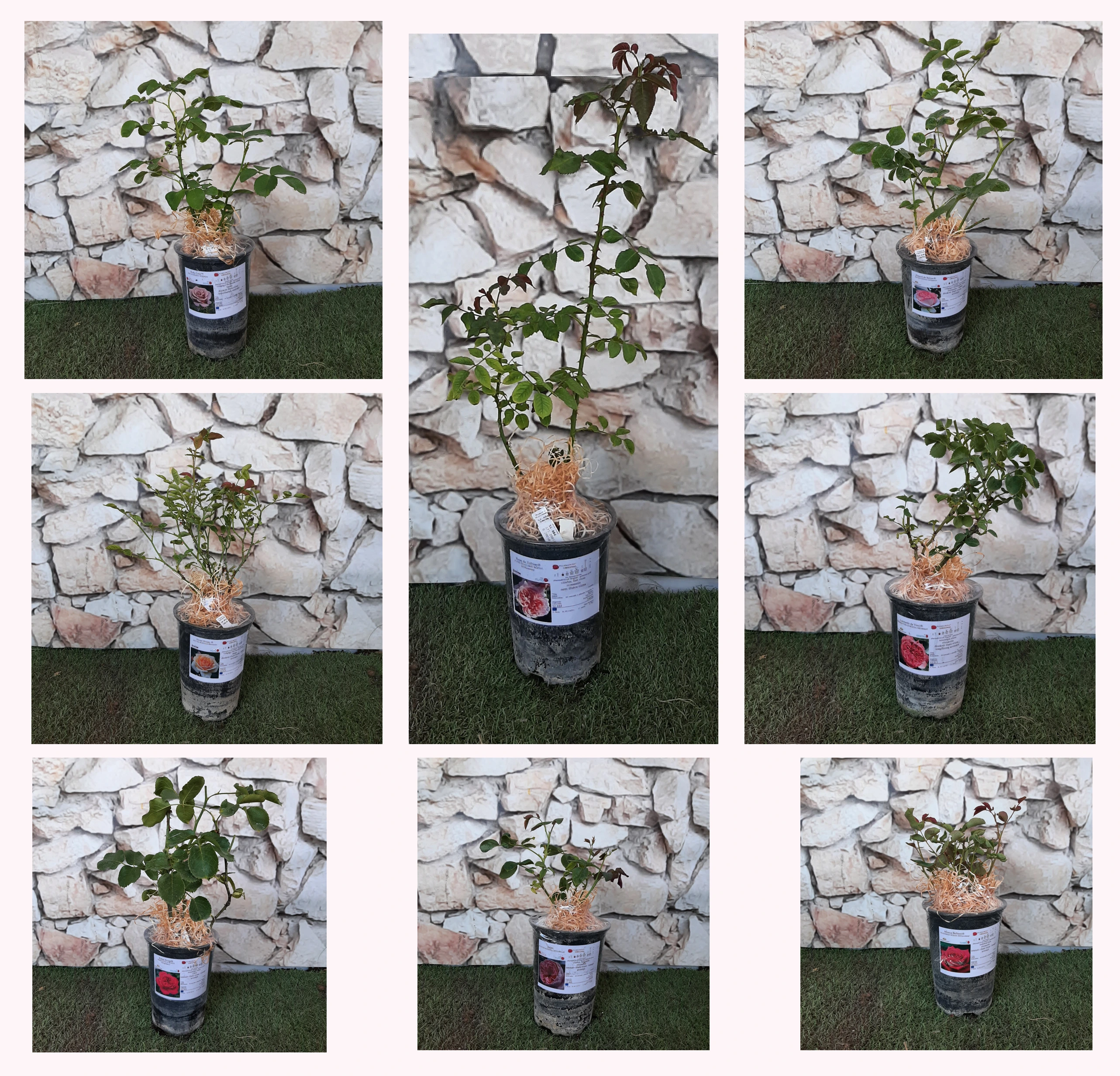
Bring a sense of coastal refreshment to your garden with INES SASTRE®, a pink‑white climbing rose whose raspberry‑striped blooms look as if they have been brushed by sea spray. This compact climber is ideal where space is tight yet you still want a generous vertical display, providing a graceful screen for balconies, verandas and small family gardens. Over time it develops a stable, well‑anchored framework that copes reliably with brisk breezes and typical coastal showers while remaining neat and manageable. Large, very double flowers appear repeatedly through the season, creating a long‑lasting display on walls, trellises and arches. Grown on its own roots in a practical 2‑litre container, it offers reassuring longevity and easy regeneration after pruning or weather damage. Plant it in a bright, sheltered corner with free‑draining soil or a 40–50 litre container, and expect a steady development arc as roots establish in the first year, strong shoots follow in the second and by the third summer it reaches its full ornamental potential for relaxed seaside‑inspired moments.
Usage options
| Target area |
Reasoning |
| Coastal veranda windbreak |
Trained on railings or a slim trellis, this rose forms a compact, leafy screen that softens salty breezes yet remains easy to manage in a small space, especially in a 40–50 litre container – ideal for the coastal-style beginner. |
| Small garden wall or fence |
Its moderate height and creeping habit make it well suited to typical suburban boundaries, giving you generous colour without overshadowing the garden or demanding complex pruning – reassuring for the busy homeowner. |
| Arch or pergola near a seating area |
Clusters of large, striped blooms repeat through the season, creating a romantic canopy that frames a bench or bistro set while staying relatively sparsely thorned for more comfortable close contact – appealing to the family gardener. |
| Feature rose in a large container |
Planted in a 40–50 litre pot with good drainage, it offers vertical interest on patios and roof terraces where ground planting is limited, with its own-root vigour supporting long-term structure – perfect for the urban balcony owner. |
| Low-maintenance decorative screen |
Dense, glossy foliage and medium disease tolerance provide an attractive green backdrop even between flushes, while simple deadheading keeps the display clean without specialist skills – suited to the time-poor beginner. |
| Romantic, long-season flower backdrop |
Very double, cupped blooms appear in clusters with an abundant second flush, giving many weeks of colour that pairs beautifully with sea kale, Festuca and Lavandula – a delight for the weekend gardener. |
| Resilient climber in breezy, rainy spots |
Once established, its well-rooted, own-root framework holds to its support and copes well with frequent rain and wind typical of exposed British gardens, maintaining dependable structure – reassuring for the coastal homeowner. |
| Long-term, easy-care garden investment |
The own-root form offers long lifespan, stable regrowth from the base after pruning or winter, and no graft union to protect, reducing long-term maintenance for those wanting reliability – ideal for the practical gardener. |
Styling ideas
- Harbour-Veranda Screen – Train INES SASTRE® along a slim trellis in a 50 litre tub with sea kale and blue Festuca below for a soft maritime screen – for compact coastal decks and balconies.
- Romantic Cottage Arch – Let its striped blooms ramble over a narrow archway, underplanted with lavender and low grasses for informal charm – for families wanting a gentle, storybook entrance.
- Shingle-Garden Backdrop – Plant against a south-facing fence in free-draining soil, mixed with sea holly and thrift to create a light, beach-inspired border – for coastal-style enthusiasts.
- Patio Feature Column – Spiral it up a slim obelisk in a large container, surrounding the base with pink Monarda for a vivid summer focal point – for busy owners of small terraces.
- Relaxed Tea Corner – Use it as a flowering screen behind a bistro set, combining with lavender in pots to frame a sheltered spot for afternoon tea – for those seeking a quiet retreat.
Technical cultivar profile
| Parameter |
Data |
| Name and registration |
Climbing large-flowered cultivar MEIteratol, marketed as INES SASTRE® Romantica®, also known in exhibitions as Raspberry Cream Twirl; classified within the Romantica® collection of decorative climbers. |
| Origin and breeding |
Bred by Alain Antoine Meilland (France) from ‘Meinoiral’ × (‘Meihestries’ × ‘Meidomonac’), introduced by Meilland International and Star Roses and Plants in 2012 after selection in French trials. |
| Awards and recognition |
Received 1st prize at the 2012 Hradec Králové International Rose Competition in the Czech Republic, highlighting its ornamental value and performance under Central European garden conditions. |
| Growth and structural characteristics |
Medium climber with creeping habit, typically 180–280 cm high and 90–160 cm wide, carrying dense, dark green glossy foliage on sparsely thorned shoots suitable for training on supports in small gardens. |
| Flower morphology |
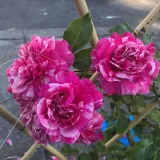
Very double, cupped XL blooms with more than 40 petals, borne in clusters of three to five per stem, repeating through the season with a notably abundant second flush when well watered and deadheaded. |
| Colour data and phenology |
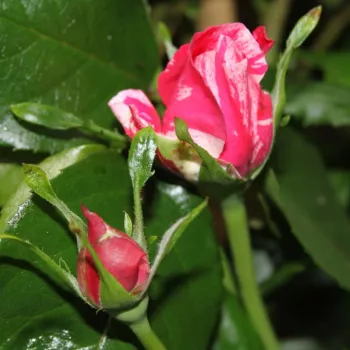
Raspberry-pink base with irregular cream-white stripes (RHS 58C outer, 60B inner), opening vivid then gradually softening as streaks blur to rosy white, giving a variegated effect from bud to full bloom. |
| Fragrance and aroma |
Displays a very light, fresh, apple-like scent that is barely noticeable in typical garden use, so is selected primarily for its striking bicolour appearance rather than for pronounced fragrance. |
| Hip characteristics |
Hip set is usually sparse due to very double flowers; when present, produces small, spherical red hips around 6–10 mm in diameter that offer modest late-season decorative interest. |
| Resistance and winter hardiness |
Hardy to approximately −26 to −23 °C (RHS H7, USDA 5b, Swedish zone 4) with medium resistance to black spot, powdery mildew and rust; benefits from regular watering in hot spells and good air circulation. |
| Horticultural recommendations |
Best in a sunny, sheltered position on walls, fences, arches or large containers, spaced 140–225 cm apart; requires occasional pest and disease monitoring plus light deadheading to maintain a tidy display. |
INES SASTRE® offers a compact climbing habit, long-season striped blooms and dependable own-root longevity, making it a graceful choice for low-fuss vertical colour in small gardens and verandas; consider it if you want lasting style with modest effort.