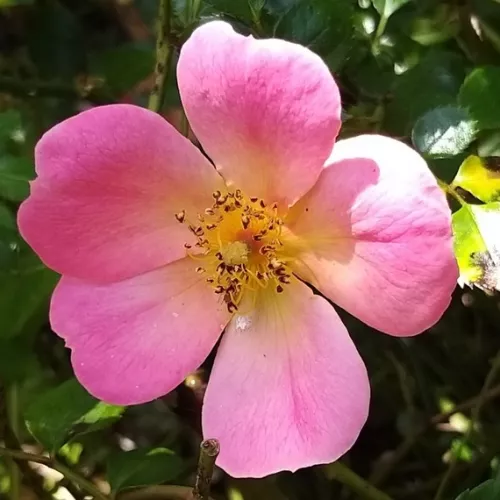
ROSA KOKANICA VACRATOT – white landscape shrub rose
Along a breezy Cornish terrace or a sheltered Devon veranda, ROSA KOKANICA VACRATOT brings a quiet sense of coastal refreshment with its simple white blooms and rare dark hips. This botanical shrub rose feels at home where gardens meet the sea, calmly standing up to blustery days and helping manage challenging, heavy soils through its steady root anchoring and reliable structure. As a naturally hardy, low-intervention landscape rose, it offers dependable endurance and attractive, upright structure without demanding complex pruning. Its open flowers are a magnet for bees and other beneficial pollinators, adding life and gentle movement to family gardens through a long and generous season. In a large 40–50 litre container on a veranda or in a shingle border, its upright habit and rare, almost black hips bring lasting visual interest with very little input from you, while own-root resilience supports a reassuring three-year development from settling roots to full ornamental maturity.
Usage options
| Target area |
Reasoning |
| Coastal shingle or salt-tolerant front garden |
Well suited to exposed, breezy plots where you want a tough, unfussy rose that copes with wind and imperfect soils while still flowering cleanly through the season, ideal for low-maintenance coastal-style gardeners and beginners. |
| Large containers on veranda or terrace |
In a 40–50 litre pot this upright shrub forms a stable, long-lived feature that does not outgrow a modest space, offering flowers and decorative hips with little more than watering and light shaping for busy veranda and balcony owners. |
| Low-maintenance family border |
Naturally hardy, disease-resilient growth and simple pruning needs make it easy to keep presentable around play areas and seating, suiting households that want dependable structure without regular fuss, especially time-pressed family garden owners. |
| Informal flowering hedge |
Planted at hedge spacing it forms a bushy, upright line with repeated white flowering and striking dark hips, giving gentle privacy and year-round framework along drives or boundaries for practical, design-conscious home gardeners. |
| Pollinator-friendly wildlife corner |
Single, open flowers with long blooming and accessible stamens draw in bees and other insects for months, supporting a more biodiverse, nature-friendly garden layout valued by wildlife-focused and environmentally aware gardeners. |
| Structural anchor in mixed clay border |
Its bushy, upright habit and strong own-root system offer reliable anchoring where free-draining pockets have been prepared in heavier soils, giving a stable backbone among perennials for those improving challenging ground and border layouts. |
| Long-season white theme planting |
Repeated flushes of clean white blooms followed by unusual dark hips carry visual interest well beyond peak summer, fitting calm, pale schemes around seating areas for those seeking a subtly changing yet restful garden atmosphere. |
| Botanical-style and collectors’ plantings |
As a selected botanical shrub with rare brownish-purple to black hips and authentic species character, it suits connoisseur plantings that value provenance and natural form, appealing to curious, detail-minded rose and species plant collectors. |
Styling ideas
- Sea-terrace – Set in gravel with Festuca and sea kale for a pale, windswept look that highlights its white flowers and dark hips – ideal for coastal-style veranda owners.
- White-border – Combine with bearded iris and silvery foliage for a calm, evening-friendly scheme where its upright habit adds rhythm – suited to busy homeowners wanting simple unity.
- Wildlife-ribbon – Run a loose line along a fence with Gaillardia and St John’s-wort to feed pollinators from spring into autumn – for families creating child-friendly nature corridors.
- Pot-companion – In a 50 litre tub with low lavender and grasses, it forms a long-lived, portable “mini hedge” – perfect for renters and small-plot gardeners.
- Botanical-corner – Group two or three plants with other species roses to showcase hips and natural form – appealing to enthusiasts developing a modest collection.
Technical cultivar profile
| Parameter |
Data |
| Name and registration |
Collection Botanical rose; shrub landscape type marketed as ROSA KOKANICA VACRATOT, linked to R. villosa; named for the Vácrátót National Botanical Garden in Hungary. |
| Origin and breeding |
Selected in Belgium by Lens Roses from Rosa kokanica seed originating at Vácrátót National Botanical Garden; introduced by Lens Roses and associated nurseries in 2012. |
| Growth and structural characteristics |
Bushy, upright shrub form with mid-green, matt foliage and dense prickling; designed as a landscape rose for hedging, mass plantings or specimen use with uniform overall habit. |
| Flower morphology |
Medium-sized, single flowers typically with 5–12 petals, borne repeatedly with notably abundant second flush; diameter around 5–6 cm, giving a natural, botanical garden look. |
| Colour data and phenology |
Uniform white blooms (RHS 155C) without marked patterning; colour holds moderately before fading; followed by distinctive brownish-purple to black spherical hips around 10–15 mm. |
| Fragrance and aroma |
Classed as a strongly scented rose, although detailed fragrance notes are not recorded; the long flowering period extends the presence of its aroma in the garden setting. |
| Hip characteristics |
Highly ornamental spherical hips, rare in their brownish-purple to black colouring, around 10–15 mm across; valued for extending display and adding texture in late season. |
| Resistance and winter hardiness |
Hardy to around −15 °C (RHS H6, USDA 6b, Swedish zones 1–2); low-maintenance species rose with generally good disease resilience, though detailed pathogen data remain limited. |
| Horticultural recommendations |
Suited to low-input borders, hedging and mass planting; recommended spacings from 70–180 cm depending on use; tolerates partial shade and is appropriate for challenging family gardens. |
ROSA KOKANICA VACRATOT offers long-lived, low-maintenance white flowering with pollinator value and striking dark hips on a durable own-root shrub, making it a thoughtful choice when planning a quietly resilient garden feature.