INTERLAV – mauve-pink park rose - Ilsink
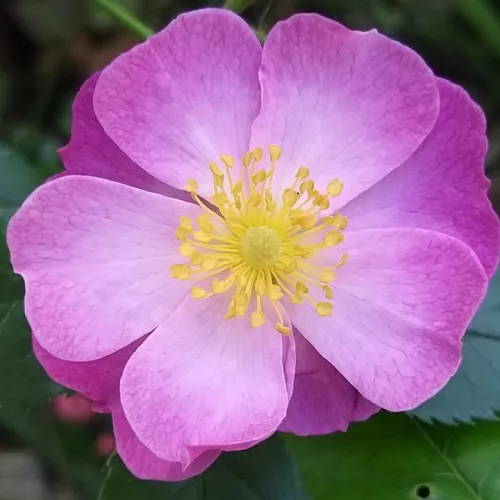
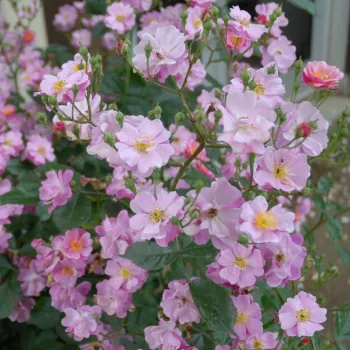
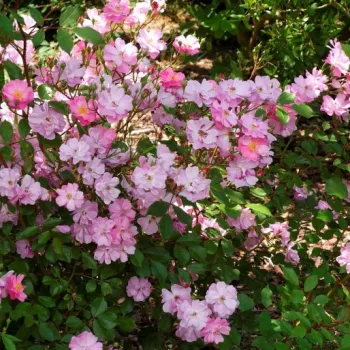
INTERLAV brings a breezy coastal refreshment to family gardens, covering its spreading framework in clouds of mauve‑pink blossom from early summer well into autumn with reliably remontant clusters. Its semi‑double flowers open wide, inviting bees and hoverflies, while good self-cleaning keeps the plant neat between visits to the seaside. Own‑root planting ensures long-term stability, helping the shrub anchor itself securely even where winds are brisk and soils need better drainage and water management. In typical UK conditions this quietly reliable shrub copes well with partial shade, forming dense, matt light‑green foliage that reads beautifully against shingle, gravel or pale paving. With modest maintenance and room to spread, it doubles as a soft, low park‑style hedge or groundcover, and over three seasons you will see roots establish, shoots build, then full ornamental impact unfold.
Usage options
| Target area |
Reasoning |
| Coastal veranda in containers (40–60 litres) |
In large, well-drained containers this spreading shrub creates a soft, wind-brushed screen of mauve‑pink bloom, with own‑root resilience giving a long-lived, low-fuss feature for those who enjoy simple care and steady performance as beginners. |
| Small family front garden, by the path |
Planted as a specimen or in a loose row, its repeating flushes of semi‑double flowers and dense foliage provide a welcoming, park‑style look without formal pruning, ideal where you want colour and structure but little technical gardening as homeowners. |
| Shingle or gravel bed with coastal feel |
The spreading habit and good groundcover effect suit shingle or gravel designs, while own‑root robustness helps it settle into free-draining spots that still face typical British bouts of rain and wind off the sea, appealing to coastal-style gardeners. |
| Low informal hedge along a drive |
At 120–190 cm high and similarly broad, it forms a soft, flowering boundary; its ADR rating and moderate maintenance needs mean you mainly trim for shape, suiting those who prefer a forgiving hedge over precise, time-consuming clipping as busy families. |
| Flowerbed focal point with pollinator interest |
Clusters of open, semi‑double blooms give easy access to nectar and pollen, supporting bees and other insects while providing pastel colour from early summer to autumn, making it attractive for anyone wanting wildlife value without complex planting as nature‑minded owners. |
| Groundcover in urban green strips |
The wide spread and dense foliage provide effective groundcover, reducing visible bare soil and helping suppress weeds, so routine care is mostly light pruning and occasional pest checks, ideal for low‑input, tidy municipal or shared spaces managed by time‑pressed custodians. |
| Partially shaded side garden |
Its tolerance of partial shade lets you use awkward side plots, where many roses sulk; repeated flowering and manageable disease levels give steady colour with modest intervention, fitting gardeners keen to get results from challenging corners as practical planners. |
| Mixed border with hips for autumn interest |
After flowering, small bright red hips add a fine-textured autumn highlight; combined with its long lifespan on own roots, this makes a border anchor that earns its space for years, suiting those who value enduring structure over short-lived bedding as thoughtful buyers. |
Styling ideas
- Coastal-porch calm – Plant INTERLAV in a 50–60 litre sand-coloured pot with blue Festuca and a low catmint skirt to echo sea and sky – ideal for veranda relaxers.
- Pastel-ribbon hedge – Run a loose line beside a drive, underplanting with lavender and sea kale for a soft, drifting edge – suited to informal-hedge seekers.
- Shingle-rose drift – Group three shrubs in gravel with scattered cobbles and dwarf honeysuckle at the edges – perfect for coastal-garden stylists.
- Urban-pocket park – Use in a small front bed with Nepeta and parsley for an easy wildlife-friendly trio – created for low-maintenance city gardeners.
- Family-picnic corner – Anchor a sitting area with one specimen, weaving in ornamental grasses and a light bench nearby – appealing to family-space planners.
Technical cultivar profile
| Parameter |
Data |
| Name and registration |
Shrub rose, commercial type park rose; registered as INTerlav, marketed as Lavender Dream / INTERLAV – mauve-pink park rose - Ilsink; ARS exhibition category shrub rose. |
| Origin and breeding |
Hybrid of ‘Yesterday’ × ‘Nastarana’, bred by G. Peter Ilsink for Interplant Roses, Leersum, Netherlands; introduced and registered in 1984 through Interplant and IRAR. |
| Awards and recognition |
ADR award recipient from 1987, indicating tested garden performance with proven ornamental value and balanced health under Central European trial conditions over several seasons. |
| Growth and structural characteristics |
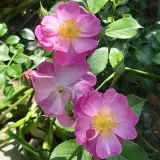
Spreading shrub, typically 120–190 cm tall with 120–200 cm spread; dense, matt, light green foliage, moderately thorny stems, forming a broad, gently arching framework in maturity. |
| Flower morphology |
Semi-double, flat blooms with 13–25 petals in small clusters; flower size small at 0.5–1.5 inches; reliably remontant, with the second main flush also notably abundant in season. |
| Colour data and phenology |
Mauve-pink to pastel lavender-pink; buds mid-pink, opening to pale lilac-pink then fading toward soft lilac; RHS 64C and 75D; colour lightens as flowers age, giving a gentle, hazy effect. |
| Fragrance and aroma |
Fragrance is very weak and barely perceptible; open, semi-double form and accessible stamens still offer partial pollinator interest and movement around the plant in warm weather. |
| Hip characteristics |
Frequently produces small, 6–10 mm spherical hips, bright red and decorative in clusters; suitable for simple autumn arrangements or left on the bush for seasonal garden interest. |
| Resistance and winter hardiness |
Hardy to approximately −26 to −23 °C (RHS H7, Swedish Zon 4, USDA 5b); powdery mildew resistant, with moderate tolerance to black spot and rust; moderate heat and drought tolerance. |
| Horticultural recommendations |
Best for beds, edging, informal hedges, parks and urban green space; medium maintenance, needing occasional health checks; plant at 90–165 cm spacing, water during prolonged dry spells. |
INTERLAV offers long-season mauve-pink flowering, self-cleaning clusters and enduring own-root resilience, making it a graceful choice for relaxed coastal or family gardens you plan to enjoy for many years to come.