IRÈNE FRAIN™ – white bedding shrub rose – Massad
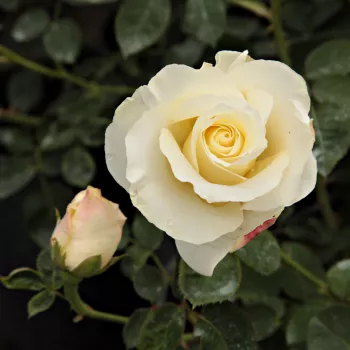
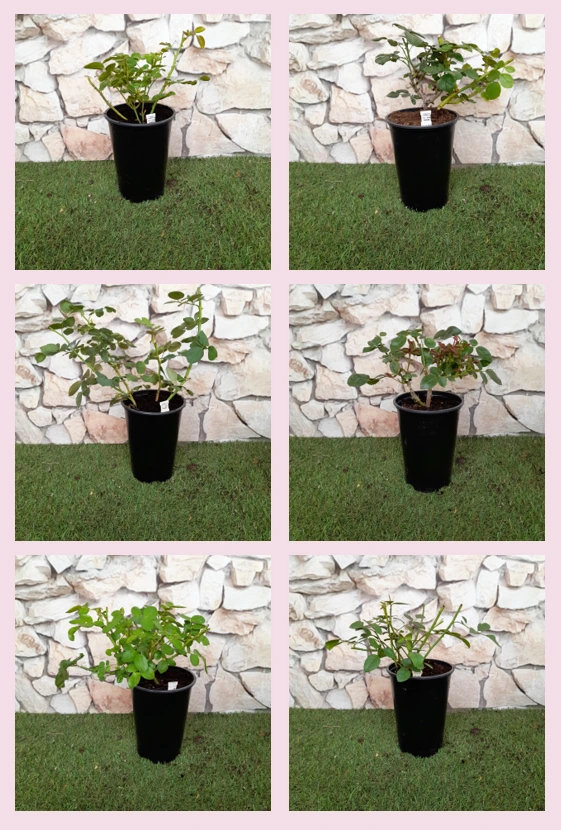
Sea-glass afternoons, light breezes and porcelain waves meet in IRÈNE FRAIN™, a compact bedding shrub rose that feels at home in UK coastal family gardens. Its refined white blooms with a lemon-tinted heart sit on bushy, dense foliage, creating a soft “girly” veil against gravel, shingle and pale decking. Easy to live with, it offers low maintenance and reliable health, suiting busy owners who want flowers rather than chores. Own-root plants establish gradually, promising a long-lived, stable display with simple regeneration. In heavy coastal soils it appreciates thoughtful drainage and firm anchoring in wind-exposed spots. In its natural rhythm, it builds roots in year one, stronger shoots in year two, and reaches full ornamental value by year three, giving you an elegant, lasting presence beside your veranda chairs and seashell trays.
Usage options
| Target area | Reasoning |
|---|
| Small coastal front garden bed |
The bushy, compact habit keeps within bounds on narrow Cornish or Devon frontage beds, while its moderate height still gives a visible, refined presence from the pavement or front gate, ideal for time-pressed, style-aware homeowners |
| Wind-sheltered shingle or gravel strip |
Dense foliage and a branching, bedding-shrub structure help it settle securely into free-draining shingle with minimal staking, supporting that exposed yet comforting coastal feel for relaxed, low-effort beginners |
| Large container on veranda or balcony |
In a 40–50 litre container, its moderate root system and compact top growth stay in balance, providing a neat, long-season flower focus where space is limited but you still want an elegant outdoor sitting room for busy urban gardeners |
| Low informal hedge beside seating area |
The even spread and repeat-flowering clusters create a soft-edged, knee-high line that gently frames a seating nook without blocking sea views, making tea breaks feel secluded yet open for relaxed family users |
| Mixed coastal-style border with grasses |
Its porcelain-white, semi-double blooms read clearly against silver-blue grasses and drought-tolerant perennials, echoing sunlit surf while remaining easy to look after for design-conscious but time-poor owners |
| Low-maintenance family planting with children |
Good disease resistance and modest maintenance needs mean fewer sprays and chores, while the rounded, well-furnished shape is simple to understand and care for with children learning garden basics alongside busy parents |
| Pollinator-friendly accent near terrace |
Semi-double, open-centred flowers offer easier pollen access, encouraging bees to visit the edges of your outdoor living space without overwhelming it, adding subtle life and movement valued by nature-curious families |
| Long-term own-root feature in clay-amended bed |
As an own-root rose, it ages gracefully and can regenerate from its base, building strength year by year in well-amended clay that manages water and anchoring in breezy conditions for forward-planning garden planners |
Styling ideas
- Veranda Calm – Pair IRÈNE FRAIN™ in a 50 litre pot with trailing Vinca minor over the rim for a soft, white-and-green edge – ideal for balcony and veranda owners wanting minimal daily care
- Shingle Drift – Plant in groups of three among pale gravel with Festuca and sea kale for a dune-like feel – suited to coastal-style lovers seeking an airy, beach-inspired forecourt
- Soft Hedge – Create a low, flowing hedge along a path, interspersed with lavender, to frame walks without blocking light – good for families wanting structure without fussy clipping
- Porcelain Patch – Use as a white focal group in a small front bed, backed by Virginia creeper for seasonal colour contrast – perfect for beginners wanting a simple but elegant entrance
- Pollinator Corner – Combine with Nepeta x faassenii and ornamental grasses beside a seating area to invite gentle bee activity – fitting for nature-minded households craving movement and subtle sound
Technical cultivar profile
| Parameter | Data |
|---|
| Name and registration |
Shrub rose, bedding type; registered as MASirfa, marketed as Irène Frain™ within the Les Églantelles® collection; commercial use primarily in ornamental beds and smaller landscape schemes. |
| Origin and breeding |
Bred by Dominique Massad in France and first introduced by Roseraies Pierre Guillot in 2012, with registration under the name MASirfa in the same year for garden and landscape use. |
| Growth and structural characteristics |
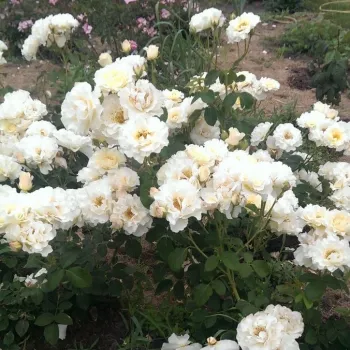
Bushy, compact shrub reaching about 50–75 cm in height and 70–100 cm in spread, with dense, slightly glossy vivid green foliage and moderate prickliness suited to beds, edges and containers. |
| Flower morphology |
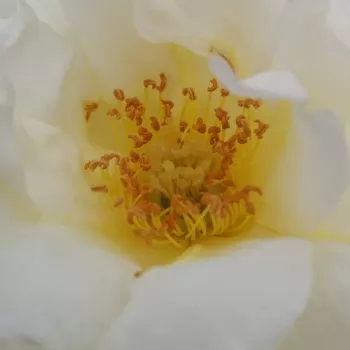
Semi-double, cup-shaped blooms of medium size, typically 13–25 petals, produced in clusters, repeating through the season with particularly abundant second flush flowering in suitable conditions. |
| Colour data and phenology |
Porcelain white with a soft lemon-yellow centre; buds vivid pink turning bone white, sometimes with a translucent pink flush; colour holds well, only lightly paling in strong sun toward the end. |
| Fragrance and aroma |
Fragrance is very weak and generally barely noticeable, so this cultivar suits gardeners prioritising visual impact and fresh, light-coloured displays over strong scent in closely used seating areas. |
| Hip characteristics |
Forms moderately abundant, small ellipsoidal hips about 8–12 mm across, orange-red in colour, offering a discreet late-season accent without dominating the overall line of the compact shrub. |
| Resistance and winter hardiness |
Good disease resistance to black spot, powdery mildew and rust; hardy to around −23 to −21 °C (RHS H7, USDA 6a), coping well with British winters given normal drainage and care. |
| Horticultural recommendations |
Best in full sun and well-prepared soil; plant 50–55 cm apart in hedges or mass plantings, 90 cm as a specimen; water regularly in dry spells and feed annually for sustained repeat bloom. |
IRÈNE FRAIN™ offers compact, bushy growth, porcelain-white repeat flowering and dependable disease resistance on a long-lived own-root framework, making it a thoughtful choice for relaxed coastal-inspired gardens.