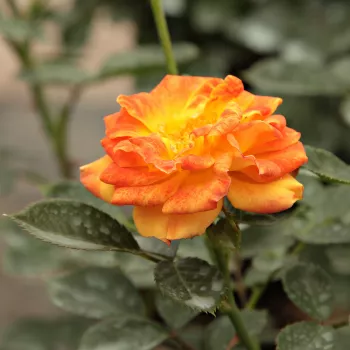
NAVELINA – yellow-red bedding Floribunda rose - Dickson
Imagine sipping tea on a sunlit veranda while Atlantic breezes play with a rose bed of glowing colour; NAVELINA settles calmly into coastal family gardens, its roots anchoring well even where soil needs improved drainage against winter wet and wind. This bedding floribunda forms a compact, bushy shape ideal for small urban plots, yet its clustered blooms create a vibrant sweep of yellow and red that reads beautifully from a shingle terrace or balcony. Once planted, the medium maintenance level is mainly simple deadheading to prolong its remontant display, with moderate watering through dry spells. As an own-root plant it offers reassuring longevity, quietly rebuilding itself after harsh seasons and keeping its ornamental value steady year after year. Over time you see the classic development arc: strong roots in the first season, bolder shoots in the second, then full bedding impact in the third, when its beds of clustered flowers frame sea kale, grasses and lavender in a breezy, “girly” coastal palette.
Usage options
| Target area | Reasoning |
|---|
| Coastal shingle or salt-tolerant front garden |
The bushy, upright habit and good anchoring root system suit exposed Cornish or Devon drives, where improving drainage keeps plants comfortable against winter wet and wind. Its moderate maintenance focuses on simple deadheading and watering, fitting coastal-style lovers and beginners. |
| Small family flower bed near a seating area |
Compact growth and medium height make it easy to fit beside a family patio without overwhelming the space, while the clustered blooms give season-long colour close to eye level. Occasional grooming keeps beds neat for hobby gardeners and homeowners. |
| Statement container on a veranda or balcony |
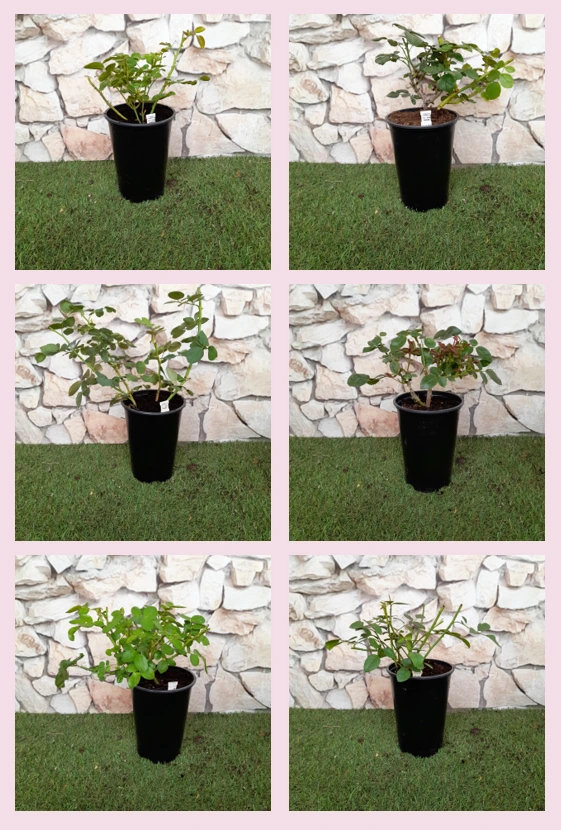
In a 40–50 litre container with free-draining compost, NAVELINA develops a stable root ball and performs reliably even where borders are limited. Regular watering and light feeding are straightforward, ideal for busy urban garden owners and veranda-owners. |
| Mixed border with grasses and coastal perennials |
The vibrant yellow-red flowers stand out among sea kale, Festuca and lavender, while the dense, glossy foliage provides structure between flushes. Its uniform growth pattern simplifies border planning for design-conscious but time-poor gardeners. |
| Low informal hedge along paths or driveways |
Recommended hedge spacing gives a continuous, colourful line without becoming leggy, and own-root resilience supports a long-lived planting once established. Occasional trimming and deadheading remain manageable for practical-minded householders. |
| Urban front garden or pocket garden |
The rose’s moderate maintenance and compact footprint work well where access is tight and time is limited, while repeat flowering adds cheery kerb appeal from spring to autumn. It particularly supports busy city-dwelling owners. |
| Public or shared green spaces in mild regions |
Floribunda-style repeat flowering and moderate disease tolerance make a reliable, colourful choice for small communal beds, especially when routine maintenance is scheduled but not intensive, suiting facilities managers and resident-group planners. |
| Cutting corner for casual home arrangements |
Medium-sized, cupped double flowers on clustered stems provide cheerful, easily cut bunches; own-root plants recover well from cutting, maintaining shape and performance for years, ideal for relaxed home bouquet makers and enthusiasts. |
Styling ideas
- Seaside-border – Plant NAVELINA in a loose ribbon with sea kale and blue Festuca to echo Cornwall’s coastal colours – perfect for coastal-style lovers wanting an easy, bright scheme.
- Veranda-pot – Use a single plant in a 50 litre clay pot, underplanted with trailing thyme, for a compact, low-maintenance feature – ideal for busy veranda-owners.
- Sunset-bed – Combine its yellow-red flowers with soft pink Verbena hastata ‘Pink Spires’ for a warm, sunset-toned family bed – suited to hobby gardeners.
- Pathway-hedge – Line a front path with evenly spaced plants for a low, colourful hedge guiding guests to the door – good for homeowners seeking structure without complexity.
- Urban-pocket – Slot one or two plants into a tiny city garden with dark gravel mulch and a single dwarf euonymus for year-round backbone – tailored to beginners with very limited space.
Technical cultivar profile
| Parameter | Data |
|---|
| Name and registration |
Floribunda bedding rose; registered as DICwitness, marketed as NAVELINA Bedding rose DICwitness; part of the Bedding rose collection, suitable for exhibition floribunda and shrub displays. |
| Origin and breeding |
Bred by Patrick Dickson, Dickson Nurseries Ltd., Northern Ireland, from ‘Mr. JCB’ × ‘Gypsy Dancer’; bred and registered in 1999, introduced to the market in 2000 in the United Kingdom. |
| Awards and recognition |
Rose of the Year in Great Britain 2000, RHS Award of Garden Merit, and silver medal at the Glasgow International Rose Trials 2001, confirming reliable garden performance and ornamental value. |
| Growth and structural characteristics |
Compact, bushy, upright floribunda, reaching about 60–90 cm in height and spread; dense, glossy dark green foliage with moderate prickliness; poor self-cleaning so regular deadheading is recommended. |
| Flower morphology |
Medium-sized, cupped, double flowers with approximately 26–39 petals, produced in clusters; remontant over the season with a generous second flush; well-suited for bedding, borders and casual cutting. |
| Colour data and phenology |
Yellow-red bicolour with ARS yb; outer petals RHS 28A, inner 14B; buds medium yellow with reddish-orange tones, maturing to fiery orange-red outside and rich yellow within, fading gradually to softer reddish and creamy shades. |
| Fragrance and aroma |
Mild, fresh and vibrant fragrance, noticeable at close range but not overpowering; primarily grown for its colour effect and bedding impact rather than scent, making it suitable near seating where subtlety is preferred. |
| Hip characteristics |
Limited hip set due to double flowers and regular deadheading; where formed, hips are small, spherical, scarlet-red, around 6–10 mm in diameter, adding occasional late-season decorative interest. |
| Resistance and winter hardiness |
Hardy to approximately −21 to −18 °C (RHS H7, Swedish Zone 3, USDA 6b); moderate tolerance to heat and drought with regular watering; moderate resistance to black spot, powdery mildew and rust in typical UK conditions. |
| Horticultural recommendations |
Suitable for beds, borders, containers and urban green spaces; likes fertile, well-drained soil with regular watering in dry spells; spacing 45–85 cm depending on use, with 3.3–3.8 plants/m² for mass planting. |
Navelina Bedding rose DICwitness offers compact, repeat flowering colour and dependable bedding structure in an own-root form that builds long-lived, resilient plants; a natural choice if you value straightforward beauty and steady performance.