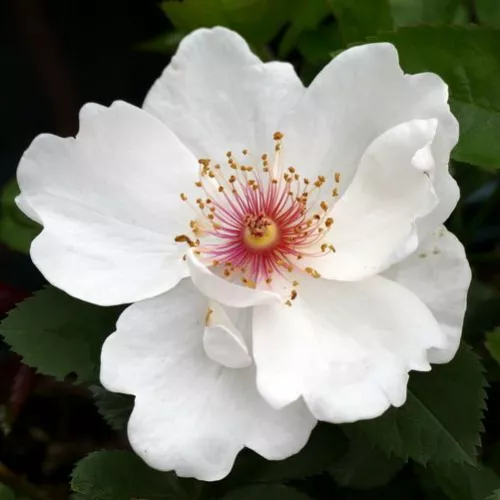
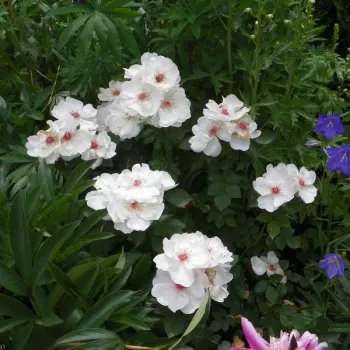
JACQUELINE DU PRÉ™ – white bedding shrub rose – Harkness
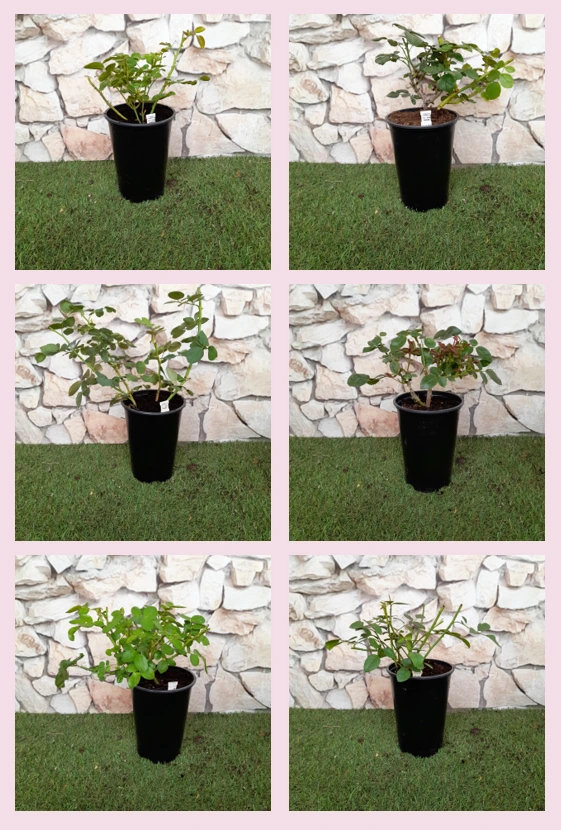
Imagine a sheltered coastal veranda where you can enjoy afternoon tea, protected by a natural rose windbreak that shrugs off blustery showers and gusty weather by the sea, while its honey-scented, snow-white blooms bring a sense of pure refreshment. Jacqueline du Pré™ settles in reliably even in challenging garden soils, quietly building strong roots and anchoring itself where drainage has been thoughtfully prepared against persistent moisture and occasional standing water in heavy coastal ground. Over the seasons it develops into an upright, bushy hedge or airy specimen, its self-cleaning flowers saving you time as petals simply fall away and new clusters appear. The open, pollinator-friendly flowers invite bees, while the own-root form supports a long-lived, regenerating structure that matures from establishing roots in the first year to fuller shoots in the second and a gracefully balanced, high-ornamental shrub by the third.
Usage options
| Target area | Reasoning |
|---|
| Small coastal front gardens in Cornwall or Devon |
Jacqueline du Pré™ copes well with exposed, breezy sites when given basic protection, providing reliable flowering and privacy in modest spaces without demanding complex care, well suited to beginners. |
| Low to medium-height flowering hedge or wind-filter |
Its upright, bushy habit and 130–170 cm height form a light, semi-transparent screen that softens winds around seating areas or verandas while keeping the garden feeling open, ideal for a relaxed family. |
| Feature shrub near a terrace or veranda |
The medium-sized, cup-shaped white flowers with honey-spiced fragrance are best appreciated close to paths and terraces, turning everyday tea breaks into small seaside rituals, attractive to the design-conscious homeowner. |
| Mixed coastal-style border with grasses and perennials |
Clustered white blooms and dark, glossy foliage pair beautifully with blue fescues, sea kale or lavender, creating a shingle-garden look that reads well from spring to autumn for the coastal-style enthusiast. |
| Low-maintenance flowerbed in urban or suburban gardens |
Good disease resistance and self-cleaning flowers reduce the need for spraying and deadheading, making it suitable for those who prefer simple seasonal tasks over intensive upkeep, especially the time-poor gardener. |
| Large container or half barrel (40–60 litres minimum) |
In a well-drained, roomy container this shrub offers long seasonal interest and can be moved to shelter from the harshest winds, fitting verandas, patios and balconies owned by space-conscious residents. |
| Pollinator-friendly, wildlife-aware planting schemes |
Its open, single flowers present pollen and nectar openly to bees and hoverflies, while autumn hips add extra seasonal value, supporting a more nature-friendly approach favoured by eco-minded gardeners. |
| Long-term structural planting with minimal replacement |
As an own-root shrub, it regenerates well from the base, avoiding issues with graft failure and building a stable, long-lived framework that rewards patient planning over several years, appealing to forward-looking owners. |
Styling ideas
- Shingle-Veranda Calm – underplant with sea kale, Festuca and low thyme around a generous pot or raised bed to echo Cornish shingle beaches – ideal for coastal-style veranda owners.
- Sea-Breeze Hedge – plant a loose line along a boundary with staggered spacing, mixing in lavender for scent and movement – suitable for families wanting a soft wind filter.
- White-Tea Corner – place by a small seating nook with pale decking, a bistro set and pale gravel mulch to reflect light – perfect for those who savour evening tea outdoors.
- Pollinator-Promenade – line a path with widely spaced shrubs interplanted with catmint and hardy geraniums to create a bee-friendly walkway – appealing to wildlife-conscious hobby gardeners.
- Urban-Coastal Pot – grow one plant in a 50–60 litre container with trailing rosemary and blue sedge to bring a seaside feel to balconies – aimed at busy urban balcony and patio owners.
Technical cultivar profile
| Parameter | Data |
|---|
| Name and registration |
Jacqueline du Pré™ (HARwanna), shrub / bed rose, Masterpiece Collection®, exhibition category shrub rose, registered with ARS as Jacqueline du Pré, commercial flowerbed shrub type. |
| Origin and breeding |
Bred by Jack Harkness, R Harkness & Co Ltd, United Kingdom, from ‘Radox Bouquet’ × ‘Maigold’; bred 1988, registered 1988, introduced 1989 by R. Harkness & Co. Ltd. |
| Awards and recognition |
Holds the Royal Horticultural Society Award of Garden Merit (1994), indicating reliable garden performance, good ornamental effect and generally robust health under typical UK conditions. |
| Growth and structural characteristics |
Upright, bushy shrub reaching about 130–170 cm high and 100–140 cm wide, densely thorned with dark green, glossy, dense foliage forming a solid, shrub-like structure suitable for beds and hedges. |
| Flower morphology |
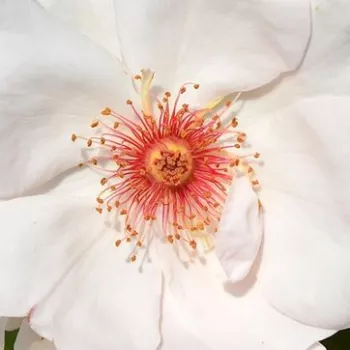
Single to semi-double, cup-shaped, cluster-flowering blooms with 5–12 petals, medium-sized at roughly 4–7 cm, remontant with a notable second flush and good self-cleaning as spent flowers drop naturally. |
| Colour data and phenology |
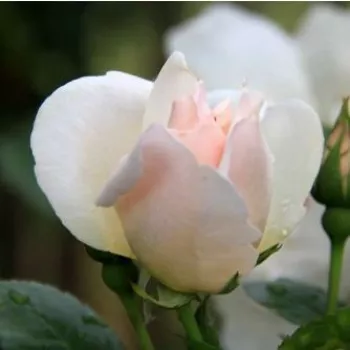
Ivory-white buds open creamy white with a soft pinkish glow, then snow-white with subtle creamy centre; before fading, petals become slightly translucent with delicate yellowish edging in strong light. |
| Fragrance and aroma |
Medium-strength, well-scented fragrance described as honey-spiced, noticeable in still air and best appreciated near seating or paths, combining classic rose notes with a warm, lightly spiced sweetness. |
| Hip characteristics |
Produces moderate quantities of small, spherical hips about 12–18 mm across, coloured bright orange-red, extending ornamental and wildlife interest into autumn and early winter in established plantings. |
| Resistance and winter hardiness |
Rated RHS H7, hardy to around −26 to −23 °C; shows good resistance to black spot, powdery mildew and rust, tolerates heat and moderate drought with watering during prolonged dry periods. |
| Horticultural recommendations |
Suited to flowerbeds, borders, hedges, parks and urban landscapes, also for cut flowers; plant 110–120 cm apart in groups, 200 cm as specimen, in sun or partial shade with well-prepared drainage. |
Jacqueline du Pré™ offers long-lived own-root reliability, self-cleaning white flowers and a fragrant, bushy presence for compact coastal or family gardens; consider it where you value beauty with lasting ease.