JASMINA ® – pink climbing rose – Kordes
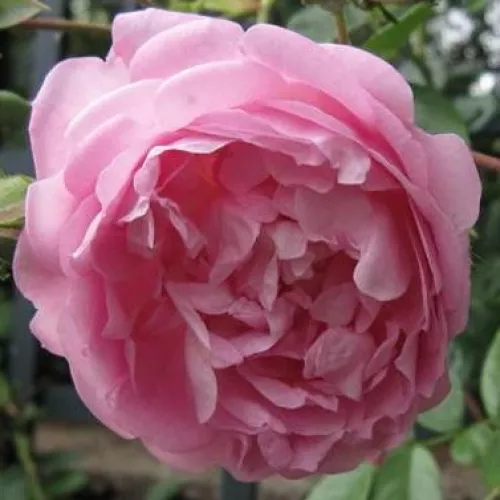
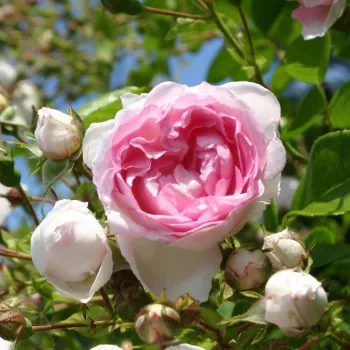
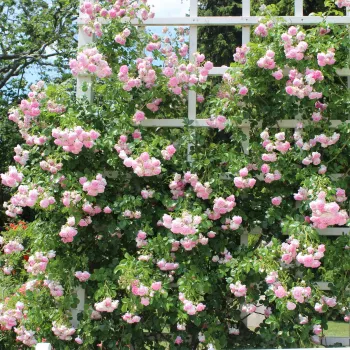
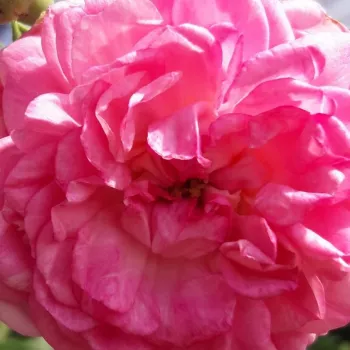
Imagine returning from a breezy walk on the shore, mug of tea in hand, sheltered behind a screen of Jasmina blooms that turn a simple veranda or fence into a fragrant coastal retreat. This Kordes-bred climbing rose offers easy maintenance, with tidy, flexible canes that are straightforward to tie in along arches, walls or railings – ideal where strong breezes demand good anchoring while still allowing air to move through. Its clusters of rosette flowers repeat from early summer, giving a long season of mauve-pink to lilac blooms that soften hard boundaries in small gardens. The strong, fruity fragrance creates a calm, “girly” charm on Cornish and Devon-style verandas, yet its proven health and ADR-level resistance mean little spraying or fuss. As an own-root plant, it builds a durable framework and can regenerate from the base, offering impressive longevity with stable ornamental value. In a large 40–50 litre container or in the ground with sensible drainage, you can expect a gentle development arc – Year 1 focused on roots, Year 2 on framework and shoots, and by Year 3 a full curtain of scented flowers that fits effortlessly into everyday family life.
Usage options
| Target area | Reasoning |
|---|
| Coastal veranda windbreak |
Trained onto wires or balustrades, this climber creates a light, airy screen that softens sea breezes without becoming a solid sail, suiting exposed Cornish or Devon verandas and patios where dependable structure matters to the beginner. |
| Compact family fence line |
On typical garden fences it clothes 2–3 m spans with repeat clusters, giving a long flowering season and privacy without taking over narrow borders, supporting households that want colour and enclosure with minimal input from the homeowner. |
| Arch or pergola near seating |
Its medium-sized, very full rosettes and strong fruity scent are best enjoyed up close, making arches and pergolas by a bench or tea corner perfect for relaxing, sensory spaces valued by the hobby-gardener. |
| Low-maintenance side path screen |
The variety requires only modest pruning and feeding, so once guided along a path fence it offers reliable cover and blossom with little ongoing effort, ideal for busy paths used daily by the urban-gardener. |
| Own-root long-term feature wall |
Planted in the ground, its own-root character allows it to bulk up gradually, recover well from occasional damage and keep an even display year after year, suiting long-range planners among the garden-owner. |
| Large container on sheltered terrace |
In a 40–50 litre or larger pot with good drainage, it can be trained up a trellis to frame doors or windows, offering structured vertical colour where soil is limited yet style is important to the balcony-owner. |
| Clay soil coastal garden strip |
Given improved drainage at planting, this rose establishes firmly and copes well with rainy, breezy weather typical of many UK coasts, offering resilient structure and bloom for the practical-minded coastal-resident. |
| Shady boundary corner |
Its suitability for partial shade lets you green up and perfume less-sunny boundaries, with the plant still flowering reliably once mature, which is helpful for problem spots that frustrate the casual beginner-gardener. |
Styling ideas
- Seaside-porch arch – Train Jasmina over a simple metal arch by a veranda, underplant with sea kale and blue Festuca for a shingle-beach look – for coastal-style lovers seeking a soft, feminine welcome.
- Pastel-fence ribbon – Run it along a pale-painted timber fence with lavender and soft pink perennials, creating a gentle, scented boundary – for families wanting charm without intensive upkeep.
- Romantic-balcony screen – In a 50 litre trough, fan it onto a trellis with compact lavenders and grasses at the base – for urban balcony owners who need vertical privacy and fragrance.
- Cottage-coastal mix – Combine it with sea kale, ornamental thymes and low silvery shrubs near a gravel path – for gardeners blending cottage style with resilient coastal planting.
- Evening-tea pergola – Drape it over a simple pergola with soft lighting and containers of lavender and Festuca below – for those who enjoy relaxed, scented evenings outdoors.
Technical cultivar profile
| Property | Data |
|---|
| Name and registration |
Climbing rose from the Klettermaxe collection; registered as KORcentex, marketed as Jasmina ® / Klettermaxe®; ARS exhibition name Jasmina™; large-flowered climber for ornamental garden and show use. |
| Origin and breeding |
Bred by Tim-Hermann Kordes (W. Kordes’ Söhne), Germany, around 1996; parentage unknown seedling × ‘Centenaire de Lourdes’; first introduced commercially in 2005 after registration in 2004. |
| Awards and recognition |
Holds the ADR award (Germany, 2007) for health and garden performance, plus multiple international honours including fragrance and medal prizes at Nantes, Lyon, Kortrijk and a test certificate in Adelaide. |
| Growth and structural characteristics |
Vigorous, creeping to climbing habit reaching about 220–380 cm high and 100–200 cm wide, with dense, slightly glossy dark green foliage and moderate prickliness; weak self-cleaning so deadheading is advisable. |
| Flower morphology |
Medium-sized clusters of very full, rosette-shaped blooms with 40+ petals; remontant with abundant repeat flushes, especially strong in the second flowering; flowers borne in attractive, multi-headed trusses. |
| Colour data and phenology |
Mallow-pink to lilac centres with paler, pastel outer petals; buds purple-pink with a silvery sheen; colour lightens slightly in strong sun, remains richer in cooler weather; ARS pink, RHS 65C outer, 68D inner. |
| Fragrance and aroma |
Strong, clearly perceptible scent with an intensely fruity character best appreciated at head height; highly double blooms reduce pollen access, so this is primarily an ornamental, not pollinator-focused, climbing rose. |
| Hip characteristics |
Occasionally sets small, spherical red hips around 8–13 mm in diameter; hips are not typically a dominant ornamental feature, but can offer light seasonal interest if deadheading is not carried out. |
| Resistance and winter hardiness |
Very good disease resistance, noted as resistant to powdery mildew, black spot and rust; hardy to about −26 to −23 °C (RHS H7, USDA 5b, Swedish zone 4), coping well with typical UK winters when established. |
| Horticultural recommendations |
Suited to arches, pergolas, walls, fences and freestanding structures; plant 140–150 cm apart for hedging or mass effect, 250 cm as solitary; tolerates partial shade and low-maintenance regimes with modest feeding. |
Jasmina ® KORcentex offers easy repeat flowering, strong fragrance and long-lived own-root reliability, making it a thoughtful choice for creating a gentle, enduring vertical accent in your garden.